 2 citations
,
January 2012 in “Journal of The Chilean Chemical Society”
2 citations
,
January 2012 in “Journal of The Chilean Chemical Society” This study developed and validated a precise RP-HPLC-PDA method for estimating finasteride in bulk and tablet forms, suitable for quality control use.
November 2009 in “Hair transplant forum international” This piece presents no new research findings; it briefly mentions opinions on Female Pattern Hair Loss and the importance of increasing awareness.
 1 citations
,
April 2021 in “Journal of The American Academy of Dermatology”
1 citations
,
April 2021 in “Journal of The American Academy of Dermatology” Some overweight or obese men with long-term frontal fibrosing alopecia may have abnormal sex hormone levels.
 115 citations
,
March 2019 in “Nature Communications”
115 citations
,
March 2019 in “Nature Communications” This study identified significant genetic associations with frontal fibrosing alopecia at four genomic loci, suggesting it is a genetically predisposed immuno-inflammatory disorder influenced by the HLA-B*07: 02 allele.
 November 2022 in “The journal of investigative dermatology/Journal of investigative dermatology”
 This study suggests that allergens like linalool found in personal care products may contribute to the pathobiology of frontal fibrosing alopecia by affecting immune responses and stem cell function in hair follicles.
 55 citations
,
June 2007 in “Journal of Statistical Planning and Inference”
55 citations
,
June 2007 in “Journal of Statistical Planning and Inference” This study introduces an extended approach to the Bonferroni procedure that accounts for correlations among endpoints, aiming to improve test power while maintaining strong control of the family-wise type I error rate in clinical trials.
2 citations
,
June 2024 in “Skin Appendage Disorders” This study identifies specific trichoscopic features such as empty follicles and perifollicular erythema in Caucasians with frontal fibrosing alopecia, which may assist in diagnosis and monitoring, but stresses the need for further research due to limited demographic data.
 2 citations
,
April 2023 in “Cutis”
2 citations
,
April 2023 in “Cutis” This systematic review discusses the treatment characteristics and outcomes for frontal fibrosing alopecia specifically in Black patients with skin of color, addressing a gap in clinical evidence due to underrepresentation in studies.
2 citations
,
January 2019 in “Skin appendage disorders” This article reports a case of frontal fibrosing alopecia in its early inflammatory stage that responded positively to intralesional steroid treatment.
 6 citations
,
January 2019 in “Medical Hypotheses”
6 citations
,
January 2019 in “Medical Hypotheses” This hypothesis article explores frontal fibrosing alopecia as a potential autoimmune condition and calls for future research to investigate this possibility, but reports no new clinical results.
 January 2007 in “대한피부과학회지”
 In this clinical trial, the topical agent AP-FHG0604T significantly increased hair counts and growth rates in women with female pattern hair loss compared to a placebo, though some reported mild local irritation.
35 citations
,
January 2020 in “Journal of the American Academy of Dermatology” Avoiding certain allergens in personal care products may improve symptoms for some patients with lichen planopilaris or frontal fibrosing alopecia.
 102 citations
,
April 2014 in “International Journal of Dermatology”
102 citations
,
April 2014 in “International Journal of Dermatology” This study found that early intervention and treatment with intralesional triamcinolone acetonide may stabilize hairline recession in patients with frontal fibrosing alopecia, although further research is needed for definitive treatment guidelines.
 December 2022 in “Journal of neurodevelopmental disorders”
 This study observed that repeated hair follicle sampling is feasible and reliable for measuring FMR1 mRNA and FMRP in individuals with Fragile X syndrome, supporting its use in longitudinal studies.
 April 2023 in “Journal of Investigative Dermatology”
 This study reports distinctive clinical, trichoscopic, and histopathological features of fibrosing alopecia in a pattern distribution among Chinese patients, suggesting possible racial differences compared to previous studies primarily involving Caucasians.
 April 2020 in “Journal of The American Academy of Dermatology”
 In this study, to address long wait times for alopecia specialists, researchers implemented shared medical appointments for women with female pattern hair loss, modeled on formats previously used for conditions like acne and vitiligo.
13 citations
,
August 2013 in “International Journal of Dermatology” Frontal fibrosing alopecia can affect African men and may be underdiagnosed.
 1 citations
,
March 2016 in “Journal of The American Academy of Dermatology”
1 citations
,
March 2016 in “Journal of The American Academy of Dermatology” This editorial response discusses the evidence for using 5-alpha reductase inhibitors in treating frontal fibrosing alopecia, acknowledging its potential benefits while emphasizing the need for further studies to establish it as a standard treatment.
 32 citations
,
September 2017 in “Journal of the American Academy of Dermatology”
32 citations
,
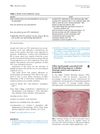
September 2017 in “Journal of the American Academy of Dermatology” In this study, researchers reported that oral isotretinoin effectively treated facial papules in frontal fibrosing alopecia, with histopathologic findings suggesting the involvement of elastic fibers and sebaceous glands in papule formation beyond perifollicular inflammation.
1 citations
,
January 2025 in “Dermatology Practical & Conceptual” This review describes trichoscopy features of lichen planopilaris and frontal fibrosing alopecia, identifying distinct patterns that help differentiate the two conditions.
 12 citations
,
July 2017 in “Journal of cosmetic dermatology”
12 citations
,
July 2017 in “Journal of cosmetic dermatology” This study suggests that infrared thermography may be a useful noninvasive tool for diagnosing active phases of frontal fibrosing alopecia when combined with dermoscopy.
 53 citations
,
May 2010 in “Dermatologic Surgery”
53 citations
,
May 2010 in “Dermatologic Surgery” This article appears to be a table of contents or navigation page for a journal, not presenting any new findings or research results.
5 citations
,
January 2016 in “Skin appendage disorders” This case report describes frontal fibrosing alopecia in a woman with primary biliary cirrhosis and polymyalgia rheumatica, suggesting a possible autoimmune link to this form of hair loss.
November 2024 in “International Journal of Women’s Dermatology” In this study of a Colombian sample, the researchers found that while sex, alopecia location, and symptoms aligned with global reports, age at presentation, tobacco use, and use of wigs and dyes were different from those noted in other countries.
 April 2016 in “The Journal of Sexual Medicine”
 This study analyzed 3,295 cases from the FDA Adverse Event Reporting System to describe demographics and reporting trends of post-finasteride syndrome, finding that most reports came from patients rather than health professionals.
November 2021 in “CRC Press eBooks” This article discusses female pattern androgenic alopecia, emphasizing its impact on women's lives and highlighting the need for further research into effective treatments, but reports no new clinical results.
 January 2024 in “The Egyptian Journal of Hospital Medicine”
 This study found that A-FABP serum levels were significantly higher in male patients with androgenetic alopecia compared to controls, and the authors concluded that A-FABP could serve as a biomarker for early detection of this condition.
 1 citations
,
May 2015 in “Journal of The American Academy of Dermatology”
1 citations
,
May 2015 in “Journal of The American Academy of Dermatology” Lichen planus pigmentosus and fibrosing frontal alopecia in Colombia are likely different stages of the same disease.
 June 2019 in “Journal of Dermatological Treatment”
 This study reported that a novel filler, BM-PHA, demonstrated similar efficacy and safety to Restylane Perlane in treating moderate to severe nasolabial folds over 24 weeks, showing only minor local side effects and similar improvements in wrinkle severity scores between the two treatments.
 October 2023 in “Dermatology practical & conceptual”
 In this case report, folliculitis decalvans with frontal fibrosing alopecia was observed in a patient with a dark phototype, highlighting the phenotypic spectrum of folliculitis decalvans and lichen planopilaris.