August 2025 in “Therapeutics” In this study, low concentrations of DMSO were found to decrease androgen receptor expression and inhibit the migration of prostate cancer cells, suggesting potential as an anticancer therapy.
September 2024 in “Journal of the American Academy of Dermatology” This study found that MF patients with darker skin types show slower initial improvement with NB-UVB phototherapy, highlighting disparities in treatment efficacy that warrant further investigation.
 15 citations
,
August 2019 in “Dermatologic Therapy”
15 citations
,
August 2019 in “Dermatologic Therapy” This letter details a case report on platelet-rich plasma treatment for a patient with treatment-resistant frontal fibrosing alopecia, but it does not provide new clinical results.
5 citations
,
October 2022 in “Materials Research Express” This study found that zinc oxide and fucoidan-loaded chitosan nanofiber scaffolds may enhance wound healing and provide antibacterial protection against common surgical pathogens in vitro.
15 citations
,
February 2011 in “Experimental Dermatology” This study found that in a mouse model, betamethasone dipropionate reduced epidermal thickness while fish oil unexpectedly increased it, validating optical coherence tomography as an effective measurement tool.
 December 2015 in “Actas Dermo-Sifiliográficas”
 This review addresses the challenges in treating frontal fibrosing alopecia, highlighting the limited effectiveness of medical treatments and the demand for hair transplantation despite its risks, but it reports no new clinical results.
 March 2025 in “Journal of Clinical Medicine”
 This review discusses the unique clinical features, challenges in diagnosis, and treatment protocols of frontal fibrosing alopecia in men, noting the overlap with other types of alopecia and the need for further studies.
 August 2024 in “JEADV Clinical Practice”
 In this clinical trial, 16 women with frontal fibrosing alopecia experienced significant improvements in hair density, vellus hair count, and quality of life after monthly intralesional dutasteride treatments, though larger and longer-term studies are needed to confirm these findings.
6 citations
,
June 2012 in “PloS one” This study identified a novel SCF mRNA splice variant in white merino sheep skin, which may play a role in hair follicle melanogenesis.
 39 citations
,
July 2015 in “British Journal of Dermatology”
39 citations
,
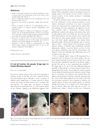
July 2015 in “British Journal of Dermatology” This article discusses the pseudo 'fringe sign' in frontal fibrosing alopecia, highlighting that it is not solely related to traction, and it reports no new clinical results.
 September 2017 in “Journal of Investigative Dermatology”
 This study found that infrared thermography might be a useful non-invasive tool to help diagnose frontal fibrosing alopecia by identifying active phases of the disease.
 2 citations
,
April 2023 in “Cutis”
2 citations
,
April 2023 in “Cutis” This systematic review discusses the treatment characteristics and outcomes for frontal fibrosing alopecia specifically in Black patients with skin of color, addressing a gap in clinical evidence due to underrepresentation in studies.
February 2026 in “Colloids and Surfaces B Biointerfaces” The composite dressing improved wound healing and hair growth in mice.
December 2023 in “Animals” In this study, researchers analyzed miRNA and gene expression in the hair follicles of FMD during different hair cycle stages, identifying differential expression patterns and key pathways involved in hair follicle development and growth.
 38 citations
,
January 2019 in “International Journal of Women's Dermatology”
38 citations
,
January 2019 in “International Journal of Women's Dermatology” This review discusses potential therapeutic options for frontal fibrosing alopecia by exploring distinct signaling pathways and cellular players, but reports no new clinical findings and emphasizes the need for further trials.
March 2026 in “Frontiers in Bioengineering and Biotechnology” In this study, researchers demonstrated that fibroblasts derived from human embryonic stem cells can be used to create tissue-engineered dermal substitutes, effectively repairing mouse skin wounds within 20 days, highlighting a promising method for clinical applications in skin repair.
 36 citations
,
January 2018 in “Scientific reports”
36 citations
,
January 2018 in “Scientific reports” This study observed that dietary intake of glucoraphanin during juvenile and adolescent stages prevented cognitive deficits and abnormal gene expressions in the brain of adult offspring exposed to maternal immune activation, potentially implicating centrosome-related genes in the development of psychosis.
July 2026 in “Materials Today Bio” This study demonstrated that in a mouse melanoma wound model, the MQ Microneedles effectively managed ROS levels to inhibit tumor growth and promote wound healing through light-controlled release.
 8 citations
,
October 2016 in “Actas Dermo-Sifiliográficas”
8 citations
,
October 2016 in “Actas Dermo-Sifiliográficas” This study found that men with frontal fibrosing alopecia exhibited more frequent facial papules, androgenetic alopecia, and body hair loss compared to women with the condition, and were generally older.
 12 citations
,
July 2017 in “Journal of cosmetic dermatology”
12 citations
,
July 2017 in “Journal of cosmetic dermatology” This study suggests that infrared thermography may be a useful noninvasive tool for diagnosing active phases of frontal fibrosing alopecia when combined with dermoscopy.
 9 citations
,
March 1968 in “The BMJ”
9 citations
,
March 1968 in “The BMJ” In their 1957 study, Neuman and Neuman suggested that magnesium deficiency may inhibit the ion exchange process required for calcium ions to enter extracellular fluid, potentially affecting calcium mobilization.
 November 2022 in “Research Square (Research Square)”
 This study identified key genes and pathways involved in the growth and development of forest musk deer hair follicles, providing insights into molecular regulation and laying groundwork for future research on related diseases.
 8 citations
,
December 2017 in “Journal of The American Academy of Dermatology”
8 citations
,
December 2017 in “Journal of The American Academy of Dermatology” This correspondence discusses the diagnostic criteria for frontal fibrosing alopecia but reports no new research findings, agreeing with many previously suggested criteria.
113 citations
,
July 2020 in “International Journal of Molecular Sciences” This review suggests that allogenic adipose stem cell and extracellular matrix transplants may be safe and effective for various medical conditions, based on available studies.
November 2004 in “Emergency Medicine News” This article reviews the clinical characteristics, treatment challenges, and epidemiology of community-acquired methicillin-resistant Staphylococcus aureus infections, highlighting their spread outside traditional hospital settings but presenting no new clinical results.
66 citations
,
June 2004 in “Development” This study found that FGF signaling is necessary for the initiation of feather placode development in chicken embryos, with FGF10 being implicated as an early dermal signal in the process.
 1 citations
,
June 2014 in “International Journal of Dermatology”
1 citations
,
June 2014 in “International Journal of Dermatology” This correspondence discusses follicular mucinosis in association with pregnancy but does not report new clinical results, instead calling attention to the observed connection.
April 2024 in “Biosaintifika Journal of Biology & Biology Education” In this study, researchers observed that a topical gel containing 20% hypoxia mesenchymal stem cell secretome significantly reduced IL-15 and IFN-γ mRNA expression and baldness by 60% in male Wistar rats with fluconazole-related alopecia.
 6 citations
,
July 2009 in “Biomolecules & therapeutics”
6 citations
,
July 2009 in “Biomolecules & therapeutics” This study found that combining MSM with MAP significantly enhanced hair growth in mice, comparable to or better than minoxidil, due to increased intradermal retention of MAP.
 February 2026 in “Scientific Reports”
 This preclinical study found that Mesenchymal Stem Cell-derived Conditioned Media formulations were safe and effective in rat and mouse models for treating chemotherapy- and radiation-induced oral mucositis, demonstrating improved tissue regeneration and healing, most notably at higher concentrations.