 December 2021 in “Research Square (Research Square)”
 This study found that repeatedly collecting hair follicles from individuals with fragile X syndrome is feasible for measuring FMR1 and FMRP levels in both home and office settings.
 December 2021 in “International Journal of Research in Dermatology”
 This study found that while female pattern hair loss in young to middle-aged women was commonly associated with markers of hyperandrogenism and specific histopathological features, its exact causes and treatment remain unclear.
 1 citations
,
March 2023 in “Frontiers in Cardiovascular Medicine”
1 citations
,
March 2023 in “Frontiers in Cardiovascular Medicine” A specific gene variant is linked to heart disease, increased heart muscle, curly hair, and thick skin on palms and soles.
34 citations
,
March 2009 in “Journal of Investigative Dermatology” Proteomic analysis can identify genetic differences in mouse hair, helping understand hair defects and variations.
4 citations
,
July 2025 in “Annals of the New York Academy of Sciences” This review emphasizes that collaboration between forensic anthropology and molecular anthropology could significantly improve the identification of unknown human remains by creating more comprehensive biological profiles.
February 1989 in “PubMed” This study found a genetic electrophoretic variant in high-sulfur proteins from human hair, which was more prevalent in the Japanese samples compared to Caucasian samples, suggesting an autosomal inheritance pattern.
 8 citations
,
April 2016 in “Anais Brasileiros De Dermatologia”
8 citations
,
April 2016 in “Anais Brasileiros De Dermatologia” This study found that males with androgenetic alopecia had a significantly lower 2D:4D digit length ratio in the right hand compared to healthy controls, which may indicate prenatal androgen exposure.
 7 citations
,
August 2009 in “Applied Mathematics and Mechanics-English Edition”
7 citations
,
August 2009 in “Applied Mathematics and Mechanics-English Edition” This study demonstrates that (9+2) topological patterns derived from fractal fiber sets exist, with nine total patterns and only two being independent or fundamental.
 11 citations
,
November 2005 in “The Journal of Dermatology”
11 citations
,
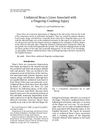
November 2005 in “The Journal of Dermatology” This report presents a unique case where a man developed Beau's lines on all fingers of one hand after a thumb injury, with the lines eventually disappearing as the nails grew.
 6 citations
,
July 2018 in “Advances in Clinical and Experimental Medicine”
6 citations
,
July 2018 in “Advances in Clinical and Experimental Medicine” This study found that scalp hair follicles had higher expression of cytokeratin 15 and distinct hair layers compared to other body regions, highlighting differences in hair follicle characteristics.
 40 citations
,
January 2013 in “International journal of trichology”
40 citations
,
January 2013 in “International journal of trichology” This study found that among women with frontal fibrosing alopecia, 100% showed dermoscopic elements suggestive of the condition, with perifollicular erythema often indicating disease activity.
17 citations
,
June 2003 in “The journal of investigative dermatology. Symposium proceedings/The Journal of investigative dermatology symposium proceedings” This study found that genes in the human keratin-associated protein 1 family may have evolved mainly through gene duplication of cysteine-repeat motifs.
 December 2022 in “Journal of neurodevelopmental disorders”
 This study observed that repeated hair follicle sampling is feasible and reliable for measuring FMR1 mRNA and FMRP in individuals with Fragile X syndrome, supporting its use in longitudinal studies.
July 1993 in “Journal of Radioanalytical and Nuclear Chemistry” Mouse hair element patterns vary, making it unreliable for tracking time.
 30 citations
,
November 2013 in “Journal of The American Academy of Dermatology”
30 citations
,
November 2013 in “Journal of The American Academy of Dermatology” This study reported that patterns of fibrosis identified through elastin staining may help distinguish specific forms of primary cicatricial alopecia in biopsy specimens, with certain patterns suggesting particular diagnoses.
 16 citations
,
July 2016 in “Veterinary Dermatology”
16 citations
,
July 2016 in “Veterinary Dermatology” This study found that dermoscopy can identify distinctive features in canine pattern alopecia, such as hair shaft thinning and pigmentation patterns, which may aid in diagnosing this and potentially other skin disorders.
 1 citations
,
October 2017 in “ecancermedicalscience”
1 citations
,
October 2017 in “ecancermedicalscience” This study observed that the molecular structure of keratins in hair fibres' discrete transition zone differs in breast cancer patients, with altered lipid ester absorption bands reverting post-cancer removal.
April 1977 in “Pediatric Research” January 2011 in “Journal of Diagnosis and Therapy on Dermato-venereology” This study found that female pattern hair loss may be influenced by genetic factors and hormonal changes, particularly in young adults, and identified specific dermoscopic features associated with the condition.
119 citations
,
January 2000 in “British Journal of Dermatology” This study found that keratin expression patterns vary within nail unit structures, with the nail matrix uniquely expressing the acidic hair-type keratin Ha1.
33 citations
,
September 1987 in “American Journal of Medical Genetics” This study documents dominant transmission and complete penetrance of uncombable hair syndrome in a family, despite the father lacking visible abnormalities.
7 citations
,
March 1993 in “International Journal of Oncology” This study found that the keratin expression in basal cell carcinoma resembles that of the pilosebaceous apparatus, with uniform presence of certain keratins in all cases.
 February 2026 in “Frontiers in Medicine”
 This study found that fibrosing alopecia in a pattern distribution in Hispanic male patients often resembles androgenetic alopecia, with a tendency for earlier onset compared to European and North American populations.
29 citations
,
February 1989 in “Journal of Cutaneous Pathology” This case report identifies a new type of hair matrix tumor called "rippled pattern trichomatricoma," distinguished by its unique cell arrangement and differentiation features.
This study identified vertex accentuation as the second most common pattern of female pattern hair loss in Asian women.
 2 citations
,
April 2021 in “Journal of The American Academy of Dermatology”
2 citations
,
April 2021 in “Journal of The American Academy of Dermatology” This study found that female pattern hair loss was highly prevalent among a multiracial Brazilian population, affecting over 30% of women, and age was a significant risk factor.
October 2022 in “International Journal of Research in Dermatology” This study suggests that hormonal disturbances play a role in female pattern hair loss and that trichoscopy may be a useful tool for diagnosis and differentiation from other conditions.
95 citations
,
March 2009 in “Differentiation” Gene expression in wool follicles changes with growth cycles, offering insights into wool and human hair growth.
 April 2019 in “Journal of Investigative Dermatology”
 The researchers reported that different allergens showed unique patterns based on season, gender, and age among patients with allergic skin rashes, with notable differences in allergen predispositions across groups.
 27 citations
,
April 2011 in “International journal of legal medicine”
27 citations
,
April 2011 in “International journal of legal medicine” This study reports that the completeness of DNA degradation in hair during cornification varies among individuals and affects the success rates of forensic hair DNA analysis.