 January 1999 in “Journal of the European Academy of Dermatology and Venereology”
 RAPK is a rare skin disorder with pigmented spots, mainly on hands and feet, starting in youth.
15 citations
,
July 1998 in “PubMed” This study found that fentanyl accumulates differently in mouse hair after systemic administration compared to external loading, suggesting ionizable functionalities of hair influence drug retention from organic solutions.
 234 citations
,
February 2001 in “British Journal of Dermatology”
234 citations
,
February 2001 in “British Journal of Dermatology” FPHL affects hair density and diameter, causing visible hair loss in older women.
52 citations
,
May 2006 in “Journal of Structural Biology” This study identified two key pentapeptide quasi-repeats in human keratin-associated proteins, which are similar to motifs found in sheep wool.
 January 2025 in “International Journal of Scientific Research”
 This study found that female pattern hair loss was present in 12.5% of PCOS patients examined, with most cases in younger women, highlighting early detection and management importance.
49 citations
,
September 2004 in “Journal of the European Academy of Dermatology and Venereology” This study found that careful light microscopy using fluid-mounted hair improves detection of the pili annulati phenotype, which varies widely in expression and affects hair fragility.
27 citations
,
September 1988 in “PubMed” In this study, researchers used three-dimensional reconstruction to show that the shape of the hair follicle determines the hair's form, with variations observed among different racial groups.
This study found that structural changes in the stroma surrounding hair follicles and skin laxity are associated with the appearance of large pores, regardless of ethnicity or age.
January 2021 in “Asian Journal of Pharmaceutical and Clinical Research” This study examined the effectiveness of FT-Raman spectroscopy for detecting polymorphism in Lamivudine and Finasteride, highlighting its advantages over other methods due to its capability to provide sharp, well-resolved spectral bands and reduced sampling issues.
15 citations
,
December 1972 in “Journal of Investigative Dermatology” 4 citations
,
April 2018 in “Journal of vacuum science and technology. B, Nanotechnology & microelectronics” This study demonstrated the potential of a methodology combining ToF-SIMS and AFM to effectively analyze human hair structure and identify cosmetic residues, which can aid the cosmetic industry in product development.
November 2024 in “Journal of Microscopy” This study found that micro-computed tomography (micro-CT) was highly effective for analyzing the cross-sectional geometry of hair fibres, including the medulla in highly curled hair, but less effective than scanning electron microscopy for surface details.
 July 2024 in “Clinical and Experimental Dermatology”
 This study found distinct hair loss patterns among 112 women with female pattern hair loss, identifying unique presentations specifically in Asian, including South Asian, and Black women, which may influence treatment response across different racial groups.
30 citations
,
January 1999 in “Journal of Cutaneous Pathology” This study suggests that spiny keratoderma may be an ectopic hair formation on palms and soles, based on keratinization patterns observed using antikeratin antibodies and electron microscopy.
43 citations
,
August 1994 in “Journal of Investigative Dermatology” 2 citations
,
January 2017 Hair movement can indicate hair quality and health.
 5 citations
,
February 2017 in “Australasian Journal of Dermatology”
5 citations
,
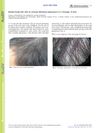
February 2017 in “Australasian Journal of Dermatology” This report describes three cases of hair loss that appear consistent with cicatricial pattern hair loss, a possible new subtype of scarring alopecia presenting in a female pattern hair loss distribution.
 1 citations
,
January 2018 in “Acta dermato-venereologica”
1 citations
,
January 2018 in “Acta dermato-venereologica” A teenager's hair with alternating white and dark bands, known as Pili annulati, is a genetic condition that is usually harmless and often considered attractive.
May 2016 in “DOAJ (DOAJ: Directory of Open Access Journals)” This study found that vertex accentuation is the second most common pattern of female pattern hair loss in Asian women, following the diffuse type.
 2 citations
,
June 2006 in “Experimental dermatology”
2 citations
,
June 2006 in “Experimental dermatology” This article discusses the development of skin patterns during embryogenesis and postnatal life, linking them to genetic, environmental, and mathematical factors, but presents no new empirical findings.
January 2000 in “Zhongguo yixue wulixue zazhi” This study observed that human hair keratin showed distinct morphological features depending on the dissolution speed, which could have potential applications in clinical settings for developing self-tendons.
 March 2023 in “Journal of Cosmetic Dermatology”
 This case report illustrates that fibrosing alopecia in a pattern distribution may be misdiagnosed as androgenetic alopecia due to similar hair loss patterns, but distinctive trichoscopic and histopathologic features help differentiate it.
October 2025 in “Clinical and Experimental Dermatology” Among patients with biopsy-proven FAPD in specialized hair clinics, this study found the condition is common in females around 52.5 years old, with treatment generally stabilizing or slightly improving hair loss, despite challenges in differentiating FAPD from androgenetic alopecia.
July 2026 in “Anais Brasileiros de Dermatologia” This study reported that both AGA and SD in Caucasian male patients showed overlapping histopathological features with FAPD, particularly perifollicular fibrosis and inflammation, complicating diagnosis.
 13 citations
,
May 2004 in “Facial Plastic Surgery Clinics of North America”
13 citations
,
May 2004 in “Facial Plastic Surgery Clinics of North America” This article discusses the significance of anatomic zones in hair loss and underscores the importance for hair restoration surgeons to understand these patterns and their implications for future treatments, but reports no new clinical findings.
 46 citations
,
January 2015 in “Journal of The American Academy of Dermatology”
46 citations
,
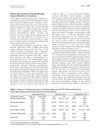
January 2015 in “Journal of The American Academy of Dermatology” This study suggests that trichoscopic features, such as perifollicular erythema and cicatricial white patches, are independently associated with pruritus and the severity of frontal fibrosing alopecia.
 39 citations
,
July 2015 in “British Journal of Dermatology”
39 citations
,
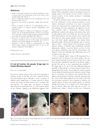
July 2015 in “British Journal of Dermatology” This article discusses the pseudo 'fringe sign' in frontal fibrosing alopecia, highlighting that it is not solely related to traction, and it reports no new clinical results.
 September 2015 in “Dermatologic Surgery”
 In this study, the researchers developed a computer-aided imaging system to quantitatively measure baldness in Chinese women with female pattern hair loss, potentially improving the precision of severity evaluation compared to traditional scales.
January 2019 in “Florida International University Digital Commons (Florida International University)” This research describes using advanced mass spectrometry imaging techniques to analyze gunshot residue and map molecular components in biological samples, such as tumors and mosquito ovarian follicles, at unprecedented spatial resolution and specificity.
17 citations
,
September 2022 in “Biomaterials Research” This study found that the film-trigger applicator system enhanced drug delivery efficiency and skin penetration of dissolving microneedles compared to traditional patch systems in both lab and animal models.