 24 citations
,
June 2020 in “Industrial Crops and Products”
24 citations
,
June 2020 in “Industrial Crops and Products” This study reports that biomass activated carbon fibers derived from metaplexis japonica seed hair effectively adsorb methylene blue dye, demonstrating high capacity and rapid adsorption performance.
 23 citations
,
March 2019 in “Journal of Essential Oil Research”
23 citations
,
March 2019 in “Journal of Essential Oil Research” This study found a strong correlation between antioxidant activity and phenolic content in rosemary, influenced by bioclimatic and seasonal factors in different stages of Tunisia.
 17 citations
,
August 2015 in “PLoS ONE”
17 citations
,
August 2015 in “PLoS ONE” This study found that deferiprone significantly reduced dermal fibrosis and skin thickness in mice with chronic kidney disease treated with Omniscan, suggesting iron's role in gadolinium chelate toxicity and nephrogenic systemic fibrosis.
 12 citations
,
July 2020 in “International Journal of Pharmaceutics”
12 citations
,
July 2020 in “International Journal of Pharmaceutics” This study found that finasteride- and dutasteride-loaded iron oxide nanoparticles improved drug penetration in the skin, suggesting they may be promising for topical alopecia therapies.
 11 citations
,
September 2020 in “Journal of Cosmetic Dermatology”
11 citations
,
September 2020 in “Journal of Cosmetic Dermatology” This study found that Blumea eriantha silver nanoparticles promoted hair growth in treated animals, with activity comparable to minoxidil in terms of anagen follicle transition.
 11 citations
,
February 2018 in “Amino acids”
11 citations
,
February 2018 in “Amino acids” This study found that homocysteine-keratin accumulation in human hair increases towards the tips, linked to copper/iron-catalyzed demethylation of methionine, and may contribute to keratin damage.
 10 citations
,
January 2017 in “Journal of Evidence-Based Complementary & Alternative Medicine”
10 citations
,
January 2017 in “Journal of Evidence-Based Complementary & Alternative Medicine” This study found that several local vegetables from Northern Thailand demonstrated significant antioxidant and 5α-reductase inhibitory activities, suggesting their potential for development into health-promoting products.
 9 citations
,
January 2021 in “RSC Advances”
9 citations
,
January 2021 in “RSC Advances” Non-thermal plasma helps hair grow by improving the area around hair follicles.
 8 citations
,
September 2022 in “Biointerface Research in Applied Chemistry”
8 citations
,
September 2022 in “Biointerface Research in Applied Chemistry” This review examines the pharmacological potential of quinoline alkaloids from Cinchona bark for developing new drugs and cosmetics but reports no new findings.
 5 citations
,
February 2020 in “European Food Research and Technology”
5 citations
,
February 2020 in “European Food Research and Technology” This study provides a detailed profile of bioactive polyphenols in various parts of the baobab fruit, highlighting its potential as a health-promoting food or supplement.
 5 citations
,
February 2019 in “bioRxiv (Cold Spring Harbor Laboratory)”
5 citations
,
February 2019 in “bioRxiv (Cold Spring Harbor Laboratory)” This study found that in a mouse model of Leigh syndrome, rapamycin alters brain proteome and may extend survival by targeting protein kinase C.
 3 citations
,
January 2024 in “Materials advances”
3 citations
,
January 2024 in “Materials advances” This article reviews the properties of cellulose nanocrystals for sustainable development but presents no new experimental results.
 3 citations
,
October 2010 in “Wiley-VCH Verlag GmbH & Co. KGaA eBooks”
3 citations
,
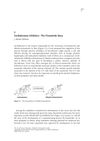
October 2010 in “Wiley-VCH Verlag GmbH & Co. KGaA eBooks” Finasteride safely treats enlarged prostate and male-pattern baldness.
 2 citations
,
January 2024 in “Journal of Pharmacognosy and Phytochemistry”
2 citations
,
January 2024 in “Journal of Pharmacognosy and Phytochemistry” The study highlights Teak's (Tectona grandis) diverse applications beyond high-quality timber, emphasizing its bioactive compounds' pharmacological potential in cancer treatment and other uses across traditional medicine, cosmetics, and biodiesel production.
 2 citations
,
April 2023 in “Pharmacognosy Journal”
2 citations
,
April 2023 in “Pharmacognosy Journal” This study found that bio fabricated herbal silver nanoparticles from Blumea lacera extracts demonstrated significant antibacterial activity against Staphylococcus aureus and Escherichia coli, and notable anti-inflammatory effects, though their antioxidant capacity was insignificant compared to the extract.
 2 citations
,
August 2018 in “Korean Journal of Plant Resources”
2 citations
,
August 2018 in “Korean Journal of Plant Resources” This study found that oregonin, isolated from Alnus japonica, demonstrated strong antioxidant activity and apoptosis modulation in hair follicle cells, suggesting its potential as a natural ingredient for preventing hair loss in cosmetic products.
 2 citations
,
March 2014 in “Journal of Korean Medicine”
2 citations
,
March 2014 in “Journal of Korean Medicine” This review of the Journal of Korean Medicine found that most Romanized prescription names did not fully conform to the Society of Korean Medicine's guidelines, indicating a need for standardized regulations.
 1 citations
,
June 2025 in “Frontiers in Bioengineering and Biotechnology”
1 citations
,
June 2025 in “Frontiers in Bioengineering and Biotechnology” This review examines glycopeptide hydrogels as biomimetic materials for tissue regeneration and other biomedical applications, describing their design, properties, and potential uses, and highlighting future advancements in replicating natural tissue environments for precision medicine.
 1 citations
,
October 2024 in “Journal of King Saud University - Science”
1 citations
,
October 2024 in “Journal of King Saud University - Science” In this in vitro study, extracts from Tridax procumbens demonstrated potential antioxidant and anticancer activity against various human cancer cell lines, with notable efficacy in specific fractions.
 1 citations
,
January 2021 in “JIFFK Jurnal Ilmu Farmasi dan Farmasi Klinik”
1 citations
,
January 2021 in “JIFFK Jurnal Ilmu Farmasi dan Farmasi Klinik” In this study, the researchers found that while the chitosan-alginate gel base supported hair growth, the addition of 0.5% celery extract did not enhance growth, likely due to its low concentration.
 1 citations
,
January 2021 in “Journal of biological chemistry/The Journal of biological chemistry”
1 citations
,
January 2021 in “Journal of biological chemistry/The Journal of biological chemistry” This study found that loss of the folliculin protein delays transferrin receptor recycling, leading to iron deficiency and suggesting a role in the mechanisms of Birt-Hogg-Dubé syndrome.
 1 citations
,
January 2019 in “Journal of Pharmacognosy and Phytochemistry”
1 citations
,
January 2019 in “Journal of Pharmacognosy and Phytochemistry” This article reviews the potential health benefits of onions, highlighting their anti-inflammatory, anticancer, and antioxidant properties, but does not report any new clinical results.
 July 2026 in “International Journal of Drug Delivery Technology”
 This study found that a combination of curcumin and piperine demonstrated moderate antioxidant activity, negligible cytotoxicity, and significant potential for promoting hair regrowth in rat models of alopecia, suggesting it could be a safe and effective natural alternative for managing hair loss.
 July 2026 in “International Journal of Pharmaceutical Research and Development”
 This study developed a herbal hair serum using Bougainvillea glabra extract and found it to be a safe and stable formulation with potential for promoting hair growth, reducing hair fall, and nourishing the scalp, without causing skin irritation.
 June 2026 in “Frontiers in Marine Science”
 This study found that Codium sp. cultivated in IMTA systems can be a sustainable source of bioactive ingredients for skin care products, with various fractions providing photoprotective, wound-healing, and antimicrobial benefits in vitro.
 May 2026 in “International Journal of Research Publication and Reviews”
 The researchers reported that a polyherbal hair dye using Phyllanthus reticulatus fruit provided effective color, stability, and scalp compatibility without irritation, positioning it as a safe and eco-friendly alternative to synthetic dyes.
 April 2026 in “International Journal for Research in Applied Science and Engineering Technology”
 In this study, the developed polyherbal shampoo with Hibiscus rosa-sinensis exhibited good stability and cleansing properties, suggesting it may be an effective natural alternative to synthetic anti-hair fall products.
 April 2026 in “Inflammopharmacology”
 This study found that Punica granatum ethanolic leaf extract may alleviate skin fibrosis in rats by modulating inflammation-related pathways and reducing dermal alterations.
 April 2026 in “International Journal of Nanomedicine”
 This review explores quercetin's potential in multifunctional theranostic systems, highlighting its bioactivity and the challenges of improving its clinical application through innovative strategies like nanoencapsulation, while noting that research in this area is underdeveloped.
 March 2026 in “Tissue Engineering and Regenerative Medicine”
 In this review, the authors discuss recent advancements in underwater adhesion technologies, specifically highlighting mussel-inspired catechol-based adhesives, which offer strong underwater bonding through various interfacial interactions and the influence of dopamine-modified polymeric tissue adhesives.