 53 citations
,
May 2010 in “Dermatologic Surgery”
53 citations
,
May 2010 in “Dermatologic Surgery” This article appears to be a table of contents or navigation page for a journal, not presenting any new findings or research results.
 6 citations
,
January 2019 in “Medical Hypotheses”
6 citations
,
January 2019 in “Medical Hypotheses” This hypothesis article explores frontal fibrosing alopecia as a potential autoimmune condition and calls for future research to investigate this possibility, but reports no new clinical results.
June 2025 in “Journal of Ultrasound in Medicine” This study reports that high-frequency ultrasound can characterize frontal fibrosing alopecia by assessing dermal atrophy, hair follicle changes, and subclinical inflammation.
 17 citations
,
November 2018 in “Dermatology”
17 citations
,
November 2018 in “Dermatology” The authors concluded that Hispanic/Latino ethnicity, facial papules, and premenopausal status in patients with frontal fibrosing alopecia may indicate a susceptibility to more severe disease, potentially necessitating early treatment.
 September 2021 in “Clinical research in dermatology”
 This review discusses frontal fibrosing alopecia and reports no new clinical results; the authors highlight the need for randomized controlled trials on 5AR inhibitors to assess their efficacy and safety.
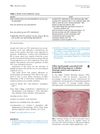 32 citations
,
September 2017 in “Journal of the American Academy of Dermatology”
32 citations
,
September 2017 in “Journal of the American Academy of Dermatology” In this study, researchers reported that oral isotretinoin effectively treated facial papules in frontal fibrosing alopecia, with histopathologic findings suggesting the involvement of elastic fibers and sebaceous glands in papule formation beyond perifollicular inflammation.
 1 citations
,
July 2018 in “Elsevier eBooks”
1 citations
,
July 2018 in “Elsevier eBooks” This review discusses the pathogenesis and clinical features of androgenetic alopecia, highlighting potential links to fibrosing alopecia and suggesting the need for combined therapeutic approaches; it reports no new clinical results.
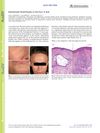 1 citations
,
January 2019 in “Acta dermato-venereologica”
1 citations
,
January 2019 in “Acta dermato-venereologica” The woman's skin and hair symptoms were confirmed as frontal fibrosing alopecia, and while facial papules are common in such cases, there's no effective local treatment, but systemic treatments can help.
3 citations
,
June 2016 in “JEADV. Journal of the European Academy of Dermatology and Venereology/Journal of the European Academy of Dermatology and Venereology” This letter to the editor describes a case of postcast hypertrichosis in a patient with frontal fibrosing alopecia and reports no new research findings.
December 2018 in “International journal of women’s dermatology” This case report highlights that frontal fibrosing alopecia may be underrecognized in young women and notes that no single treatment regimen has been proven consistently effective for this condition.
2 citations
,
July 2025 in “Journal of the European Academy of Dermatology and Venereology” This study involved 69 hair experts using a Delphi process to achieve consensus on treating frontal fibrosing alopecia, finding strong agreement on disease monitoring but less on physical and systemic therapies, indicating the need for more research.
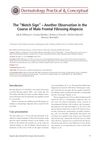 1 citations
,
April 2024 in “Dermatology Practical & Conceptual”
1 citations
,
April 2024 in “Dermatology Practical & Conceptual” Hair loss in male frontal fibrosing alopecia may spare areas covered by a wristwatch.
 9 citations
,
August 2018 in “Journal der Deutschen Dermatologischen Gesellschaft”
9 citations
,
August 2018 in “Journal der Deutschen Dermatologischen Gesellschaft” This study provides the most comprehensive review to date of published cases of frontal fibrosing alopecia, emphasizing a notable association with thyroid disease.
 3 citations
,
November 2020 in “Clinical, Cosmetic and Investigational Dermatology”
3 citations
,
November 2020 in “Clinical, Cosmetic and Investigational Dermatology” This review summarizes the current treatment modalities for frontal fibrosing alopecia and provides a practical guide for clinicians, but reports no new clinical results.
 7 citations
,
October 2015 in “Actas Dermo-Sifiliográficas”
7 citations
,
October 2015 in “Actas Dermo-Sifiliográficas” This article reviews the increasing incidence of frontal fibrosing alopecia since its first description in 1994 and reports no new results.
 November 2022 in “The journal of investigative dermatology/Journal of investigative dermatology”
 This study suggests that allergens like linalool found in personal care products may contribute to the pathobiology of frontal fibrosing alopecia by affecting immune responses and stem cell function in hair follicles.
 63 citations
,
October 2011 in “Archives of Dermatology”
63 citations
,
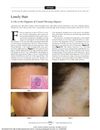
October 2011 in “Archives of Dermatology” Isolated long hairs at the original hairline can help diagnose Frontal Fibrosing Alopecia.
 April 2012 in “Informa Healthcare eBooks”
 Fibrosing alopecia in a pattern distribution is a unique hair loss condition with inflammation and scarring, resembling but distinct from common balding.
 March 2024 in “Journal of cosmetic dermatology”
 This study found that oral isotretinoin significantly reduced symptoms in nearly 90% of patients with frontal fibrosing alopecia, affecting both facial papules and hair loss.
August 2020 in “Benha Journal of Applied Sciences” This study observed that patients with androgenetic alopecia had significantly higher serum FABP4 levels compared to healthy controls, suggesting FABP4 may be involved in the condition's pathogenesis.
26 citations
,
October 2017 in “PubMed” According to this study, systemic retinoids, specifically oral isotretinoin and acitretin, were more effective than finasteride in stabilizing the frontal hairline in female patients with frontal fibrosing alopecia, achieving treatment goals in over 70% of cases.
 15 citations
,
December 2017 in “Journal of The European Academy of Dermatology and Venereology”
15 citations
,
December 2017 in “Journal of The European Academy of Dermatology and Venereology” This letter discusses potential pathogenetic links among frontal fibrosing alopecia, androgenetic alopecia, and fibrosing alopecia in a pattern distribution and reports no new clinical findings.
 40 citations
,
January 2013 in “International journal of trichology”
40 citations
,
January 2013 in “International journal of trichology” This study found that among women with frontal fibrosing alopecia, 100% showed dermoscopic elements suggestive of the condition, with perifollicular erythema often indicating disease activity.
 102 citations
,
April 2014 in “International Journal of Dermatology”
102 citations
,
April 2014 in “International Journal of Dermatology” This study found that early intervention and treatment with intralesional triamcinolone acetonide may stabilize hairline recession in patients with frontal fibrosing alopecia, although further research is needed for definitive treatment guidelines.
7 citations
,
August 2019 in “American Journal of Dermatopathology” This study found that limb hair loss in frontal fibrosing alopecia is inflammatory and permanent, but lacks the classic scarring features seen in scalp alopecia, prompting potential misdiagnosis as alopecia areata.
 April 2023 in “JAAD international”
 This study observed that among a Moroccan population with frontal fibrosing alopecia, common comorbidities included lichen planus pigmentosus (36.8%), rosacea (28.9%), thyroid disorders (23.7%), and dyslipidemia (21.1%), highlighting potential relationships mediated by shared inflammatory or metabolic pathways.
 8 citations
,
December 2017 in “Journal of The American Academy of Dermatology”
8 citations
,
December 2017 in “Journal of The American Academy of Dermatology” This correspondence discusses the diagnostic criteria for frontal fibrosing alopecia but reports no new research findings, agreeing with many previously suggested criteria.
 7 citations
,
January 2019 in “Australasian Journal of Dermatology”
7 citations
,
January 2019 in “Australasian Journal of Dermatology” In this study, the CYP 21A2 gene p.V281L mutation was associated with an increased susceptibility to familial frontal fibrosing alopecia, suggesting an antigen-driven mechanism linked to certain human leukocyte antigen haplotypes.
 17 citations
,
June 2016 in “Australasian Journal of Dermatology”
17 citations
,
June 2016 in “Australasian Journal of Dermatology” In this case report, a 46-year-old woman with familial frontal fibrosis alopecia experienced initial stabilization of hair loss with dutasteride and minoxidil, but artificial hair transplantation led to implant folliculitis, requiring removal of the fibers.
 January 2022 in “Дерматологія та венерологія”
 This paper presents two cases of frontal fibrosing alopecia in postmenopausal women, noting challenges in monitoring due to the invasive nature of the diagnostic process.