21 citations
,
June 2003 in “Journal of Morphology” This study suggests that the epidermis of monotremes and marsupials exhibits a more primitive pattern of protein distribution compared to eutherian mammals, with differences in loricrin distribution and keratinocyte maturation.
9 citations
,
November 2023 in “Pain Physician” This study suggests that IV delivery of ExoFlo may be a safe and effective treatment for addressing symptoms in CRPS patients, warranting further investigation.
October 2014 in “Tesis Doctorals en Xarxa (Consorci de Serveis Universitaris de Catalunya)” This research discusses the time-of-day-dependent role of protein-complex assembly in the differentiation of human epidermal stem cells and highlights the context-dependent functioning of human protein complexes.

This review explores plant-derived exosomes as promising alternatives to synthetic wound-healing agents due to their ability to regulate signaling pathways involved in skin repair, while also addressing challenges in their clinical application.
1 citations
,
January 2013  January 2025 in “Bright Sky Publications eBooks”
 This abstract serves as a promotional notice for a book titled "Essentials of Food Science and Nutrition" by several authors, offering it for sale at a low price, but does not report any research results.
 December 2023 in “Polish Journal of Chemical Technology”
 This study found that Ajuga reptans leaf and root extracts, when incorporated into cosmetic products, improved skin hydration, elasticity, pore size, hyperpigmentation, and wrinkle depth.
 68 citations
,
June 2005 in “Expert Opinion on Therapeutic Targets”
68 citations
,
June 2005 in “Expert Opinion on Therapeutic Targets” This review discusses the influence of oestrogens on various skin components and highlights their modulatory roles and receptor pathways, but it reports no new clinical results.
 1 citations
,
July 2016 in “Elsevier eBooks”
1 citations
,
July 2016 in “Elsevier eBooks” Understanding skin structure and development helps diagnose and treat skin disorders.
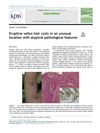 January 2018 in “The Kaohsiung journal of medical sciences”
 This case report describes an atypical presentation of eruptive vellus hair cysts on the elbows, where standard diagnostic techniques were unreliable due to the loss of cystic structural integrity.
December 2025 in “Biopolymers” This study found that chemically treated hair, particularly when subjected to both acid straightening and bleaching, experiences more significant structural damage when exposed to heat, highlighting key changes in both the internal and surface components of hair fibers.
5 citations
,
April 2016 in “PubMed” This article discusses common skin side effects of EGFR inhibitors like cetuximab, noting their management remains based on clinical experience without strict therapy protocols, but provides no new clinical findings.
 20 citations
,
February 2019 in “Genes”
20 citations
,
February 2019 in “Genes” This study identifies a likely pathogenic homozygous missense variant in the AEBP1 gene in a patient with symptoms of classical Ehlers-Danlos syndrome, suggesting new perspectives for EDS classification and research.
This abstract is a list of dermatological conditions and treatments without providing new research findings or clinical results.
17 citations
,
September 1953 in “Journal of Cell Science” This study found that the tetrazolium salt INT is the most effective for revealing dehydrogenase activity and certain histological structures in sheep and other mammals' skin.
January 1991 in “Dermatology” This abstract lists dermatological topics and does not provide new research findings.
12 citations
,
January 2000 in “Biochemical and Biophysical Research Communications” This study characterized the intron-exon organization of human keratin 15 and keratin 19 genes to aid future mutation detection analyses related to potential genetic disorders of keratinization.
3 citations
,
May 2022 in “Dermatologic surgery” This review examines the use of exosomes in skin rejuvenation and hair regeneration but reports no new clinical results, noting challenges in purification and practical use for clinical applications.
March 2026 in “Adipocyte” This study identified transcription elongation as a crucial regulatory factor in adipocyte cell fate, showing that the elongation factors Spt4 and Spt6 are essential for proper adipogenic differentiation by aiding RNA polymerase II progression through key adipogenic genes.
 October 2001 in “WORLD SCIENTIFIC eBooks”
 This compilation on contact and occupational dermatology in the Asia-Pacific region discusses various allergens and irritants without reporting new clinical findings.
 September 2022 in “Institutional Repositories DataBase (IRDB)”
 3D-oxy exosomes may significantly boost hair growth, offering new treatment options for hair loss.
 25 citations
,
November 2018 in “Cell reports”
25 citations
,
November 2018 in “Cell reports” This study found that the ablation of Esrp1 and Esrp2 disrupts epithelial tight junctions by affecting Arhgef11 isoform expressions, highlighting a potential mechanistic link between splicing alterations and epithelial barrier defects.
This study found that dermal papilla cell-derived exosomes may enhance hair follicle regeneration during wound healing by boosting fibroblast hair-inducing capacity and activating the Wnt/β-catenin signaling pathway.
This review highlights recent advances in the use of light exposure for health purposes, examining its role in pathology, therapeutic strategies, and molecular changes, as well as discussing future developments in this globally supported field.
77 citations
,
April 2005 in “Journal of Investigative Dermatology” Repetin is a protein involved in skin and hair development, binding calcium and compensating for other proteins when needed.
 April 2016 in “Journal of Investigative Dermatology”
 This study found that secreted factors from skin-derived precursors, especially those pre-treated with jasmine extract, enhanced keratinocyte growth and influenced reconstructed human epidermis thickness in lab experiments.
 January 2025 in “Journal of Cosmetic Dermatology”
 This source reported that early evidence supports the potential efficacy of exosomes in treating conditions like alopecia, facial rejuvenation, hyperpigmentation, and scarring, but noted that standardization issues need addressing through further studies to better understand their use in aesthetic dermatology.
 September 2019 in “Journal of Investigative Dermatology”
 This study found that using human induced pluripotent stem cells (iPSC) carrying the causal mutation of Epidermolysis Bullosa simplex provides a robust model for understanding its molecular mechanisms and testing potential therapeutic targets.
 June 2006 in “British Journal of Dermatology”
 The document reports unique growth lines in a child after Stevens-Johnson syndrome, skin reaction from parsnips and sun in a girl, and itchy skin with xanthomas in a boy with Alagille syndrome.
 December 1999 in “Eating Disorders”
 This review discusses theories and treatments for body image disturbances and reports no new clinical results.