14 citations
,
November 2018 in “Journal of drug delivery and therapeutics” This article reviewed the preparation, application, and characterization of ethosomes as drug delivery transporters and reported that in a double-blind randomized clinical study, ethosomal acyclovir significantly improved all evaluated parameters in skin delivery, highlighting potential for novel therapies.
 January 2023 in “Journal of cosmetic dermatology”
 This study found that the synthetic retinoid EC23 effectively induces keratinocyte hyperproliferation and enhances hair growth in mice, showing more potency than all-trans retinoic acid.
 13 citations
,
June 2024 in “Asian Pacific Journal of Cancer Prevention”
13 citations
,
June 2024 in “Asian Pacific Journal of Cancer Prevention” The researchers reported that the ethyl ester group in YH239-EE may enhance its ability to induce cell death, making the (+) enantiomer a potentially promising therapy for breast cancer reflected in MCF7 cell studies.
January 2024 in “Wiadomości Lekarskie” This review outlines the evolution and impact of robotic surgery, highlighting past milestones like the da Vinci system’s prominence in prostatectomies and future advances in augmented reality and micro-robotics, while emphasizing that the surgeon's expertise remains essential despite technological progress.
45 citations
,
December 2007 in “The FASEB journal” This study demonstrated that hair follicle bulge stem cells can form epidermis in a tissue-engineered skin model, highlighting the significance of K5/K17 filaments in slow-cycling stem cell subsets.
118 citations
,
April 2020 in “Stem Cell Research & Therapy” This study found that adipose-derived mesenchymal stromal cell secretome, particularly when preconditioned with IFNγ, significantly influences cell motility and anti-inflammatory responses, enhancing its potential as a regenerative therapy.
December 2021 in “OPAL (Open@LaTrobe) (La Trobe University)” This review discusses recent advancements in targeted therapies for vitiligo, highlighting the therapeutic potential of JAK inhibitors and mesenchymal stem cell-derived extracellular vesicles, and reports no new clinical results.
45 citations
,
July 2025 in “Journal of Medicinal Chemistry” This article discusses the development and clinical progress of PROTAC technology, particularly focusing on the New Drug Application for vepdegestrant, an estrogen receptor-targeting PROTAC, marking significant advancements in targeted protein degradation therapies.
June 2026 in “Disease Models & Mechanisms” This editorial introduces a special issue on "In Vitro Models of Human Disease" in DMM, highlighting how these models enhance understanding of disease mechanisms, accelerate drug development, and support personalized treatment strategies.
1 citations
,
November 2023 in “Journal of Spinal Cord Medicine” This study suggests that IT PEP injection may have beneficial effects after spinal cord injury, but additional research is necessary to better understand and optimize its clinical application.
October 2025 in “Frontiers in Medicine” This study confirmed known adverse events and identified new ones related to ixekizumab, offering preliminary safety insights for its clinical use, but noted limitations such as potential underreporting and confounding factors in the spontaneous adverse event reporting systems.
 August 2015 in “MOJ proteomics & bioinformatics”
 This study suggests that epithelial-derived pop-up keratinocytes (ePUKs) may improve regenerative medicine applications due to their specific phenotype and increased expression of proteins involved in regulating cellular movement and wound healing.
August 2011 in “BIO-PROTOCOL” This protocol paper details methods for live imaging and analysis of dividing germline stem cells in C. elegans and reports no new research findings.
September 2023 in “Journal of the American Academy of Dermatology” August 2026 in “Veterinary and Animal Science” This study investigated key genes associated with hair follicle cycle regulation and environmental adaptation in Xinjiang goats, highlighting ELOVL3's role in promoting dermal papilla cell proliferation under varying climates, potentially aiding in cashmere quality improvement and stress-resistant breeding.
 July 2026 in “bioRxiv (Cold Spring Harbor Laboratory)”
 This study identified a new FAK isoform, FAKΔe4, which is regulated by ECM stiffness and affects cell migration, invasion, and mechanosensing in human-derived data and engineered models.
 November 2018 in “Annals of oncology”
 This study found that the computer-controlled RV-01 scalp cooling device helped prevent significant hair loss in metastatic breast cancer patients treated with eribulin, with none of the 16 patients requiring a wig and experiencing minimal discomfort.
October 2022 in “Journal of the ASEAN Federation of Endocrine Societies” This study found that GnRH-a treatment or orchiectomy, which required significantly lower doses of oral estradiol valerate, were more effective than anti-androgens like spironolactone and finasteride in achieving target hormone levels in transgender females in India.
14 citations
,
November 2021 in “Nanoscale” This study's simulations revealed the complex "onion-like" organization of a lipid nanoemulsion droplet containing vitamins A and E for skin delivery, showing distinct concentration patterns of these vitamins within different layers of the nanodroplet.
 January 2024 in “Wiadomości Lekarskie”
 AI and advanced technologies are improving medical diagnostics and treatments.
 April 2018 in “Journal of Investigative Dermatology”
 This study found that the loss of transcription factor Ovol2 in epidermal and hair follicle stem cells leads to migration defects, which are partially improved by deleting the EMT-inducing Zeb1.
 3 citations
,
April 2021 in “Biomolecules & Therapeutics”
3 citations
,
April 2021 in “Biomolecules & Therapeutics” In a mouse model of chemotherapy-induced alopecia, this study found that enhancing ETV2 expression improved angiogenesis and hair regrowth following 5-fluorouracil treatment.
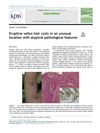 January 2018 in “The Kaohsiung journal of medical sciences”
 This case report describes an atypical presentation of eruptive vellus hair cysts on the elbows, where standard diagnostic techniques were unreliable due to the loss of cystic structural integrity.
 July 2021 in “British Journal of Dermatology”
 Laser treatment for skin conditions VEN and ILVEN is effective and liked by patients.
December 2013 in “대한기계학회 춘추학술대회” This research demonstrates that a temperature controllable medical chilling device using thermal electric cooling technology effectively maintains constant cell temperatures, potentially improving tissue viability during hair transplant procedures.
 May 2026 in “Applied Biochemistry and Biotechnology”
 Lemon-derived vesicles may help hair grow.
42 citations
,
June 2002 in “Molecular and Cellular Biology” In this study, researchers identified distinct chromatin regions and regulatory elements that drive keratinocyte-specific gene expression, highlighting complex enhancer modules influencing skin epithelium through a combination of transcriptional activators and repressors.
August 2026 in “Current Stem Cell Research & Therapy” This study found that extracellular vesicles from mesenchymal and outer root sheath stem cells may inhibit hair follicle stem cell apoptosis, suggesting potential therapeutic benefits for hair loss treatments.
 August 2023 in “Military Medical Research”
 This review highlights that skin organoids, advanced three-dimensional models mimicking human skin, are emerging as effective alternatives to traditional culture models and human skin, overcoming limitations of two-dimensional systems and ethical concerns, and are being increasingly used in areas like developmental biology and disease modeling.
 January 2025 in “ARC Journal of Dermatology”
 In this study, exposure to e-cigarette vapor was reported to trigger the release of proinflammatory cytokines IL-6, IL-8, and IL-10, which could contribute to dermatological issues.