 2 citations
,
October 2000
2 citations
,
October 2000 This report discusses a request for a health hazard evaluation at Equifax in St. Petersburg, Florida concerning potential workplace exposures related to reported employee health issues, particularly hair loss, but provides no new results.
 November 2022 in “The journal of investigative dermatology/Journal of investigative dermatology”
 This study suggests that varicella-zoster virus infection in skin cells may play a role in segmental vitiligo's progression and depigmentation.
 35 citations
,
April 2014 in “American Journal of Medical Genetics”
35 citations
,
April 2014 in “American Journal of Medical Genetics” The study reported a significant genotype–phenotype correlation in prepubescent males with XLHED, particularly in the severity of skin and hair manifestations between those with different EDA mutations.
 9 citations
,
April 2024 in “Cureus”
9 citations
,
April 2024 in “Cureus” This study outlines the features and diagnosis of Vogt-Koyanagi-Harada disease, highlighting its association with specific genes, its prevalence among pigmented races, and treatment with systemic steroids and immunosuppressants.
 1 citations
,
November 2025 in “Wiener Medizinische Wochenschrift”
1 citations
,
November 2025 in “Wiener Medizinische Wochenschrift” This study reports a case of fatal HHV-6 encephalitis and vasculitis in a previously healthy 49-year-old male, highlighting the occurrence of this condition even in individuals without typical risk factors, such as immunocompromised status.
 April 2018 in “Journal of Investigative Dermatology”
 This study found that the absence of Hes1 in hair follicles delays secondary hair germ activation and shortens the anagen phase, impacting HFSC self-renewal and long-term hair regeneration.
 February 2026 in “Orphanet Journal of Rare Diseases”
 This study identified pathogenic or likely pathogenic gene variants in 70.1% of Russian families affected by hypohidrotic ectodermal dysplasia, expanding knowledge of causative mutations.
 August 2026 in “Pharmaceutics”
 In this study, researchers developed a dexpanthenol-infused nanotechnological platform within hyaluronic acid hydrogels that promoted wound healing in mice by providing a protective barrier and significantly enhancing skin regeneration, including increased fibroblast activity and tissue remodeling.
 9 citations
,
May 2019 in “Experimental Cell Research”
9 citations
,
May 2019 in “Experimental Cell Research” This study found that Hedgehog signaling likely contributes to cervical carcinogenesis, and while itraconazole reduced growth in mice, it did so through pathways other than inhibiting Hedgehog signaling.

In this case study, a 70-year-old male with lymphoid variant hypereosinophilic syndrome presented with rare isolated pulmonary involvement, which improved with prednisone treatment.
May 2023 in “Cytotherapy”  30 citations
,
June 2014 in “Seminars in Immunology”
30 citations
,
June 2014 in “Seminars in Immunology” This review discusses recent advances in understanding the Eda pathway's role in developmental biology, and highlights ongoing trials and areas for further research, including Eda's potential involvement in cell processes and disease.
 9 citations
,
May 2013 in “JAMA Dermatology”
9 citations
,
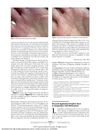
May 2013 in “JAMA Dermatology” This report documents two cases of eruptive nevi occurring in the skin folds of children with Langerhans cell histiocytosis.
9 citations
,
January 2015 in “Indian Dermatology Online Journal” This case report highlights the successful treatment of Kaposi varicelliform eruption in a pemphigus vulgaris patient using intravenous acyclovir, alongside antibiotics, resulting in healing of skin lesions with scarring.
This study found that a modified scaffold with VEGF165 genetically modified hair follicle stem cells significantly promoted blood vessel growth and wound healing in rats, suggesting its potential as a skin substitute in clinical settings.
4 citations
,
January 2017 in “Acta dermato-venereologica” A new EDA gene mutation was found in a Chinese family with a specific skin disorder.
 April 2026 in “Microsystems & Nanoengineering”
 This study developed HA-gel-dex hydrogels with enhanced ECM-like properties and functionality, showing promise for 3D bioprinting, tissue repair, and as wound dressings due to improved cell interaction, cytocompatibility, antimicrobial synergy, and wound healing in mice compared to traditional ECM bio-inks.
 17 citations
,
September 2010 in “Pediatric dermatology”
17 citations
,
September 2010 in “Pediatric dermatology” This report describes a case of widespread Porokeratotic eccrine and hair follicle nevus in a 15-year-old woman with keratitis-ichthyosis-deafness syndrome, involving both eccrine ostia and hair follicle infundibula.
433 citations
,
December 2022 in “Materials Today Bio” This review discusses the use of extracellular vesicle-loaded hydrogels in tissue regeneration and reports no clinical results; the authors highlight their potential and suggest future research directions.
September 2014 in “Archives of disease in childhood” This case report describes a 12-year-old boy who developed severe shingles with skin erosion and hair loss despite early aciclovir treatment after a stem-cell transplant for relapsed acute myeloid leukemia.
 1 citations
,
November 2017 in “Expert opinion on orphan drugs”
1 citations
,
November 2017 in “Expert opinion on orphan drugs” This review discusses the genetic basis of ectodermal dysplasia, highlighting that identification of gene pathologies enhances diagnosis and supports prenatal DNA testing, but it reports no new clinical results.
36 citations
,
February 2017 in “Journal of Cellular and Molecular Medicine” In this study, VEGF165 induced hair follicle stem cells to differentiate into vascular endothelial cells, potentially supporting angiogenesis and neovascularization, with the Notch signaling pathway affecting differentiation efficiency.
February 2014 in “PubMed” This study reports that high-purity rHFSCs with strong proliferation and high VEGF165 expression can be efficiently obtained, facilitating tissue engineering applications like artificial hair follicles and skin construction.

This study identified a missense variant in the EDA gene of a male cat, which likely caused hypohidrotic ectodermal dysplasia, characterized by hair and teeth abnormalities; this represents the first report of such a genetic condition in cats.
 1 citations
,
January 2023 in “Burns and trauma”
1 citations
,
January 2023 in “Burns and trauma” This study found that tdDPC-EVs significantly improved wound healing by enhancing angiogenesis through the KLF4/VEGFA axis, offering advantages over traditional DPC-EVs.
 5 citations
,
October 2018 in “American Journal of Clinical Dermatology”
5 citations
,
October 2018 in “American Journal of Clinical Dermatology” This review discusses major dermatologic conditions occurring in the early post-hematopoietic stem cell transplant period and reports no new clinical results; it underscores dermatologists' role in recognizing critical complications.
 7 citations
,
June 2022 in “Frontiers in Medicine”
7 citations
,
June 2022 in “Frontiers in Medicine” This review discusses the potential of adipose-derived stem cell extracellular vesicles (ADSC-EVs) in skin regeneration, highlighting mechanisms like inflammation and angiogenesis, but reports no new clinical results; challenges and future prospects are also considered.
 October 2025 in “DOAJ (DOAJ: Directory of Open Access Journals)”
 This study highlighted the significant role of VSM in cochlear aging, suggesting that changes in its structure and composition may contribute to the development of various pathologies, including congenital hearing disorders, while also identifying the need for further research on VCM-associated molecules.
7 citations
,
March 2017 in “Experimental and Therapeutic Medicine” This study found that human hair follicle-derived mesenchymal stem cells effectively maintained human embryonic stem cells in an undifferentiated state, comparable to mouse embryonic fibroblasts under standard conditions.
 February 2026 in “International Journal of Molecular Sciences”
 This review explores the potential roles of extracellular vesicles in various medical fields, emphasizing their promise but noting the need for standardization and clinical testing before widespread application.