31 citations
,
February 1982 in “Archives of dermatology” This study found that oral etretinate improved skin conditions like erythrodermic and pustular psoriasis, although less so for psoriasis vulgaris and lichen planus, with notable side effects including cheilitis and mucous membrane dryness.
![Synthesis and Activity of 8-Substituted Benzo[c]quinolizin-3-ones as Dual Inhibitors of Human 5α-Reductases 1 and 2](/images/assets/efc54340-66d6-4f27-9930-045ac023f903/small/15248.jpg) 9 citations
,
November 2004 in “Bioorganic & Medicinal Chemistry Letters”
9 citations
,
November 2004 in “Bioorganic & Medicinal Chemistry Letters” This study identified potent dual inhibitors of 5α-reductases 1 and 2 that may aid in designing new drugs for related diseases.
January 2007 in “Zhōnghuá yàoxué zázhì” This study concluded that two exemestane preparations are bioequivalent, using a high-performance liquid chromatographic mass spectrometric method to measure concentrations in human plasma.
 12 citations
,
June 2022 in “FARMACIA”
12 citations
,
June 2022 in “FARMACIA” This study found that a topical transethosomal system may enhance the skin penetration and deposition of naftifine compared to a marketed cream, potentially overcoming the stratum corneum barrier.
4 citations
,
November 2020 in “Case reports in dermatology” This report summarizes recent cases of the rare condition erythromelanosis follicularis faciei et colli to illustrate its varied clinical presentations.
 9 citations
,
July 2002 in “Journal of the European Academy of Dermatology and Venereology”
9 citations
,
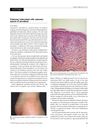
July 2002 in “Journal of the European Academy of Dermatology and Venereology” This article discusses multiple minute digitate hyperkeratosis in a dermatological context and reports no new clinical findings; the authors focus on a descriptive review.
2 citations
,
October 2021 in “Clinical and experimental dermatology” In this study, Cyperus rotundus essential oil was found to have significantly better depigmenting effects than hydroquinone for treating axillary hyperpigmentation, with additional benefits in reducing inflammation and hair growth, making it a cost-effective and safe treatment option.
 6 citations
,
January 2022 in “GSC Biological and Pharmaceutical Sciences”
6 citations
,
January 2022 in “GSC Biological and Pharmaceutical Sciences” This review discusses the ethnobotanical use and bioactivity of Eclipta prostrata, highlighting its potential in treating various conditions and linking its effects to secondary metabolites.
 January 2022 in “Pharmaceutical Sciences Asia”
 This study found that a liposome containing butterfly pea flower extract and clove oil was stable and, when used by 15 volunteers over 60 days, enhanced eyebrow thickness and darkness without causing irritation.
 1 citations
,
April 2025 in “Clinical Cosmetic and Investigational Dermatology”
1 citations
,
April 2025 in “Clinical Cosmetic and Investigational Dermatology” This study reports two cases of erlotinib-induced erosive pustular dermatosis of the scalp in patients with non-small cell lung cancer, emphasizing the need for dermatological monitoring during EGFR inhibitor therapy.
 May 2019 in “Asian Journal of Pharmaceutical and Clinical Research”
 This study found that the ethyl acetate and chloroform fractions of Eclipta prostrata Linn. exhibited significant anti-inflammatory activity in a carrageenan-induced paw edema model and showed notable anti-arthritic potential in a formaldehyde-induced arthritis model.
 40 citations
,
January 2018 in “Pharmaceutics”
40 citations
,
January 2018 in “Pharmaceutics” This study found that nanoemulsions incorporating skin penetration enhancers significantly increased the permeation of minoxidil through human skin compared to aqueous control solutions.
 March 2026 in “Zenodo (CERN European Organization for Nuclear Research)”
 This review compiles existing knowledge on the botanical characteristics, traditional uses, phytochemistry, and pharmacological activities of Eclipta alba, highlighting its potential therapeutic properties and encouraging further pharmacological and phytochemical exploration of this traditionally used medicinal plant.
This study found that combining prodigiosin and essential oil from Thuja orientalis leaves showed a synergistic effect against the 3rd larva stage of Cx. pipiens, significantly reducing acetylcholine esterase activity and altering midgut pH, compared to untreated larvae.
32 citations
,
March 2006 in “PubMed” This article reviews treatment options for unwanted facial hair in women, noting that eflornithine 13.9% cream reduces hair growth rate and can be combined with other methods.
 May 2025 in “The Journal of Rheumatology”
 In this case report, researchers detailed the clinical management and positive outcome of a 62-year-old woman with catastrophic antiphospholipid syndrome associated with systemic lupus erythematosus, highlighting the potential effectiveness of Eculizumab in achieving disease remission and maintaining stability over 18 months.
January 2011 in “Reactions Weekly”  14 citations
,
November 1987 in “Journal of The American Academy of Dermatology”
14 citations
,
November 1987 in “Journal of The American Academy of Dermatology” A woman developed a severe skin reaction called toxic epidermal necrolysis after taking the antibiotic cephalexin.
133 citations
,
July 2006 in “International Journal of Dermatology” This study found that topical eflornithine HCl 13.9% cream effectively reduced facial hair in women, with a favorable safety profile.

This study found that enhancing quercetin bioavailability with EubioQuercetin significantly improved external aging signs in mice and influenced gut microbiota and intestinal gene expression, suggesting potential modulation through the gut microbiota–intestinal barrier axis.
6 citations
,
August 2024 in “The Journal of Dermatology” In this study, ozenoxacin was found to inhibit sebum production in insulin- and 5α-DHT-differentiated hamster sebocytes in a dose-dependent manner, suggesting potential benefits in acne management by combining antimicrobial activity against C. acnes with reduced sebum production.
9 citations
,
June 2021 in “Journal of Inflammation Research” This study found that Euph E and Euri A showed strong anti-inflammatory activity and modulated cytokine and immune functions in macrophages, related to specific signaling pathways.
 1 citations
,
March 2013 in “The European Journal of Contraception & Reproductive Health Care”
1 citations
,
March 2013 in “The European Journal of Contraception & Reproductive Health Care” This publication discusses the political rationale behind the French regulator ANSM's decision to withdraw Diane®-35 from the market, in response to health concerns associated with third-generation oral contraceptives.
August 2026 in “Acta Innovations” This study found that Eclipta alba (L.) Hassk herbal oil formulated with VCO demonstrated enhanced antioxidant, anti-inflammatory, and antibacterial activities, and provided UV protection, with EHO-18 identified as the best-performing version.
 May 2025 in “Russian Journal of Allergy”
 This study reported that combining fexofenadine or ebastine with topical therapy significantly improved hair regrowth and reduced the severity of alopecia areata over 12 weeks compared to topical treatment alone.
 168 citations
,
December 1986 in “Cancer Chemotherapy and Pharmacology”
168 citations
,
December 1986 in “Cancer Chemotherapy and Pharmacology” Epirubicin is as effective as doxorubicin for cancer treatment with less heart damage, but doesn't work on doxorubicin-resistant cancers.
2 citations
,
January 2016 This study found that nanoemulsions containing oleic acid or eucalyptol significantly enhanced the skin penetration of caffeine and naproxen compared to aqueous solutions, primarily by increasing solute diffusivity in the stratum corneum.
44 citations
,
January 2017 in “Journal of Investigative Dermatology” This study identified KLHL24 as a new gene linked to a subtype of epidermolysis bullosa simplex, highlighting its role in unresolved cases by involving a degradation-resistant truncated protein impacting keratin turnover.
12 citations
,
January 2013 in “Indian Journal of Dermatology” This case report on a 13-year-old boy with monilethrix observed slight improvement after a two-month trial of oral N-acetyl cysteine, but overall hair density did not improve further.
20 citations
,
February 2015 in “Anais brasileiros de dermatologia/Anais Brasileiros de Dermatologia” This case report describes a 6-year-old girl diagnosed with monilethrix despite no familial history and treated with a topical minoxidil trial.