 19 citations
,
March 1998 in “Endocrinology”
19 citations
,
March 1998 in “Endocrinology” This study found that sex differences in somatostatin biosynthesis in rat hypothalamic neurons develop between postnatal day 1 and 5, influenced by the conversion of testosterone to estrogen.
 14 citations
,
December 2010 in “Seminars in Oncology”
14 citations
,
December 2010 in “Seminars in Oncology” This review discusses the diagnostic challenges of androgen and estrogen-secreting adrenal tumors and highlights that the presence of metastases is the most reliable indicator of malignancy; it reports no new clinical findings.
 7 citations
,
April 2006 in “Experimental Neurology”
7 citations
,
April 2006 in “Experimental Neurology” Finasteride blocks deoxycorticosterone's anticonvulsant effects in infant rats, but indomethacin doesn't.
 47 citations
,
September 2016 in “Reviews in endocrine and metabolic disorders”
47 citations
,
September 2016 in “Reviews in endocrine and metabolic disorders” This review discusses the steroidogenic properties of human skin and suggests that impaired steroidogenesis may be linked to conditions like acne, rosacea, atopic dermatitis, and androgenic alopecia, but reports no new clinical results.
 109 citations
,
October 2007 in “Journal of pineal research”
109 citations
,
October 2007 in “Journal of pineal research” This study suggests that melatonin plays a role in hair follicle function by modulating growth and pigmentation, and it may act as a protective agent in active hair growth phases.
 3 citations
,
April 2019 in “Human & Experimental Toxicology”
3 citations
,
April 2019 in “Human & Experimental Toxicology” This study found that finasteride caused adverse effects on liver, kidney, and heart tissues in female mice, raising concerns about its potential use in females for treating androgenetic alopecia.

This review reports that collagen as a nutraceutical shows promising results for improving skin health in estrogen-deficient women, but more research is needed for scalp hair, nail health, and optimal dosing of curcumin and glutathione.
 September 2021 in “Research Square (Research Square)”
 This study found that measuring specific steroid hormone levels can aid in diagnosing P450 oxidoreductase deficiency, a subtype of congenital adrenal hyperplasia, by distinguishing affected patients from healthy individuals.
 November 2010 in “Clin-Alert”
 Monitoring for adverse effects in clinical treatments is crucial.
 451 citations
,
March 2005 in “Endocrine Reviews”
451 citations
,
March 2005 in “Endocrine Reviews” This paper discusses the role of steroid sulfatase in hormone-dependent tumors and highlights the development of potent inhibitors, noting the commencement of a phase I trial for one inhibitor in postmenopausal breast cancer patients.
 305 citations
,
February 2007 in “Hormone and metabolic research”
305 citations
,
February 2007 in “Hormone and metabolic research” This review discusses the roles of androgens and estrogens in skin functions and disorders, and highlights the use of estrogen-progestin treatments and anti-androgens in managing hirsutism and acne, without reporting new results.
 47 citations
,
November 2012 in “Expert Opinion on Therapeutic Patents”
47 citations
,
November 2012 in “Expert Opinion on Therapeutic Patents” The document concludes that research on sulfatase inhibitors should continue due to their potential in treating various diseases, despite some clinical trial failures.
 37 citations
,
October 2006 in “Steroids”
37 citations
,
October 2006 in “Steroids” This paper describes recent advancements in the synthesis of thiasteroids but reports no new experimental results, noting that introducing heteroatoms in steroidal structures has potential biological effects.
 8 citations
,
January 1987 in “Gynecological Endocrinology”
8 citations
,
January 1987 in “Gynecological Endocrinology” This study found that treatment with the pure antiandrogen Flutamide did not affect the estrous cycle or plasma levels of most hormones in female rats, supporting its potential use for treating hirsutism, acne, and alopecia in women.
 4 citations
,
September 2024 in “Frontiers in Endocrinology”
4 citations
,
September 2024 in “Frontiers in Endocrinology” This study found that serum steroid profiling, particularly 11-deoxycortisol, can effectively differentiate between ACC and ACA, while considering sex differences and functional status for other steroids is important.
 3 citations
,
March 2021 in “Metabolites”
3 citations
,
March 2021 in “Metabolites” This study identified distinct differences in metabolic pathways related to pattern baldness, with findings highlighting the androgen metabolic pathway in males and the estrogen plus arachidonic acid pathways in females using hair samples.
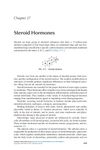 3 citations
,
January 2016 in “Elsevier eBooks”
3 citations
,
January 2016 in “Elsevier eBooks” This article discusses the various roles of steroids in vertebrate organ systems and notes several glucocorticoids that were among the Top 200 Drugs by sales in the 2010s, but it reports no new clinical findings.
 2 citations
,
April 2013 in “Expert Review of Endocrinology & Metabolism”
2 citations
,
April 2013 in “Expert Review of Endocrinology & Metabolism” This review discusses the challenges in diagnosing different causes of adult androgen excess and outlines current screening and management strategies but reports no new findings.
In this study, adolescents with depressive symptoms were found to have higher urinary excretion rates of certain steroid metabolites, including corticosterone and adrenal hormones, and a specific metabolite ratio was identified as a potential biomarker for distinguishing these patients from healthy controls.
 July 2021 in “Advances in laboratory medicine”
 This article reviews differential diagnosis approaches for 46,XY DSD, proposing a diagnostic algorithm focused on biochemical and genetic data, without presenting new clinical results.
 January 2017 in “Elsevier eBooks”
 This study suggests that progesterone may have a complex role in absence epilepsy, facilitating seizures through conversion to allopregnanolone, but potentially reducing them during pregnancy.
 May 2026 in “Frontiers in Pharmacology”
 In this study, DOP treatment improved hair regrowth in androgenetic alopecia by altering local steroid metabolism and follicular morphology.
 January 2024 in “Journal of Applied Pharmaceutical Science”
 This study identified procyanidin B2 and leucopelargonidin from Saraca asoca as potential inhibitors in PCOS by showing high binding energy scores against key enzymes involved in estrogen and testosterone biosynthesis.
 97 citations
,
September 2016 in “Reviews in Endocrine and Metabolic Disorders”
97 citations
,
September 2016 in “Reviews in Endocrine and Metabolic Disorders” This review summarizes recent multidisciplinary advances in sebaceous gland research and highlights potential novel therapeutic strategies for skin diseases, but it reports no new clinical results.
 48 citations
,
July 1996 in “Human & Experimental Toxicology”
48 citations
,
July 1996 in “Human & Experimental Toxicology” Human enzymes can detoxify harmful substances but might also increase their cancer risk.
 19 citations
,
September 1995 in “Food and nutrition bulletin”
19 citations
,
September 1995 in “Food and nutrition bulletin” This article reviews the toxic effects of mimosine in Leucaena leucocephala and discusses various methods to mitigate its toxicity but presents no new findings.
 18 citations
,
November 1994 in “Histochemical Journal”
18 citations
,
November 1994 in “Histochemical Journal” This study explored the localization of phenolsulphotransferase in human embryonic and fetal kidneys, finding distinct patterns of PST immunoreactivity in developing mesonephric and metanephric structures over time.
 16 citations
,
July 1992 in “The journal of experimental zoology/Journal of experimental zoology”
16 citations
,
July 1992 in “The journal of experimental zoology/Journal of experimental zoology” This study found that adrenal hormones appear to inhibit winter fur growth onset in mink and may affect the duration of inactivity between fur growth periods.
 14 citations
,
July 1987 in “Dermatologic Clinics”
14 citations
,
July 1987 in “Dermatologic Clinics” This article reviews current evaluation and treatment options for androgenic alopecia in women and reports no new clinical results.
 November 2025 in “Frontiers in Pharmacology”
 This mini-review examines ethnopharmacological approaches to manage hair loss in postmenopausal women, highlighting promising botanical remedies like saw palmetto, rosemary oil, and ginseng. The authors underscore a need for more interdisciplinary trials and focus on traditional remedies' multifaceted benefits, while noting gaps in menopausal-specific evidence.