 3 citations
,
November 2019 in “The American Journal of Dermatopathology”
3 citations
,
November 2019 in “The American Journal of Dermatopathology” This study found that multiple eccrine duct dilation is highly specific for diagnosing cicatricial alopecia and may indicate scarring processes, aiding in accurate differential diagnosis from noncicatricial alopecias.
4 citations
,
December 2014 in “Indian Journal of Dermatology” This case report documents a rare presentation of congenital milia en plaque on the scalp of a five-year-old boy, with blaschkoid extension to the nuchal area, highlighting its uncommon location and onset.
 6 citations
,
December 2020 in “Biological & Pharmaceutical Bulletin”
6 citations
,
December 2020 in “Biological & Pharmaceutical Bulletin” This study found that certain fatty acids and triterpenoid-glycosides from Eclipta prostrata L. leaves exhibit potent inhibitory effects on the protein tyrosine phosphatase 1B enzyme, suggesting potential anti-diabetic and anti-obesity benefits.
10 citations
,
July 2023 in “Pharmaceuticals” This study explored the wound healing potential of a natural marine soft coral-derived nanoparticle-based gel in a diabetic excision wound model, finding it effectively regulates proinflammatory cytokines and inhibits enzymes related to wound healing.
7 citations
,
October 2016 in “Cellular and Molecular Bioengineering” This study demonstrated that an automated algorithm can effectively track epithelial cell movement within clusters, revealing that partial knockdown of E-cadherin reduces electrotactic potential in breast epithelial cells, particularly in free-moving clusters, and suggesting an adhesion-independent role of E-cadherin in regulating cell electrotaxis.
33 citations
,
August 2000 in “Experimental Cell Research” January 2022 in “Chemistry: A European Journal” This study found that synchrotron radiation ECD imaging provides new insights into solid-state Finasteride by highlighting the significant role of anisotropy in local domains for chiroptical measurements.
September 2024 in “MedComm” This study by Bansaccal et al. found that skin with higher levels of type I collagen density and elasticity in the dermis can inhibit basal cell carcinoma development and spread by acting as a natural barrier against cell reprogramming in mice.
 July 2022 in “The journal of investigative dermatology/Journal of investigative dermatology”
 This case study reports that a 26-year-old woman with epidermolysis bullosa prurogompsa also presented with unique findings of co-existing muscular dystrophy and immune-based myasthenia gravis, with significant improvement following steroid treatment.
 2 citations
,
December 2021
2 citations
,
December 2021 This study found that the observed isotropic ss-ECD spectrum of finasteride is influenced by the anisotropy of locally oriented crystals, offering new possibilities for analyzing solid-state chiral materials.
31 citations
,
January 2014 in “The Scientific World JOURNAL” This study found that the water extract of Eclipta prostrata L. may protect skin cells against UVB-induced damage, likely due to its antioxidant properties and absorption of UVA and UVB radiation.
 April 2017 in “Journal of Investigative Dermatology”
 This study found that 10% carbamide peroxide significantly reduced acne lesions compared to a vehicle solution, suggesting it as an effective and safe alternative to benzoyl peroxide for treating mild to moderate acne.
August 2025 in “Indian Dermatology Online Journal” This article reports a case of erosive pustular dermatosis on the scalp of an elderly male, highlighting its complex diagnosis and successful treatment with high-potency topical corticosteroids.
 6 citations
,
September 2022 in “Frontiers in pharmacology”
6 citations
,
September 2022 in “Frontiers in pharmacology” In this study, Epimedii Folium extract was found to enhance melanin production and promote pigmentation through mechanisms involving the MAPK/ERK1/2 pathway in both in vitro and in vivo models.
May 2015 in “European Journal of Paediatric Neurology” This study describes three additional cases of encephalocraniocutaneous lipomatosis, emphasizing the importance of examining patients with ocular and ipsilateral skin lesions for this rare neurocutaneous disorder.
13 citations
,
December 2021 in “Journal of Cellular and Molecular Medicine” This case report observed that treatment with human placental mesenchymal stromal cell-derived exosome-enriched extracellular vesicles may improve symptoms of chronic cutaneous graft-versus-host disease, including hyperpigmentation and skin ulcers, in a patient resistant to conventional therapies.
 3 citations
,
November 2022 in “Advances in Clinical and Experimental Medicine”
3 citations
,
November 2022 in “Advances in Clinical and Experimental Medicine” The authors reported that electrochemotherapy and electroporation-based treatments, both with and without cytotoxic drugs, show promise as safer and more effective options for breast cancer treatment, including metastatic cases and palliative care, in vitro and in vivo.
June 2026 in “Materials Today Bio” This study reported that a decellularized porcine amniotic membrane hydrogel can alleviate inflammation and promote tissue repair in a UVB-induced skin inflammation model, suggesting its potential as a regenerative treatment for photodamage-associated skin injuries.

This study found that an exosome formulation with plant extracts significantly increased hair regrowth in men with male pattern alopecia compared to a placebo, without notable adverse effects.
June 2022 in “Indian Journal of Ophthalmology/Indian journal of ophthalmology” This case report of an infant with AEC syndrome highlights the importance of early and aggressive management of ocular complications to preserve vision and reduce the risk of amblyopia.
This study found that an extract treatment showed similar efficacy and tolerability to calcipotriol/betamethasone ointment in reducing psoriasis severity and symptoms over 28 days in patients with mild-to-moderate plaque psoriasis.
 April 2017 in “Journal of Investigative Dermatology”
 In this study, CTCF was found to play essential roles in epidermal differentiation and skin barrier formation, simultaneously acting as a suppressor of epithelial inflammatory responses in mouse skin.
 January 2015 in “Dermatology”
 The document covers various dermatological treatments and conditions.
9 citations
,
January 2015 in “Medical hypotheses” This report suggests that TCDD may alter human epidermal stem cell populations by upregulating c-Myc, potentially leading to increased stem cell turnover during chloracne development.
December 2025 in “Advanced Healthcare Materials” In this study, a new topical formulation containing amine-activated carboxymethyl chitosan and hydrolyzed extracellular matrix showed promising results in a mouse model by reducing oxidative stress, inflammation, and promoting hair regeneration, potentially offering an alternative treatment for inflammatory hair loss.
1 citations
,
November 2022 in “Indian Journal of Dermatology/Indian journal of dermatology” This case study describes a 12-year-old boy with an unruptured epidermal inclusion cyst on his cheek, highlighting the role of dermatoscopy in diagnosing and differentiating cyst types for treatment.
 March 2026 in “Cosmoderma”
 This clinical study found that using a cream or lotion as an additional treatment alongside standard care for atopic dermatitis significantly reduced symptoms and improved skin moisturization and barrier function within 28 days compared to standard care alone in participants with mild-to-moderate eczema.
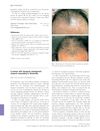 13 citations
,
February 2007 in “British Journal of Dermatology”
13 citations
,
February 2007 in “British Journal of Dermatology” EF and PXE not closely related.
 September 2024 in “Genes”
 This study found that overexpressing CRABP1 in dermal papilla cells promotes their proliferation and influences key genes in the Wnt/β-catenin signaling pathway, which may offer insights into mechanisms controlling hair follicle development.
3 citations
,
July 2022 in “Indian Journal of Dermatology” This report describes a case of acute localised exanthematous pustulosis in a 19-year-old boy after using amoxicillin-clavulanic acid, with new dermoscopic features identified.