
This study in a nine-year-old boy from Lebanon identified a gene mutation (c.1066dup p.(Arg356Profs*16)) associated with a rare inborn error of immunity, characterized by craniosynostosis, jaundice, and several other symptoms, expanding the known genotypic and phenotypic spectrum of this condition.
34 citations
,
August 2012 in “Calcified Tissue International”  August 2018 in “Journal of Investigative Dermatology”
 This study found that combining optical clearing methods with light-sheet fluorescence microscopy allows detailed 3D visualization of normal and pathological human skin biopsies, revealing differences in epidermal thickness and volume.
 October 2010 in “Epilepsy Currents”
 This study found that inhibitory neurosteroids synthesized within glial cells can reduce seizure frequency in epileptic animals by enhancing inhibitory transmission via γ-aminobutyric acid receptors.
26 citations
,
April 2021 in “Materials & Design” This study found that composite chitosan nanofibers containing luminescent europium complexes can sensitively detect Cu2+ concentrations as low as 10 μmol/L, making them suitable for use in biological systems.
 June 2021 in “Clinical neuropsychopharmacology and therapeutics”
 This paper reviews the hair color changes associated with valproic acid treatment, noting only a few reported instances of bleaching or darkening, and reports no new findings.
10 citations
,
July 2023 in “World Journal of Stem Cells” This review discusses the interaction between mesenchymal stem cell secretomes and retinal cell secretomes, suggesting their potential in experimental therapies to protect and regenerate retinal tissue.
November 2025 in “JEADV Clinical Practice” In this case report, a 28-year-old woman's tinea capitis, diagnosed using a Wood's lamp, was successfully treated with oral itraconazole and ketoconazole shampoo over eight weeks.
January 2025 in “Archives of Dermatological Research”  14 citations
,
January 2018 in “Scientific reports”
14 citations
,
January 2018 in “Scientific reports” This study demonstrated that bioluminescence imaging of NG2+ cells in transgenic rats allows in vivo monitoring of hair follicle cycles to study hair growth and follicle regeneration.
 9 citations
,
January 2020
9 citations
,
January 2020 This case series observed that macular changes from popper use can resolve completely after cessation, even in individuals with chronic use.
5 citations
,
January 2011 in “Archives de Pédiatrie” This study illustrates the severe neonatal clinical presentation of Netherton syndrome, which can be fatal despite intensive care, highlighting a specific homozygous mutation (c.1431-12G > A) associated with lethal cases.
 11 citations
,
August 2010 in “Developmental neurobiology”
11 citations
,
August 2010 in “Developmental neurobiology” This study suggests that Ptprq in the hair bundles may exist as multiple isoforms that are differentially expressed throughout development and affect the organization of stereocilia in the chick inner ear.
 July 2022 in “The journal of investigative dermatology/Journal of investigative dermatology”
 This case study reports that a 26-year-old woman with epidermolysis bullosa prurogompsa also presented with unique findings of co-existing muscular dystrophy and immune-based myasthenia gravis, with significant improvement following steroid treatment.
 8 citations
,
May 1941 in “Science”
8 citations
,
May 1941 in “Science” Inositol helped cure hair loss around rats' eyes and improved their growth.

This report presents a case of IFAP syndrome with the typical symptoms of alopecia universalis, severe photophobia, and follicular ichthyosis, but provides no additional clinical findings or conclusions.
November 2019 in “Harper's Textbook of Pediatric Dermatology” This article reviews Netherton syndrome, focusing on its genetic basis, clinical presentation, and treatment options, and reports no clinical results; the authors mention potential benefits of targeted therapies and gene therapy.
1 citations
,
January 2010 in “Acta Chirurgica Latviensis” In this study, researchers found that psoriasis patients with untreated lesions showed increased activation of defensins, matrix metalloproteinases, and neuropeptides, which may be stimulated by specific inflammation pathways.
 September 2021 in “European Neuropsychopharmacology”
 This study found that higher dihydrotestosterone (DHT) levels in the parietal region of the scalp may be linked to androgenetic alopecia's clinical presentation.
 December 2021 in “Journal of Rheumatic Diseases”
 In this case report, a 13-year-old girl with pediatric systemic lupus erythematosus experienced rare ischemic vaso-occlusive retinopathy as a first symptom, and early interventions improved her visual acuity and fever but did not fully restore vision.
 3 citations
,
April 2010 in “Clinical Neuropharmacology”
3 citations
,
April 2010 in “Clinical Neuropharmacology” In this case report, a 75-year-old man with benign essential blepharospasm and Parkinson disease experienced significant symptom relief from dystonia after starting finasteride, suggesting it may be a potential therapeutic option.
 April 2023 in “The journal of investigative dermatology/Journal of investigative dermatology”
 This review explores the multifaceted roles of melanocytes in skin biology, emphasizing their potential impact on future research to prevent and treat skin diseases, but reports no new experimental results.
May 2013 in “Optometry and vision science” This abstract provides summaries of multiple clinical reports on topics like macular holes with posterior uveal melanoma, hemolacria, trichotillomania management with bimatoprost, Demodex identification methods, and psychological factors in contact lens discomfort, but reports no new research findings.
This review highlights recent advances in the use of light exposure for health purposes, examining its role in pathology, therapeutic strategies, and molecular changes, as well as discussing future developments in this globally supported field.
1 citations
,
January 2025 in “Proceedings of the National Academy of Sciences” This study used cryoelectron microscopy to unveil the structure of LPA-bound human LPAR6, revealing unique ligand binding and recognition modes distinct from LPAR1, which may aid in designing targeted compounds for hair loss and cancer.
September 2023 in “International journal of molecular sciences” In this study involving ICR mice, researchers found that Korean red pine bark extract improved cognitive functions impaired by TMT through mechanisms like antioxidant system protection, cholinergic and synaptic support, mitochondrial regulation, and reduction of neuro-inflammation and apoptosis.
8 citations
,
August 2018 in “BMJ Case Reports” This case report describes a patient who experienced rapid hair depigmentation after starting pazopanib for metastatic renal cell carcinoma, which may suggest therapy success despite being distressing.
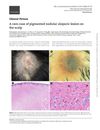
This study reported the case of a 30-year-old man with a bluish-grey scalp nodule that developed over a previously stable hairless plaque, revealing histopathological features consistent with epithelioid cell nests and spindle-shaped dermal melanocytes embedded in collagen.
 April 2017 in “Journal of Investigative Dermatology”
 This study found that the PON1 192 R allele was associated with an increased risk of psoriasis and altered lipid profiles in patients from Western Mexico.
3 citations
,
January 1984