 1 citations
,
January 2024
1 citations
,
January 2024 CaBP1 and CaBP2 are necessary for proper hearing and neurotransmission in the ear's inner hair cells.
 April 2026 in “npj Parkinson s Disease”
 This study found that VPS13C variants are significantly enriched in patients with idiopathic REM sleep behavior disorder (iRBD), associating these variants with more severe symptoms, autonomic dysfunction, and faster progression from iRBD to overt α-synucleinopathy in the iRBD-first disease subtype.
 1 citations
,
August 2018 in “bioRxiv (Cold Spring Harbor Laboratory)”
1 citations
,
August 2018 in “bioRxiv (Cold Spring Harbor Laboratory)” This study reports that a novel gain-of-function mutation in TMEM173, combined with polymorphisms in TMEM173 and IFIH1, results in a distinct clinical phenotype with features of SAVI, including alopecia and photosensitivity.

CaBP1 and CaBP2 are necessary for proper hearing and neurotransmission in the ear's inner hair cells.
January 2018 in “ScholarWorks @UVM (University of Vermont)” This study provides evidence supporting the theory that the presence of selenocysteine in proteins, such as thioredoxin reductase, may confer chemical reversibility, which contributes to their oxidative resistance and potential catalytic functions.
32 citations
,
September 2010 in “Stress” This study found that suppressing allopregnanolone production in late gestation fetal sheep altered CNS activity and behavioral responses to transient asphyxia, effects mitigated by an analog co-infusion.
44 citations
,
October 2016 in “Epilepsia” This study demonstrated that the glycolytic inhibitor 2-deoxy-D-glucose enhances antiseizure effects by potentiating extrasynaptic tonic GABAergic inhibition through neurosteroidogenesis in hippocampal slices.
5 citations
,
January 2019 in “Methods in molecular biology” In this study, researchers showed that multiphoton microscopy with fluorescent protein tagging enables single-cell imaging and tracking in live transgenic mice, offering new insights into cell dynamics in stem cell research compared to traditional histological methods.
74 citations
,
July 1995 in “PubMed” This study suggests that reversible hypopigmentation in homocystinuric patients may result from tyrosinase inhibition by homocyst(e)ine, with in-vitro experiments showing copper sulfate reversing this inhibition.
 March 2024 in “Frontiers in medicine”
 In this nonrandomized controlled trial, tenon capsule injection of platelet-rich plasma improved capillary perfusion and may enhance short-term vision in patients with acute nonarteritic anterior ischemic optic neuropathy.
 January 2026 in “Inflammation and Regeneration”
 This review highlights that two-photon excitation microscopy is a valuable tool for visualizing live skin structures and immune responses at high resolution, though its clinical use is hindered by safety and cost issues.
![[4-t-Butylphenyl]-N-(4-imidazol-1-yl phenyl)sulfonamide (ISCK03) Inhibits SCF/c-kit Signaling in 501mel Human Melanoma Cells and Abolishes Melanin Production in Mice and Brownish Guinea Pigs](/images/assets/4eb017dc-711d-4926-bcd0-c3b8f48e3a99/small/19974.jpg) 26 citations
,
July 2007 in “Biochemical Pharmacology”
26 citations
,
July 2007 in “Biochemical Pharmacology” This study found that phenyl-imidazole sulfonamide derivatives, particularly ISCK03, inhibited c-kit signaling and promoted depigmentation in various experimental settings, suggesting potential use as skin-whitening agents.
 July 2020 in “Nepalese journal of ophthalmology”
 This case report from Nepal describes a five-year-old boy with Hutchinson Gilford Progeria Syndrome experiencing ocular manifestations, highlighting the role of ocular senescence in this genetic disorder.
19 citations
,
February 2001 in “Journal of paediatrics and child health” This report documents a 14-year-old Chinese boy with mitochondrial encephalopathy, lactic acidosis, stroke-like episodes, and a de novo A3243G mitochondrial DNA mutation, highlighting the condition's multisystem involvement without ragged red fibers in muscle biopsy.
 September 2016 in “Journal of Dermatological Science”
 This case report describes the first documented instance of epidermal nevus syndrome caused by a postzygotic KRAS G12C mutation in a three-year-old Japanese girl.
30 citations
,
February 2008 in “Journal of Investigative Dermatology” 22 citations
,
January 1990  October 2023 in “Indian Dermatology Online Journal”
 This case report describes a 1.5-month-old baby with Schimmelpenning-Feuerstein-Mims syndrome, manifested by skin and ocular abnormalities along with developmental delays and hearing loss observed later, highlighting the syndrome's progression and need for multidisciplinary management.
 10 citations
,
January 2013 in “Journal of skin cancer”
10 citations
,
January 2013 in “Journal of skin cancer” In this study, PKC ε transgenic mice exposed to ultraviolet radiation showed increased hair follicle stem cell frequency and altered gene expression compared to wild-type mice, suggesting a potential role in skin cancer susceptibility.
5 citations
,
October 2021 in “American Journal of Medical Genetics Part A” This case report identifies a novel maternally inherited MBTPS2 variant associated with an expanded phenotypic spectrum of BRESHECK syndrome, including cytopenias, bone marrow fibrosis, and chronic diarrhea.
 April 2019 in “Journal of Investigative Dermatology”
 This study reported that gain-of-function mutations in TRPV3 lead to hair loss in mice by disrupting inner root sheath keratinocyte differentiation, ultimately causing follicular keratinocyte stem cell exhaustion and permanent follicle disruption.
 101 citations
,
August 2010 in “PLoS ONE”
101 citations
,
August 2010 in “PLoS ONE” In this mouse study, severe selenoprotein deficiency in epidermal cells was linked to skin abnormalities, disrupted hair follicle development, and progressive alopecia, highlighting the role of selenoproteins in skin and hair health.
20 citations
,
January 2017 in “Epilepsia” In this study, inhibition of neurosteroid synthesis after inducing status epilepticus in rats led to acute seizures and accelerated the onset of epilepsy, suggesting a role for δ-GABAR plasticity in epileptogenesis.
33 citations
,
August 1993 in “FEBS Letters” This study identified a new enzyme, skin l‐tryptophan‐2,3‐dioxygenase, that may play a role in rat hair growth regulation, showing increased activity during peak hair growth periods.
4 citations
,
December 2014 in “Indian Journal of Dermatology” This case report documents a rare presentation of congenital milia en plaque on the scalp of a five-year-old boy, with blaschkoid extension to the nuchal area, highlighting its uncommon location and onset.
 December 2021 in “Black sea journal of health science”
 This case report describes a 31-year-old male who developed eosinophilic pleuropericardial effusion potentially linked to long-term valproic acid use, which resolved after adjusting his medication.
November 2025 in “International Journal of Biological Macromolecules” This study introduced an eco-friendly enzymatic hair dyeing process utilizing laccase-catalyzed polymerization of hematoxylin, achieving intense, long-lasting color comparable to commercial dyes while enhancing hair strength and offering antioxidant and UV-shielding benefits.
 9 citations
,
December 2010 in “Journal of The European Academy of Dermatology and Venereology”
9 citations
,
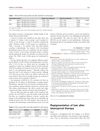
December 2010 in “Journal of The European Academy of Dermatology and Venereology” This letter reports repigmentation of hair in patients receiving latanoprost therapy.
27 citations
,
July 1983 in “Journal of Investigative Dermatology”