April 2018 in “Journal of Investigative Dermatology” In this study, embryonic skin fibroblasts from day E17.5 and postnatal day P5, but not E14.5, effectively supported hair follicle formation, indicating distinct developmental states and differentiation capacities.
 15 citations
,
February 2014 in “BMC Research Notes”
15 citations
,
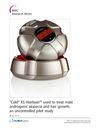
February 2014 in “BMC Research Notes” This study found that male androgenic alopecia patients using the X5 hair laser device showed a statistically significant increase in hair growth over a 26-week period.
 20 citations
,
January 2017 in “Scientific reports”
20 citations
,
January 2017 in “Scientific reports” This study found that cetaceans have adapted their fibroblast growth factors to assist in low bone density, hypoxia tolerance, and the development of rigid flippers, reflecting significant evolutionary changes for aquatic life.
6 citations
,
April 2005 in “Journal of dermatological science” This study identified the expression sites of five KAP5 genes on human chromosome 11q13.5 in scalp skin sections but did not explore their detailed distribution within hair follicles.
4 citations
,
April 2019 in “DOAJ (DOAJ: Directory of Open Access Journals)” This review highlights available treatments for frontal fibrosing alopecia, noting that 5-alpha reductase inhibitors, intralesional steroids, and hydroxychloroquine currently have the most evidence supporting their use, while other treatments show variable results and require further study.
 November 2023 in “Journal of cosmetic dermatology”
 This report describes three cases of erythromelanosis follicularis faciei et colli showing significant improvement in facial telangiectasia following treatment with a 595-nm pulsed dye laser, with minimal recurrence observed during follow-up.
This review discusses finasteride's use in manipulating neuroactive steroid levels and its potential effects on behavior, reporting preclinical evidence and clinical observations but providing no new experimental results.
 March 2020 in “The journal of investigative dermatology/Journal of investigative dermatology”
 This study suggests that the expression of VLCFA biosynthesis genes is suppressed in skin hyperplasia and cancer, which could influence keratinocyte function.
 23 citations
,
April 2021 in “Journal of Clinical Medicine”
23 citations
,
April 2021 in “Journal of Clinical Medicine” This review compiles existing data on frontal fibrosing alopecia and highlights the promise of 5-alpha reductase inhibitors as a treatment option, while noting the need for clarity on its cause and progression.
 2 citations
,
November 2007 in “Hair transplant forum international”
2 citations
,
November 2007 in “Hair transplant forum international” This abstract introduces the concept of follicular units (FUs) in the human scalp but presents no new research findings.
2 citations
,
August 2021 in “Animal Cells and Systems” This study suggests that egfl6 expression in the pharyngeal pouches is not essential for craniofacial development in zebrafish.
 May 2015 in “Journal of The American Academy of Dermatology”
 5% minoxidil foam helps women with thinning hair.
This study found that the protein Formin 2 helps regulate cell-to-cell transport in thale cress by stabilizing actin filaments at plasmodesmata, with its absence leading to increased permeability and vulnerability to viral infections.
 2 citations
,
June 2024 in “Frontiers in Plant Science”
2 citations
,
June 2024 in “Frontiers in Plant Science” This study found that RALF peptides, through liquid-liquid phase separation, form condensates with pectin and other proteins, playing a pivotal role in plant development and stress response regulation.
 14 citations
,
June 2021 in “British journal of dermatology/British journal of dermatology, Supplement”
14 citations
,
June 2021 in “British journal of dermatology/British journal of dermatology, Supplement” This paper presents consensus guidelines for standardized diagnostic criteria and assessment methods for frontal fibrosing alopecia to improve clinical research and data collection globally.
January 2020 in “프로그램북(구 초록집)” This study found that treating androgenetic alopecia patients with microneedle-delivered GFC containing FGF5s and NMN increased hair density and diameter compared to normal saline.
 45 citations
,
February 2005 in “Steroids”
45 citations
,
February 2005 in “Steroids” This study reported that certain newly synthesized steroidal derivatives showed stronger inhibitory activity against the 5α-reductase enzyme than finasteride in hamsters, suggesting their potential as enzyme inhibitors.
 April 2026 in “Zenodo (CERN European Organization for Nuclear Research)”
 This research presents the Dodatek A model, elaborating on androgen function through new mathematical indices and methodological improvements, shifting focus from serum hormone concentrations to system interactions to better describe androgen activity comprehensively.
 1 citations
,
March 2016 in “Journal of The American Academy of Dermatology”
1 citations
,
March 2016 in “Journal of The American Academy of Dermatology” This editorial response discusses the evidence for using 5-alpha reductase inhibitors in treating frontal fibrosing alopecia, acknowledging its potential benefits while emphasizing the need for further studies to establish it as a standard treatment.
 January 2025 in “PLoS ONE”
 This study found that ING5 knockout mice are prone to developing lymphomas and severe dermatitis, suggesting ING5 plays a role in tumor suppression and stem cell maintenance in vivo.
25 citations
,
February 2021 in “Diabetes” This study found that Dock5 plays a crucial role in keratinocyte function and wound healing, with its expression reduced in diabetic models but improving healing when restored.
11 citations
,
January 1996 in “PubMed” This study observed that Nod factor stimulation in alfalfa roots leads to dynamic changes in the cytoskeleton and endoplasmic reticulum, suggesting a mechanism for root hair growth changes.
1 citations
,
February 2017 in “PubMed” In this open-label study, 80% of participants with androgenetic alopecia showed improvement after taking the oral supplement Forti5® for 24 weeks, with significant increases in hair mass index and terminal hair count.
May 2026 in “Journal of Fish Biology” In this study, feeding Gymnocypris eckloni with Flammulina velutipes residues enhanced foregut morphology and beneficially altered gut microbiota, highlighting potential improvements in intestinal health for aquaculture use.
 November 2022 in “bioRxiv (Cold Spring Harbor Laboratory)”
 This study found that conditional deletion of Mof in mice resulted in severe defects in skin development, including compromised epidermal differentiation and hair growth, leading to perinatal lethality.
January 2020 in “Global dermatology” This study found that iontophoresis with growth factor cocktail including fibroblast growth factor 5-short significantly increased hair density in patients with androgenetic alopecia over 24 weeks.
 71 citations
,
October 2008 in “The journal of investigative dermatology/Journal of investigative dermatology”
71 citations
,
October 2008 in “The journal of investigative dermatology/Journal of investigative dermatology” This study presents a novel in vitro assay using human folliculoid microspheres to research hair growth, which may facilitate preclinical testing of hair growth-modulatory agents.
7 citations
,
September 2024 in “PLANT PHYSIOLOGY” This study in Arabidopsis thaliana found that exposure to volatile compounds from Penicillium aurantiogriseum promotes root hair growth through signaling involving RALF22, ethylene, auxin, and photosynthesis, and that RALF22 plays a crucial role in the plants' response to these compounds.
 February 2022 in “Research Square (Research Square)”
 This study demonstrated that LGR5 is a marker of hair follicle stem cells across species using a transgenic pig model and noted similarities and differences in expression patterns compared to humans.
 April 2026 in “Zenodo (CERN European Organization for Nuclear Research)”
 In this study, Dodatek A operationalizes the Functional Androgen Axis framework by defining three system-level indices and an efficiency metric to describe androgen function, incorporating key methodological improvements and acknowledging significant limitations for future empirical validation.