5 citations
,
September 2023 in “International Journal of Molecular Sciences” This study found that FucoPol hydrogel membranes can effectively deliver model drugs such as caffeine and diclofenac sodium via different loading methods, with notable mechanical and release properties, suggesting their potential as platforms for topical drug delivery.
10 citations
,
November 2023 in “Frontiers in Pharmacology” In this study, researchers developed a self-assembling hydrogel called RADA-PDGF2 and found it to accelerate wound closure in a mouse model due to its pro-proliferative and pro-migratory properties, without causing cytotoxicity or immunogenicity.
8 citations
,
October 2022 in “Frontiers in Bioengineering and Biotechnology” This study found that HFV70 cryogels, made from Flammulina velutipes extract and hydroxyethyl cellulose, effectively promoted rapid hemostasis and tissue regeneration in full-thickness skin defects in rats, demonstrating improved hemocompatibility, cytocompatibility, antimicrobial, and antioxidant properties.
August 2026 in “Materials Technology” This study developed a multifunctional TA-MoS2-SF hydrogel for diabetic ulcer treatment, demonstrating enhanced photothermal bactericidal effects, immune environment remodeling, and fibroblast proliferation, suggesting it may serve as an effective 'antibacterial-immunomodulatory-repair' strategy.
1 citations
,
December 2024 in “ACS Biomaterials Science & Engineering” The patches could quickly deliver epilepsy treatment and reduce seizures.
1 citations
,
August 2025 in “OPAL (Open@LaTrobe) (La Trobe University)” This study presents a composite hydrogel dressing with berberine-loaded silk fibroin microspheres and Calotropis gigantea fibers that demonstrates effective antibacterial properties, enhanced mechanical strength, and promotes wound healing.

This study found that the Nap-F3K-CA hydrogel, when used on burn wounds, demonstrated effective antibacterial and anti-inflammatory properties, promoting accelerated skin repair, decreased wound infections, and improved healing processes, highlighting its potential as a clinical burn wound dressing.
47 citations
,
January 2003 in “Pharmaceutical Research” 60 citations
,
February 2014 in “Tissue Engineering Part A” This study found that microporous electrospun scaffolds with a 70:30 collagen I to poly(ɛ-caprolactone) ratio significantly accelerated wound closure and dermal regeneration in full-thickness critical-sized skin defects.
November 2007 in “Science” This study found that keratin-based hydrogels derived from human hair improved nerve regeneration in a mouse model by enhancing Schwann cell activity and outperforming autografts.
14 citations
,
March 2025 in “Nano Today” The hydrogel dressing speeds up and improves diabetic wound healing.
89 citations
,
April 2015 in “Materials Science and Engineering C” Keratin-based hydrogels from human hair improve wound healing effectively.
17 citations
,
January 2024 in “Journal of Materials Chemistry B” This paper reviews the current state of magneto-responsive biocomposites in wound dressings, highlighting their potential benefits in wound healing, such as remote control and enhancing tissue reconstruction, while addressing the need for more comprehensive research in this field.
 May 2024 in “Journal of colloid and interface science”
 This study developed a bilayer bionic skin scaffold that mimics the skin's structure to resist microbial invasion and enhance wound healing, with in vivo animal studies showing improved collagen deposition, neovascularization, and hair follicle formation.

This review investigates how the chirality of peptides affects their ability to form hydrogels, comparing the structural and mechanical properties of hydrogels made from homochiral and heterochiral peptides, and discussing their potential biological applications.
 86 citations
,
March 2018 in “ACS Biomaterials Science & Engineering”
86 citations
,
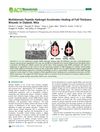
March 2018 in “ACS Biomaterials Science & Engineering” This study found that MDP hydrogel significantly accelerated wound healing and improved tissue formation in diabetic mice compared to a standard clinical hydrogel and control buffer.
January 2024 in “Journal of chemical health risks” In this study, a multifunctional aloin-arginine-alginate bio-patch was developed, which transforms into a hydrogel to accelerate wound healing and offers antibacterial and anti-inflammatory benefits, making it promising for use in cutaneous regeneration.
July 2026 in “Journal of Drug Delivery Science and Technology” 2 citations
,
July 2024 in “Materials Today Communications” In this study, an injectable alginate hydrogel with Fibronectin3 was developed, demonstrating high biocompatibility and ability to enhance wound healing in mice, suggesting promise for clinical application in treating irregular wounds.
69 citations
,
October 2013 in “Tissue Engineering Part A” This study found that using a keratin hydrogel scaffold as a filler in collagen nerve conduits significantly improved nerve regeneration and motor recovery in Macaca fascicularis monkeys compared to saline.
 12 citations
,
January 2018 in “Biomaterials Science”
12 citations
,
January 2018 in “Biomaterials Science” This study observed that dermal papilla cell aggregates showed increased viability and gene expression on softer 3D substrates, indicating the importance of substrate stiffness in cellular behavior.
 July 2026 in “Advanced Healthcare Materials”
 This review discusses the potential of silk fibroin-based injectable hydrogels as next-generation biomaterials for regenerative medicine, exploring their therapeutic advantages, challenges, and future clinical applications.
 May 2026 in “Nature Communications”
 In this study, a self-adaptive nanozyme embedded in a madecassoside-enriched hydrogel demonstrated strong antibacterial efficacy and accelerated healing in wounds infected with drug-resistant bacteria, as evidenced by improved repair and regeneration in MRSA-infected mice and preclinical pig models.
1 citations
,
January 2024 in “Fibrosis” This review examines advancements in hydrogel formulations aimed at preventing dermal fibrosis and promoting scarless wound healing, highlighting their role in regulating myofibroblast differentiation and controlling the wound microenvironment.
8 citations
,
January 2024 in “Current Research in Food Science” This study found that using composite alginate hydrogels containing Aloe vera, CMC, and tragacanth can improve the encapsulation efficiency and protect pumpkin seed protein hydrolysates from degradation during simulated gastrointestinal digestion, potentially increasing their applicability as functional food components.
 15 citations
,
June 2020 in “Applied Materials Today”
15 citations
,
June 2020 in “Applied Materials Today” This study found that SA-MS hydrogel released Mo4+ ions which promoted healing of disease-impaired wounds by enhancing cell proliferation and angiogenesis, and through its photothermal effects addressed skin cancer-impaired wounds in mice.
 2 citations
,
January 2024 in “Pakistan Journal of Life and Social Sciences (PJLSS)”
2 citations
,
January 2024 in “Pakistan Journal of Life and Social Sciences (PJLSS)” This study examines the use of emulgel-based systems as drug delivery vehicles for hydrophobic medications, noting their potential benefits in dermatological applications due to properties like easy spreadability, non-greasy texture, and prolonged shelf life.
 January 2026 in “RSC Advances”
 The hydrogel helps heal wounds without scars by releasing two drugs gradually.
April 2025 in “Frontiers in Bioengineering and Biotechnology” This research explores the potential of Gel-SHP hydrogels in tissue regeneration, suggesting they could contribute to new methodologies and understanding in wound healing and dermal shell formation, but results are not detailed.
 March 2024 in “Advanced science”
 This study observed that a novel extracellular matrix hydrogel made from human fibroblast-derived matrix improved wound healing in animal models, showing significant effects such as hair follicle formation, reduced inflammation, enhanced pro-healing growth factor levels, and interaction with macrophages, compared to traditional collagen hydrogels.