December 2016 in “Anales del sistema sanitario de Navarra” This case study reports successful treatment of frontal fibrosing alopecia with daily 2.5mg finasteride in a 77-year-old woman.
5 citations
,
January 2019 in “Research journal of pharmacy and technology” In this study, a hair tonic formulated from a 10% water fraction of Angiopteris evecta extract was reported to be stable and promote hair growth in rabbits, showing equal or greater efficacy compared to a synthetic minoxidil control, while being safe and non-irritating.
 13 citations
,
April 2015 in “Journal of Dermatology”
13 citations
,
April 2015 in “Journal of Dermatology” In this study, long-term finasteride treatment improved androgenetic alopecia in Japanese men, with younger age and less advanced disease at treatment start predicting better efficacy.
 6 citations
,
January 2013 in “Case reports in endocrinology”
6 citations
,
January 2013 in “Case reports in endocrinology” This article reviews acromegaloid facial appearance syndrome and presents a case in a 57-year-old woman, emphasizing the need for more cases to understand its clinical features and inheritance patterns.
 43 citations
,
March 2011 in “Journal of psychosomatic research”
43 citations
,
March 2011 in “Journal of psychosomatic research” This study found that children with alopecia areata experienced more stressful life events and excreted higher levels of catecholamines compared to healthy siblings.
3 citations
,
January 2025 in “Journal of the American Academy of Dermatology” Early diagnosis and a multidisciplinary approach are crucial for managing Frontal Fibrosing Alopecia.
1 citations
,
August 2013 in “Asian Journal of Pharmaceutical and Clinical Research” This study found that petroleum ether extract of Glycyrrhiza glabra prevented alopecia in testosterone-treated male rats, demonstrating effects comparable to the standard treatment finasteride.
 33 citations
,
January 2015 in “Journal of Cosmetic Dermatology”
33 citations
,
January 2015 in “Journal of Cosmetic Dermatology” This study reports that familial frontal fibrosing alopecia was diagnosed earlier in premenopausal women compared to postmenopausal women, though long-term outcomes remain uncertain without a definitive treatment.
2 citations
,
January 2020 in “Evidence-based Complementary and Alternative Medicine” This study found that Hataedock may alleviate atopic dermatitis symptoms in mice by maintaining skin homeostasis and improving skin barrier formation through the endocannabinoid system.
 5 citations
,
July 2020 in “Journal of the American Academy of Dermatology”
5 citations
,
July 2020 in “Journal of the American Academy of Dermatology” This study suggests that using antihistamines alongside a regimen of topical corticosteroid and superficial cryotherapy may enhance hair regrowth in patients with mild to moderate alopecia areata.
 April 2023 in “The journal of investigative dermatology/Journal of investigative dermatology”
 This study found that local PGE2 injection may prevent radiotherapy-induced hair loss by protecting hair follicle cells and promoting hair follicle self-repair.
 3 citations
,
April 2021 in “PLoS ONE”
3 citations
,
April 2021 in “PLoS ONE” The authors concluded that controlling voltage, pulse width, and calcium concentration in pulse electric field-activated platelet-rich plasma enhances the release of growth factors and serotonin without causing clot formation, suggesting potential clinical advantages over bovine thrombin-activated PRP.
8 citations
,
July 2022 in “International Journal of Molecular Sciences” This study found that in estrogen receptor-positive breast cancer cells, 17β-estradiol repressed polyamine oxidase transcription by interacting with AP-1 sites on its promoter.
 August 2021 in “Case Reports”
 This report describes a case where a woman with frontal fibrosing alopecia initially presented with symptoms resembling rosacea, but further investigation led to a diagnosis of FFA, resulting in a treatment change to oral finasteride and hydroxychloroquine.
 35 citations
,
June 2018 in “Urology”
35 citations
,
June 2018 in “Urology” This study of FAERS data suggests that finasteride, particularly at the 1 mg dosage, is associated with a wide range of adverse effects not previously established in long-term studies, especially among younger men.
 May 2025 in “Science Advances”
 In this study, researchers reported that hair follicle stem cells maintain quiescence through a PIEZO1-dependent mechanism that senses mechanical forces and translates them into localized calcium influx, involving a transcriptional network that regulates cell adhesion and cytoskeleton-related genes.
 38 citations
,
January 2019 in “International Journal of Women's Dermatology”
38 citations
,
January 2019 in “International Journal of Women's Dermatology” This review discusses potential therapeutic options for frontal fibrosing alopecia by exploring distinct signaling pathways and cellular players, but reports no new clinical findings and emphasizes the need for further trials.
 January 2021 in “Dermatologic Therapy”
 Channels stay open for 24 hours, making laser treatment potentially effective for hair loss.
March 2008 in “British Journal of Pharmacology” This guide provides an overview of the complex roles and mechanisms of various receptors and channels in pharmacology but does not report new experimental results.
 5 citations
,
March 2014 in “Journal of The American Academy of Dermatology”
5 citations
,
March 2014 in “Journal of The American Academy of Dermatology” The study suggests hormonal factors may play a role in Frontal Fibrosing Alopecia and that treatments like oral antiandrogens and steroids could be beneficial.
July 2024 in “Journal of Investigative Dermatology” This study found that inhibiting the enzyme PDE8A can promote adipocyte differentiation and enhance hair growth in an animal model of androgenetic alopecia, suggesting PDE8A as a potential therapeutic target for restoring dermal adipogenesis and hair cycling.
 April 2018 in “Journal of Investigative Dermatology”
 This study found that high skin expression of amphiregulin in acute graft-versus-host disease was associated with severe disease grade, poor overall survival, and increased non-relapse mortality.
 1 citations
,
January 2019 in “Acta dermato-venereologica”
1 citations
,
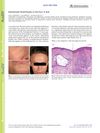
January 2019 in “Acta dermato-venereologica” The woman's skin and hair symptoms were confirmed as frontal fibrosing alopecia, and while facial papules are common in such cases, there's no effective local treatment, but systemic treatments can help.
 37 citations
,
April 2019 in “Journal of The American Academy of Dermatology”
37 citations
,
April 2019 in “Journal of The American Academy of Dermatology” This review assessed the effectiveness of various treatments for frontal fibrosing alopecia and found that intralesional steroids and 5α-reductase inhibitors showed the most positive outcomes in slowing or halting hair loss, though the lack of placebo-controlled studies and consistent outcome measures limits definitive conclusions.
13 citations
,
January 2018 in “International Journal of Trichology” In this study, intralesional triamcinolone acetonide injections were associated with halting the progression of frontal fibrosing alopecia in female patients and showed minimal adverse effects, but the efficacy as sole therapy remains unclear pending further trials.
 March 2026 in “Journal of Pakistan Association of Dermatologists”
 In this quasi-experimental study, 24-week tofacitinib treatment significantly improved hair regrowth in South Asian patients with alopecia areata, but a high relapse rate post-withdrawal signals the need for continuous treatment strategies.
1 citations
,
January 2013 in “Annals of Dermatology” This case report describes an 11-year-old girl with eosinophilic pustular folliculitis that showed significant improvement with naproxen after being unresponsive to other treatments.
16 citations
,
April 2000 in “Journal of Investigative Dermatology” The study reports that the AVET system showed higher efficiency in transfecting cultured human keratinocytes compared to SuperFect and PrimeFector, with AVET reaching levels of enzyme activity similar to normal cells in keratinocytes from lamellar ichthyosis patients.
 21 citations
,
January 1995 in “Journal of the American Institute for Conservation”
21 citations
,
January 1995 in “Journal of the American Institute for Conservation” This study describes a new method for extracting red mordant dyes from wool fibers using ethylene diamine tetraacetic acid and N,N-dimethyl formamide, preserving the fibers for further examination.
 7 citations
,
October 2017 in “Artificial Cells Nanomedicine and Biotechnology”
7 citations
,
October 2017 in “Artificial Cells Nanomedicine and Biotechnology” This research observed that finasteride-loaded ethosomes showed improved permeation across rat skin and human cadaver scalp skin compared to unencapsulated finasteride, potentially enhancing delivery to hair follicle units.