 December 2024 in “Cell Communication and Signaling”
 This study found that subcutaneous adipose tissue-derived extracellular vesicles (AT-EVs) protect skin from photodamage by enhancing fibroblast proliferation and reducing oxidative stress compared to those from adipose-derived stem cells.
8 citations
,
February 2017 in “International journal of molecular sciences” This study found that the natural extract e-CAF promotes the proliferation and migration of human hair dermal papilla cells in vitro, suggesting potential benefits for skin regeneration and tissue repair.
 2 citations
,
April 2019 in “Dermatologic Therapy”
2 citations
,
April 2019 in “Dermatologic Therapy” A patient with alopecia had hair regrowth with tofacitinib but developed a skin reaction, choosing to continue the treatment despite the side effect.
3 citations
,
May 2024 in “International Journal of Women’s Dermatology” This article discusses the connection between product use, contact dermatitis, and frontal fibrosing alopecia and reports no new findings; the authors emphasize the need for more research to improve patient outcomes.
 41 citations
,
December 2015 in “JAMA Dermatology”
41 citations
,
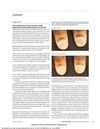
December 2015 in “JAMA Dermatology” Tofacitinib citrate improved nail dystrophy and pain in patients with alopecia universalis without causing side effects.
January 2024 in “Dermatologic Therapy” This retrospective study found that oral tofacitinib significantly reduced the severity of alopecia areata in children, achieving over a 50% reduction in hair loss severity, though relapse occurred during treatment tapering, and mild adverse effects were noted.
 8 citations
,
September 2011 in “European Journal of Dermatology”
8 citations
,
September 2011 in “European Journal of Dermatology” This study reports that most cases of frontal fibrosing alopecia did not show significant improvement with available treatments, and effective management remains unproven.
14 citations
,
January 2014 in “Indian Journal of Dermatology Venereology and Leprology” Frontal fibrosing alopecia can affect men's beards and leads to permanent hair loss.
 17 citations
,
January 2019 in “Dermatologic Therapy”
17 citations
,
January 2019 in “Dermatologic Therapy” The article in Dermatologic Therapy discusses clinical experiences with using tofacitinib to treat alopecia areata in 63 patients, but no specific results are reported in the abstract.
4 citations
,
August 2024 in “International Journal of Molecular Sciences” This study found that a combination of natural compounds (escin, bromelain, ginkgo biloba, and sage miltiorrhiza) reduced platelet adhesion to activated endothelium in laboratory settings by inhibiting adhesion molecule transcription and reducing pro-inflammatory cytokines, potentially preventing initial steps of the coagulation cascade.
 9 citations
,
August 2014 in “Journal of The American Academy of Dermatology”
9 citations
,
August 2014 in “Journal of The American Academy of Dermatology” This article discusses the authors' concerns over the misinterpretation of studies linking smoking and frontal fibrosing alopecia, clarifying that neither study suggests smoking is protective against the condition.
3 citations
,
August 2013 in “Journal of the American Academy of Dermatology” This study identified a novel microscopic "arrow sign" in hair root sheaths of patients on EGFR inhibitors, potentially aiding in diagnosing related hair changes and differentiating from fungal infections.
21 citations
,
October 2007 in “Journal of Investigative Dermatology” Fetuin-A helps wounds heal without scars by promoting cell movement.
2 citations
,
March 2026 in “Journal of Dermatological Treatment” This study found that JAK inhibitors used to treat alopecia areata have varied safety profiles, with different adverse events associated with each drug; tofacitinib and ruxolitinib had earlier onset of events, while baricitinib and ritlecitinib showed distinct delayed patterns.
 7 citations
,
January 2019 in “Australasian Journal of Dermatology”
7 citations
,
January 2019 in “Australasian Journal of Dermatology” In this study, the CYP 21A2 gene p.V281L mutation was associated with an increased susceptibility to familial frontal fibrosing alopecia, suggesting an antigen-driven mechanism linked to certain human leukocyte antigen haplotypes.
 11 citations
,
November 2019 in “Clinical Case Reports”
11 citations
,
November 2019 in “Clinical Case Reports” This study highlights that while there are no FDA- or ANVISA-approved treatments for children with alopecia areata, JAK inhibitors are emerging as a promising therapeutic option for this population.
22 citations
,
March 2017 in “Journal of the Formosan Medical Association” This report presents the Taiwanese Dermatological Association's 2016 consensus on defining and managing skin toxicities from EGFR-TKI treatments, providing comprehensive guidelines for clinicians in Taiwan.
 5 citations
,
September 2021 in “Journal of The American Academy of Dermatology”
5 citations
,
September 2021 in “Journal of The American Academy of Dermatology” This study found a high prevalence of beard and eyebrow alopecia in male patients with frontal fibrosing alopecia, and suggests a potential link between hormonal imbalances and the condition.
 46 citations
,
August 2016 in “Journal of The American Academy of Dermatology”
46 citations
,
August 2016 in “Journal of The American Academy of Dermatology” This study found that lifestyle factors such as diet, personal history, and psychological stress may be linked to the development of adult female acne, based on observed associations in a case-control setting.
January 2024 in “Biomedicines” This review discussed the cutaneous manifestations of APECED, highlighting chronic mucocutaneous candidiasis, alopecia areata, and vitiligo, while emphasizing the importance of early detection and monitoring for accurate diagnosis and patient care in various populations.
2 citations
,
September 2021 in “Anais Brasileiros de Dermatologia” Increased sunscreen use may be linked to frontal fibrosing alopecia in Hispanic females.
85 citations
,
November 2004 in “Journal of the American Academy of Dermatology” The 308-nm excimer laser helps hair regrowth in some alopecia areata cases but not all.
 1 citations
,
November 2001 in “Acc Current Journal Review”
1 citations
,
November 2001 in “Acc Current Journal Review” This review found that 5α‐reductase inhibitors were associated with slightly increased rates of decreased libido, erectile and ejaculatory dysfunction, gynecomastia, and mood disorders compared to placebo, though their long-term effects remain unclear.
 1 citations
,
May 2024 in “Dermatology and Therapy”
1 citations
,
May 2024 in “Dermatology and Therapy” This review article examines the current understanding of frontal fibrosing alopecia, noting its prevalence in different demographics and the roles of genetic and environmental factors in its pathogenesis, while highlighting that treatment approaches remain varied and lack standardization.
 25 citations
,
December 2017 in “Facial Plastic Surgery”
25 citations
,
December 2017 in “Facial Plastic Surgery” This study observed that combining high-potency steroids with pimecrolimus might effectively stabilize hairline recession in frontal fibrosing alopecia patients.
 4 citations
,
January 2016 in “Annals of Dermatology”
4 citations
,
January 2016 in “Annals of Dermatology” This study found that men with more advanced androgenetic alopecia had increased epicardial fat thickness, suggesting a potential link to coronary risk.
 August 2025 in “International Journal of Research in Dermatology”
 This case report highlights an atypical presentation of acrodermatitis enteropathica in an 18-year-old male, exhibiting symptoms like erythrokeratoderma variabilis with a positive response to high-dose oral zinc, underscoring the importance of considering zinc deficiency in unusual skin conditions.
68 citations
,
January 2014 in “Dermatology research and practice” This review discusses the presentation and management of skin toxicity from epidermal growth factor inhibitors, highlighting a correlation between cutaneous adverse effects and tumor response, but reports no new clinical results.
September 2003 in “Reactions Weekly” August 2023 in “Journal of Investigative Dermatology” In this meta-analysis, researchers found that oral dutasteride may stabilize or improve frontal fibrosing alopecia in patients, but results varied widely, and further controlled studies are needed to confirm its effectiveness as a treatment option.