 4 citations
,
May 2022 in “Journal of Nepal Medical Association”
4 citations
,
May 2022 in “Journal of Nepal Medical Association” This case report describes a 40-year-old woman with Cronkhite-Canada Syndrome whose symptoms, including gastrointestinal issues and skin changes, improved significantly with corticosteroids, co-infection treatment, and nutritional counseling.
 184 citations
,
September 2006 in “PLoS Genetics”
184 citations
,
September 2006 in “PLoS Genetics” This study found that loss of Apc due to K14-cre-mediated gene recombination in mice led to aberrant growth in ectodermally derived squamous epithelia, implicating its critical role in specifying epithelial cell fates during embryonic development.
 4 citations
,
August 2023 in “Nature Communications”
4 citations
,
August 2023 in “Nature Communications” In this study, researchers observed that the combination of hair progenitors and their micro-niche changes every three days in mouse zigzag hair, and disruptions in specific genes affected this rhythm, highlighting the importance of this periodic change for normal hair morphology.

The researchers observed that in cichlid fishes with different dental structures, tooth replacement accelerated more than three times following tooth extraction, alongside distinct changes in gene expression and cellular interactions over one week, providing insights into tooth regeneration mechanisms in vertebrates.
 March 2026 in “International Journal of Homoeopathic Sciences”
 This review discusses the growing problem of alopecia and suggests that homeopathy, alongside lifestyle changes, may effectively manage different types of hair loss, though it reports no new clinical findings.
 6 citations
,
May 2013 in “PloS one”
6 citations
,
May 2013 in “PloS one” This study found that the Foxn1(-/-) nude phenotype significantly influences epithelial progeny in skin, with notable changes in stem cell niches not achievable in other models.
 September 1998 in “JEADV. Journal of the European Academy of Dermatology and Venereology/Journal of the European Academy of Dermatology and Venereology”
 The document concludes that individualized treatments for hair issues are effective, certain hair changes can indicate neurocutaneous diseases, specific lotions improve skin health, laser hair removal works but needs more study on long-term effects, men's cosmetics are diverse, peeling is effective but can have side effects, and facial pigmentation is often due to overactive skin cells.
 211 citations
,
October 2001 in “The FASEB Journal”
211 citations
,
October 2001 in “The FASEB Journal” This study found that the BMP antagonist noggin induces hair growth in postnatal skin by neutralizing BMP4's inhibitory activity, potentially mediated by changes in Shh expression.
 40 citations
,
January 2016 in “PLoS ONE”
40 citations
,
January 2016 in “PLoS ONE” The study found that exposing Arbas Cashmere goats to a short photoperiod significantly increased cashmere production by extending the anagen phase of hair follicles, with gene expression changes identified as contributing factors.
 2 citations
,
October 2020 in “Dermatologie pro praxi”
2 citations
,
October 2020 in “Dermatologie pro praxi” In this review, the authors focus on understanding various forms of alopecia, emphasizing that early diagnosis is crucial, especially for scarring alopecia, where follicle changes can become irreversible.
 1 citations
,
January 2013 in “Elsevier eBooks”
1 citations
,
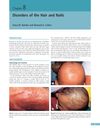
January 2013 in “Elsevier eBooks” The document reviews various hair and nail disorders, their causes, and treatments, emphasizing the need for proper diagnosis and the link between nail changes and systemic diseases.

In this case report, researchers documented a 19-year-old male professional athlete with acquired trichorrhexis nodosa, noting environmental factors like chlorine exposure during swimming may have contributed to his condition, which improved after advice on hair care changes.
 June 2021 in “International journal of research in dermatology”
 This report describes a child and his father with hereditary hypotrichosis simplex, an uncommon isolated form of hair loss, with no other ectodermal or systemic abnormalities noted.
 April 2018 in “Journal of Investigative Dermatology”
 This study found that activation of the transcription factor Nrf2 in keratinocytes promotes wound healing in mice by expanding hair follicle stem cells, independent of changes in keratinocyte proliferation or migration.
 April 1963 in “Archives of Dermatology”
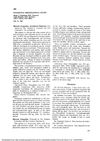
 This case study details the progression of a woman's skin conditions, initially diagnosed as acanthosis nigricans and later as mycosis fungoides, with changes in lesion characteristics and distribution over time.
 April 2021 in “Journal of Investigative Dermatology”
 This study developed a transgenic mouse model to explore androgenetic alopecia, finding that inducible COX2 expression led to sebaceous gland changes and hair miniaturization, with reversible effects upon reducing COX2.
 13 citations
,
July 2019 in “Toxicology research”
13 citations
,
July 2019 in “Toxicology research” In this study, ethanamizuril was found to cause alopecia, biochemical changes, and organ damage at higher doses in rats, with a no-observed-adverse-effect level of 20 mg/kg over 30 days.
22 citations
,
July 2016 in “Cellular and Molecular Life Sciences” Genetic changes in mice help understand skin and hair disorders, aiding treatment development for acne and hair loss.
 31 citations
,
December 2010 in “Journal of the American Academy of Dermatology”
31 citations
,
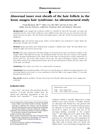
December 2010 in “Journal of the American Academy of Dermatology” This study reports that structural abnormalities in the inner root sheath of hair follicles may cause the hair shaft to be loosely attached in patients with loose anagen hair syndrome.
56 citations
,
July 2004 in “Mechanisms of Development” Pax9 is crucial for proper tongue surface development and preventing skin-like changes.
22 citations
,
September 2014 in “JAMA dermatology” This study identified major criteria including ectodermal malformations for diagnosing ichthyosis with confetti, and revealed significant genetic variation in the disease locus within the general population.
 10 citations
,
August 2012 in “Current Problems in Pediatric and Adolescent Health Care”
10 citations
,
August 2012 in “Current Problems in Pediatric and Adolescent Health Care” This review explores hair signs related to nutrition disorders, such as thin and dyspigmented hair, without presenting new clinical findings; the authors highlight unknowns regarding underlying causes.
This study suggests that specific genetic changes, including mutations in protein-coding genes and noncoding regions, have contributed to the evolution of hairlessness in multiple mammalian species.
4 citations
,
October 2023 in “Children” This study diagnosed a group of six girls with various ectodermal abnormalities, identifying cranio-skeletal malformations consistent with focal dermal hypoplasia (Goltz syndrome), and found heterozygous mutations in the PORCN gene in two children.
 4 citations
,
July 2022 in “Frontiers in Cell and Developmental Biology”
4 citations
,
July 2022 in “Frontiers in Cell and Developmental Biology” This review discusses the formation and maintenance of hair follicles through dynamic cellular changes and signaling pathways, presenting a comprehensive overview but providing no new experimental findings.
218 citations
,
September 2012 in “Gastroenterology” This review discusses the role of epigenetics in colorectal cancer and explains how changes like DNA methylation impact tumor development, but it reports no new results.
 122 citations
,
June 2002 in “Genes & Development”
122 citations
,
June 2002 in “Genes & Development” This study found that K17 is crucial for the structural integrity and survival of hair-producing cells, with K17 null mice developing alopecia due to hair fragility and follicular alterations.
 44 citations
,
January 2005 in “Dermatology”
44 citations
,
January 2005 in “Dermatology” This article reviews the clinical and diagnostic features of hair shaft disorders, emphasizing the role of structured patient assessments and the avoidance of hair trauma, but reports no new results.
20 citations
,
April 2000 in “Experimental dermatology” This study observed that overexpression of the enzyme ODC in transgenic mice caused hair loss and skin changes similar to human papular atrichia, suggesting that ODC might be involved in a critical hair follicle function pathway.
January 2025 in “Dermatology Research and Practice” In this research, RNA expression analysis of scalp biopsies from lichen planopilaris patients revealed changes in specific genes after treatments with hydroxychloroquine, narrow band UVB, or low level laser light therapy, suggesting potential biomarkers and implicating M2 macrophages in the disease's immunopathogenesis.