 March 2026 in “Israel Journal of Plant Sciences”
 This study investigated the endophytic bacterial community of Eclipta prostrata, finding that these microorganisms contribute to the plant’s stress tolerance and detoxification, which may enhance its medicinal properties by supporting the synthesis and stability of beneficial metabolites.
 2 citations
,
January 2018 in “International Journal of ChemTech Research”
2 citations
,
January 2018 in “International Journal of ChemTech Research” This study used phytochemical screening and FTIR spectroscopy with PCA to reveal slight chemical differences between two varieties of Eclipta alba, providing a method for their effective discrimination.
 October 2024 in “International Journal For Multidisciplinary Research”
 This review highlights that Wedelolactone, a compound in Eclipta prostrata, appears to be a potent antioxidant and selective modulator of proteins linked to chronic diseases, suggesting further research into its pharmacological effects is warranted according to the examined data.
June 1958 in “Mycopathologia” Selective chemical epilation effectively treats tinea capitis without harmful side effects.
 2 citations
,
December 2021
2 citations
,
December 2021 This study found that the observed isotropic ss-ECD spectrum of finasteride is influenced by the anisotropy of locally oriented crystals, offering new possibilities for analyzing solid-state chiral materials.
 1 citations
,
September 2025 in “International Journal of Drug Delivery Technology”
1 citations
,
September 2025 in “International Journal of Drug Delivery Technology” This randomized controlled study reported that combining Ecklonia cava with Diane-35 significantly improved weight, waist circumference, hormonal balance, and inflammation markers in women with polycystic ovary syndrome over three months compared to Diane-35 alone.
February 2023 in “Reactions Weekly”  January 2022 in “Pharmaceutical Sciences Asia”
 This study found that a liposome containing butterfly pea flower extract and clove oil was stable and, when used by 15 volunteers over 60 days, enhanced eyebrow thickness and darkness without causing irritation.
 October 2022 in “International journal of pharmaceutical sciences review and research”
 This study compared the antioxidant and antidiabetic activities of Hibiscus rosa-sinensis leaf extract and Eclipta alba bark extract, finding that Hibiscus rosa-sinensis exhibited greater antidiabetic activity, whereas Eclipta alba demonstrated stronger antioxidant activity.
 65 citations
,
October 2008 in “Journal of Neuroendocrinology”
65 citations
,
October 2008 in “Journal of Neuroendocrinology”  December 2025 in “Universities Journal of Phytochemistry and Ayurvedic Heights”
 This study highlights a comprehensive approach for authenticating and assessing the quality of herbal medicines using a combination of physiological, morphological, and molecular techniques, including HPTLC, ICP-MS, UV spectroscopy, and DNA barcoding, to ensure the standardization of herbal medicinal products, particularly Eclipta alba.

This case study presented by the researchers describes the effective use of topical calcipotriene ointment in treating a 6-year-old girl with en coup de sabre scleroderma, resulting in normalization of the sclerotic skin, hair regrowth, and improved pigmentation.
 168 citations
,
December 1986 in “Cancer Chemotherapy and Pharmacology”
168 citations
,
December 1986 in “Cancer Chemotherapy and Pharmacology” Epirubicin is as effective as doxorubicin for cancer treatment with less heart damage, but doesn't work on doxorubicin-resistant cancers.
 1 citations
,
January 2016 in “Der pharmacia lettre”
1 citations
,
January 2016 in “Der pharmacia lettre” This study found that shampoo formulated with Eclipta alba extracts may promote hair growth and act as an antidandruff agent due to its antifungal activity against Malassezia.
6 citations
,
July 2015 in “JAAD Case Reports” This study describes a case of erlotinib-induced alopecia, unresponsive to traditional corticosteroid treatments, that was successfully managed with doxycycline, suggesting a novel approach for EGFR inhibitor-associated alopecia.
 13 citations
,
September 2011 in “American Journal of Clinical Dermatology”
13 citations
,
September 2011 in “American Journal of Clinical Dermatology” This review describes the dermatological uses of the contraceptive ethinylestradiol/chlormadinone acetate for conditions linked to high androgen levels and reports no new clinical results.
 July 2007 in “Journal of Generic Medicines”
 The UK High Court revoked Lundbeck's patent for Escitalopram, and second medical use claims based on dosage were not considered novel.
 25 citations
,
January 2011 in “Annals of Dermatology”
25 citations
,
January 2011 in “Annals of Dermatology” This case report documents a 61-year-old woman treated with erlotinib who experienced the rare side effect of cicatricial alopecia.
March 2018 in “New scientist”  3 citations
,
November 2020 in “Phyton-international Journal of Experimental Botany”
3 citations
,
November 2020 in “Phyton-international Journal of Experimental Botany” This review discusses the potential therapeutic applications of wedelolactone, a compound in Eclipta prostrata, for various chronic human diseases and reports no new clinical results.
January 2022 in “Chemistry: A European Journal” This study found that synchrotron radiation ECD imaging provides new insights into solid-state Finasteride by highlighting the significant role of anisotropy in local domains for chiroptical measurements.
 October 2024 in “International Journal of Ayurveda Research”
 This study evaluated the 5α-reductase inhibitory effects of several Ayurvedic herbs and found that Eclipta alba exhibited the highest activity, suggesting its potential for use in treatments for androgenic disorders like alopecia.
 14 citations
,
July 2012 in “Journal of the American Academy of Dermatology”
14 citations
,
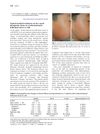
July 2012 in “Journal of the American Academy of Dermatology” This study found that topical tacalcitol improved roughness and scaling in erythromelanosis follicularis faciei et colli, although it was less effective for facial erythema.
 October 2023 in “Journal of the American Academy of Dermatology”
 This source reports that clascoterone cream has been approved in the U.S. for treating acne vulgaris in patients aged 12 and older, suggesting it works by competing with dihydrotestosterone at androgen receptors to mitigate acne's effects.
2 citations
,
October 2025 in “Antimicrobial Agents and Chemotherapy” This study found that cepharanthine may be a promising treatment for enterovirus infections, as it offered full protection to mice against lethal EV71 challenges and reduced viral titers and pathology.
 3 citations
,
March 2017 in “International Journal of Ayurvedic Medicine”
3 citations
,
March 2017 in “International Journal of Ayurvedic Medicine” This review discusses the ethnomedicinal claims, chemical composition, and pharmacological profile of Eclipta alba Hassk., reporting no new clinical results but suggesting future research for traditional medicine validation.
 September 2011 in “American Journal of Clinical Dermatology”
 The birth control pill containing ethinylestradiol and chlormadinone may help treat acne and other skin and hair conditions related to hormones.
 8 citations
,
February 2003 in “Annals of Neurology”
8 citations
,
February 2003 in “Annals of Neurology” Progesterone treatment improved seizures in a woman with menstrual cycle-related epilepsy, but a wrong medication worsened her condition.
 21 citations
,
January 2012 in “Annals of Dermatology”
21 citations
,
January 2012 in “Annals of Dermatology” This study reported that Ell-Cranell® alpha 0.025% solution significantly increased hair counts and diameter in Korean women with female pattern hair loss over an 8-month period, showing both efficacy and safety.
3 citations
,
September 2016 in “Dermatologic Therapy” In this study, Deplanque et al. (2016) explored doxycycline's role in preventing erlotinib-induced folliculitis in patients with non-small-cell lung cancer, highlighting skin toxicity as a common side effect that can affect patient adherence to treatment.