 61 citations
,
September 2020 in “Bioactive Materials”
61 citations
,
September 2020 in “Bioactive Materials” This study found that the multifunctional FEA-PCEI dressing significantly accelerated wound healing, reduced scar formation, and promoted hair follicle neogenesis while providing antibacterial and anti-inflammatory benefits.
 4 citations
,
January 2018 in “Hair transplant forum international”
4 citations
,
January 2018 in “Hair transplant forum international” This article talks about the concept of extraction and reports no new research findings.
 January 2021 in “Journal of Allergy and Therapy”
 This article reviews the phases of hair growth and differences between androgenetic alopecia and telogen effluvium but provides no new clinical findings on Electric Follicle Stimulation.
 January 2020 in “Cosmetics”
 This study found that Ecklonia cava extract increased skin hydration and decreased redness, suggesting potential benefits for protecting and repairing scalp skin from pollutant-induced damage.
 13 citations
,
February 2007 in “British Journal of Dermatology”
13 citations
,
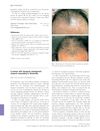
February 2007 in “British Journal of Dermatology” EF and PXE not closely related.
 4 citations
,
January 1994 in “Yakugaku zasshi”
4 citations
,
January 1994 in “Yakugaku zasshi” In this study, EPC-K, a compound with antioxidant and moisturizing effects, was found to decompose significantly under certain conditions, impacting its stability in quasi drug hair-growing products.
 5 citations
,
February 2019 in “Journal of oceanology and limnology (Online)”
5 citations
,
February 2019 in “Journal of oceanology and limnology (Online)” This study found that adding 7% Ecklonia cava extract to oxidative hair dyes significantly reduced their cytotoxicity and oxidative stress without affecting color performance.
 November 1998 in “Journal of The European Academy of Dermatology and Venereology”
 A man's skin cancer improved and some of his hair grew back after treatment with a special light therapy and a medication.
11 citations
,
June 2010 in “Dermatologic surgery” This article contains information about journal subscriptions and does not report any research findings.
 1 citations
,
November 2023 in “Contact dermatitis”
1 citations
,
November 2023 in “Contact dermatitis” In this study, sensitization to ethylhexyl salicylate was found in 27.3% of patients with frontal fibrosing alopecia, suggesting it may be a potential contact allergen for this condition.
 September 2024 in “Advanced Biomedical Research”
 In this study, chick embryo extract enhanced neuronal differentiation and trophic factor expression in rat hair follicle stem cells, suggesting potential improvements for stem cell therapies in neurodegenerative diseases.
 14 citations
,
July 2012 in “Journal of the American Academy of Dermatology”
14 citations
,
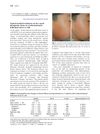
July 2012 in “Journal of the American Academy of Dermatology” This study found that topical tacalcitol improved roughness and scaling in erythromelanosis follicularis faciei et colli, although it was less effective for facial erythema.
January 2023 in “Psychology” This study reported that seed germination and root hair growth were significantly enhanced after exposure to an individual whose depression was treated with Emotional Freedom Techniques, suggesting that human mood may influence seed viability.
 May 2024 in “Animal genetics”
 The researchers investigated a Maine Coon cat with suspected classical Ehlers-Danlos Syndrome and discovered a heterozygous deletion in the COL5A1 gene, underscoring the value of whole-genome sequencing for precise veterinary diagnostics.
 76 citations
,
May 2020 in “Ultraschall in der Medizin - European Journal of Ultrasound”
76 citations
,
May 2020 in “Ultraschall in der Medizin - European Journal of Ultrasound” This consensus document provides foundational position statements for dermatologic ultrasound but reports no clinical results; it aims to guide future evidence-based recommendations and guidelines.
12 citations
,
December 2022 in “Frontiers in Bioscience-Landmark” This review discusses the physiological roles of the epidermal differentiation complex and its potential involvement in psoriasis, but it reports no new experimental findings.
 11 citations
,
January 1993 in “Dermatology”
11 citations
,
January 1993 in “Dermatology” In this study, researchers found histopathological similarities between L-tryptophan eosinophilic myalgia syndrome and idiopathic eosinophilic fasciitis, with certain unique inflammatory features present in the former.
1 citations
,
April 2023 in “Preprints.org” This study found that the guided SEFFI technique for facial volume restoration and anti-aging is minimally invasive with a low complication rate, suggesting it as a promising treatment option.
 5 citations
,
February 2013 in “Journal of Liquid Chromatography & Related Technologies”
5 citations
,
February 2013 in “Journal of Liquid Chromatography & Related Technologies” This study developed and validated a micellar electrokinetic chromatography method to determine finasteride stability, finding that the drug degrades under acidic, basic, and oxidative stress conditions.
January 1982 in “Clinical Cosmetic and Investigational Dermatology” This case report describes a 54-year-old woman with familial dyskeratotic comedones who experienced slight improvement in her skin lesions after three months of treatment with topical retinoids and urea cream.
March 2026 in “Experimental Dermatology” This study developed an in vitro model using NTERT keratinocytes expressing AEC-related TP63 mutations, which replicated skin defects observed in AEC patients and offers a valuable tool for understanding the disorder and developing new treatments.
 August 2025 in “BMC Pregnancy and Childbirth”
 In this study, prenatal ultrasonography was found to be a valuable tool for screening ectodermal dysplasia during pregnancy, and a new EDA gene variant associated with X-linked hypohidrotic ectodermal dysplasia was identified, aiding in more accurate diagnoses and reproductive decision-making.
5 citations
,
July 2022 in “Frontiers in Medicine” In this study, the combination of ECM-C with microneedle and radiofrequency treatments improved periorbital wrinkles, skin elasticity, and thickness more effectively than ECM-C with microneedles alone, but subjective evaluations showed no significant differences.
 4 citations
,
September 2011 in “American Journal of Clinical Dermatology”
4 citations
,
September 2011 in “American Journal of Clinical Dermatology” This case series suggests that EE/CMA 0.03mg/2mg may help manage dermatological disorders related to androgen excess, as evidenced by symptomatic improvements in the four patients treated.
9 citations
,
February 2021 in “Evidence-based Complementary and Alternative Medicine” This study reported that Longdan Xiegan decoction is more effective than conventional western medicine alone in treating eczema, but the evidence quality was generally low, highlighting the need for further studies.
49 citations
,
January 2017 in “Oxidative Medicine and Cellular Longevity” In this study, the alcoholic extract of Eclipta alba demonstrated significant anticancer activity in vitro by inducing apoptosis in breast cancer cell lines and showed strong antioxidant properties.
 43 citations
,
August 2016 in “International Journal of Nanomedicine”
43 citations
,
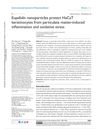
August 2016 in “International Journal of Nanomedicine” This study found that a eupafolin nanoparticle delivery system improved water solubility and skin penetration, enhancing its antioxidant and anti-inflammatory effects against particulate matter-induced stress in skin cells.
 1 citations
,
November 2023 in “Indian Journal of Science and Technology”
1 citations
,
November 2023 in “Indian Journal of Science and Technology” In this study, researchers identified several active metabolites in Eclipta alba, demonstrated strong interaction with Alzheimer's disease proteins, and found that 28 days of treatment improved memory without significant toxicity in rats, suggesting potential pathways for treating Alzheimer's.
 12 citations
,
December 2020 in “Archives animal breeding/Archiv für Tierzucht”
12 citations
,
December 2020 in “Archives animal breeding/Archiv für Tierzucht” This study found that EDA and EDAR are expressed throughout cashmere goat fetal development and play a critical role in hair follicle formation by influencing gene expression in fibroblasts and epithelial cells.
January 2025 in “Open Veterinary Journal” This case series reports that electrochemotherapy with intravenous bleomycin effectively resolved cutaneous mast cell tumors in four cats, showing no tumor recurrence during follow-up, except for new lesions in one cat, and minimal local toxicity.