 11 citations
,
March 2024 in “Cell and Tissue Research”
11 citations
,
March 2024 in “Cell and Tissue Research” In this review, researchers summarize the methods for characterizing telocytes, outline their physiological roles and implications in diseases, and discuss potential future studies including precise markers and targeted therapies.
 11 citations
,
September 2011 in “Biochemical journal”
11 citations
,
September 2011 in “Biochemical journal” This study found that neurotrophin-4 regulates Cav3.2 T-current expression in D-hair neurons via TrkB receptor activation, highlighting its role in mechanosensitive function.
62 citations
,
December 1941 in “Experimental biology and medicine” In this study, phenylthiocarbamide intake was associated with hair graying in rats, while switching to tap water led some rats to regain their original fur color, suggesting dietary factors influence pigmentation.
 1 citations
,
February 2022 in “Clinical, Cosmetic and Investigational Dermatology”
1 citations
,
February 2022 in “Clinical, Cosmetic and Investigational Dermatology” In this study, researchers found that the thyroxine receptor agonist TDM10842 accelerated the onset of anagen, a hair growth phase, in C3H mice, potentially through activation of the Wnt/beta-catenin and Hedgehog pathways, with Pclaf playing a key role in this process.
September 2024 in “Journal of the American Academy of Dermatology” Alopecia areata often recurs after treatment with diphenylcyclopropenone.

This case study documents a 55-year-old male with advanced NSCLC who experienced toe-predominant paronychia and a papulopustular rash following dacomitinib treatment, with the causality tools indicating a "probable" link, yet the therapy continued successfully without dosage alteration.
 3 citations
,
May 2025 in “Cell Death and Disease”
3 citations
,
May 2025 in “Cell Death and Disease” This study found that METTL1 is upregulated in papillary thyroid cancer tissues and promotes cancer cell proliferation and metastasis through its tRNA methyltransferase activity.
 April 2017 in “Journal of Investigative Dermatology”
 In this study, deep phenotyping of 68 patients with XPD gene defects successfully separated individuals by clinical diagnosis and survival status, potentially improving diagnosis and prognosis for xeroderma pigmentosum and trichothiodystrophy.
 January 2025 in “International Journal of Trichology”
 This study found that adding PRP to DPCP treatment for severe alopecia areata did not enhance effectiveness compared to DPCP alone.
15 citations
,
February 2015 in “Anais brasileiros de dermatologia/Anais Brasileiros de Dermatologia” This article reviews the use of dermoscopy in distinguishing temporal triangular alopecia from alopecia areata, emphasizing its role in avoiding invasive diagnostics and ineffective treatments; it reports no new clinical findings.
 2 citations
,
August 2023 in “Pharmaceutics”
2 citations
,
August 2023 in “Pharmaceutics” This paper reviews the development of transdermal drug delivery systems for skin diseases, from first to fourth generation, and highlights ongoing challenges and the importance of clinical trials, but provides no new clinical results.
14 citations
,
August 2014 in “Journal of the American Academy of Dermatology” This study found that topical diphenylcyclopropenone is an effective treatment for extensive alopecia areata, with significant hair regrowth reported in most patients, though effectiveness varied with disease characteristics.
31 citations
,
September 1999 in “Molecular Carcinogenesis” This study in a transgenic mouse model found that repressing overexpression of ornithine decarboxylase reduced papilloma development, indicating its role in tumor promotion sensitivity.
 January 2007 in “Revista del Centro Dermatológico Pascua”
 This case report describes a 2-year-old boy diagnosed with trichothiodystrophy, characterized by fragile hair, intellectual damage, diminished fertility, and short stature.
 December 2022 in “Frontiers in plant science”
 This study identifies two new proteins, CCDC22 and CCDC93, essential for root and root hair growth in Arabidopsis, and demonstrates their genetic link to a VTI13-dependent vacuolar trafficking pathway.
July 2025 in “International Journal of Trichology” This study reported six pediatric cases of temporal triangular alopecia and highlighted the use of trichoscopy to distinguish it by detecting a distinctive carpet of vellus hair, helping to differentiate TTA from other hair loss conditions.
 June 2023 in “International Journal of Clinical Research and Reports”
 This study found that higher concentrations of topical diphenylcyclopropenone, especially when prepared with acetone, showed better stability over 6 months compared to lower concentrations.
July 2026 in “bioRxiv (Cold Spring Harbor Laboratory)” In this study, researchers observed that TCDD exposure in mice enhanced sebaceous gland differentiation and lipid production before causing seboatrophy, providing insights into the cellular events that may contribute to chloracne pathogenesis.
 6 citations
,
October 2012 in “Journal of Heredity”
6 citations
,
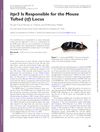
October 2012 in “Journal of Heredity” This study identified the Itpr3 gene as responsible for the tufted hair loss phenotype in the BTBR mouse strain.
52 citations
,
February 2012 in “PloS one” This study found that the absence of Ctip2 in epidermal keratinocytes led to impaired wound healing in mice, affecting cell migration, proliferation, and hair follicle stem cell maintenance.
 2 citations
,
September 2001 in “PubMed”
2 citations
,
September 2001 in “PubMed” Finasteride is advertised directly to consumers for treating male pattern hair loss.
10 citations
,
January 2012 in “Case reports in medicine” This report describes two cases where patients developed vitiligo as a side effect of diphencyprone treatment for alopecia areata, highlighting the need to inform patients about this potential adverse effect.
 April 2017 in “Journal of Investigative Dermatology”
 This study found that a single dose of TRP significantly reduced the number of UV-B-induced actinic keratosis lesions in a mouse model and was associated with improved skin histology and minimal side effects.
 77 citations
,
January 1980 in “Carcinogenesis”
77 citations
,
January 1980 in “Carcinogenesis” This study found that TPA was significantly more effective than mezerein in inducing dark basal keratinocytes in mouse skin, which may be important in early tumor promotion stages.
 61 citations
,
April 2014 in “Radiation Research”
61 citations
,
April 2014 in “Radiation Research” This study observed that topically applied RTA 408 reduced the severity of radiation-induced dermatitis in mice, with the highest dose significantly reducing and alleviating skin damage and associated inflammation.
 14 citations
,
February 2020 in “Scientific reports”
14 citations
,
February 2020 in “Scientific reports” This study found that telocytes in human scalp tissue were located around hair follicles and glands and may be involved in skin regeneration and homeostasis.
 56 citations
,
March 2010 in “Journal of Dermatology”
56 citations
,
March 2010 in “Journal of Dermatology” This review provides a synopsis of 53 cases of temporal triangular alopecia, noting its frequent detection in early childhood and potential association with congenital diseases, but it reports no new clinical findings.
This study identified the Arabidopsis cation chloride cotransporter CCC1 as essential for regulating pH and function in the trans-Golgi network/early endosome, with its absence causing significant growth and stress response defects.
 10 citations
,
December 2015 in “International Journal of Molecular Sciences”
10 citations
,
December 2015 in “International Journal of Molecular Sciences” This study suggests that PDCD4 regulates keratinocyte proliferation and contact inhibition, playing a role in epidermal homeostasis and wound healing.
4 citations
,
October 2021 in “Journal of Clinical Medicine” This study found that individuals with heterozygous truncation-type variants in the *DSP* gene exhibit lower skin temperature and higher transepidermal water loss, with specific microscopic skin changes and pseudomonilethrix.