1 citations
,
January 2026 in “Science Advances” This study developed a 3D bioprinted skin model to mimic pemphigus vulgaris, providing a tool to study disease mechanisms and test targeted therapies by reproducing the architecture and pathogenic disruptions of native skin.
1 citations
,
January 2025 in “IntechOpen eBooks” This source outlines the development of a comprehensive system for evaluating the safety and efficacy of cosmetics in China compared to established practices in Europe and the U.S., highlighting factors like AI technologies and specific product categories such as anti-aging and sun protection.
1 citations
,
April 2024 in “Pathogens” This study observed mycobacterial infection with M. xenopi in a pet ferret, noting its resistance to doxycycline, and highlighted the potential zoonotic transmission risk associated with such infections.
1 citations
,
October 2023 in “Heliyon” In this study, the researchers reported a new case of Hutchinson-Gilford progeria syndrome with a novel LMNA mutation and successful surgical intervention for airway obstruction.
 1 citations
,
April 2023 in “International Journal of Molecular Sciences”
1 citations
,
April 2023 in “International Journal of Molecular Sciences” This study found that Botryococcus terribilis ethanol extract significantly reduced inflammation markers in LPS-stimulated RAW264 cells, potentially via Axl inhibition and alteration of immune-related gene expression.
1 citations
,
November 2022 in “Diagnostics” This case report identifies a 32-year-old woman with undiagnosed PHPT-1a who exhibited complete pseudo-anodontia and persistent patchy alopecia areata, suggesting these may be new nonclassical features of a GNAS pathogenic variant.
1 citations
,
August 2019 in “Journal of pediatric & adolescent gynecology” This report describes a novel AR gene mutation in a female patient, contributing to androgen insensitivity syndrome, and emphasizes its potential impact on genetic counseling.
1 citations
,
December 2013 in “BMJ case reports” This case report describes a 27-year-old pregnant woman with Werner9s syndrome and uncontrolled hypertension, resulting in her death during an emergency caesarean section, though her baby survived and tested negative for the condition.
 April 2026 in “Journal of Dermatological Science”
 This study highlights that hair-bearing organoids derived from embryonic stem cells can effectively model androgenic alopecia conditions and test the efficacy of anti-hair loss treatments.

This review found that exposure to pollutants like PM, NOx, and PAHs is linked to various skin and hair disorders, indicating a need for cosmetics with natural adsorbents to reduce pollutant effects, achieving 30-55% removal efficiency.
 March 2026 in “Journal of Nanotheranostics”
 This review highlights how nanotechnology enhances CRISPR-Cas9's potential for cancer treatment by improving delivery and stability, addressing key challenges like immunogenicity and delivery inefficiencies, and discusses recent advancements in stimuli-responsive nanoplatforms for precise genome editing.
 February 2026 in “International Journal of Molecular Sciences”
 This paper reviews advancements in 3D human skin models using bioprinting, organoid, and organ-on-a-chip technologies, noting improvements in physiological realism through vascularization and multi-omics data, but also highlighting challenges such as cost and lack of standardization that hinder clinical adoption.
September 2025 in “JCEM Case Reports” In this case report, a 46-year-old woman initially diagnosed with 21-hydroxylase deficiency congenital adrenal hyperplasia was later identified as having 3β-HSD2 deficiency after further investigation, highlighting the need for awareness of rarer CAH forms to prevent delayed diagnosis and insufficient treatment.
August 2025 in “Marine Drugs” This study evaluated a new composite material made from PLA, ALG, ZnS, and HT for blood-contacting applications, finding it improved surface characteristics and displayed anticoagulant properties and high biocompatibility with no genotoxic effects on blood and skin cells.
July 2025 in “Frontiers in Medicine” This study identified compound heterozygous mutations, c.1101del and c.736 T > A, in the LIPH gene responsible for causing autosomal recessive woolly hair in a child, with c.1101del being a novel frameshift mutation.
 June 2025 in “Natural Product Communications”
 This study successfully synthesized novel cercidin analogues from Cercidophyllum japonicum, confirming their structure via NMR data. The researchers suggest these compounds could facilitate future antibiotic development by advancing structure-activity-relationship studies.
May 2025 in “Preprints.org” This review highlights the potential of olive mill wastewater as a sustainable source of cosmeceutical ingredients with antioxidant, anti-inflammatory, and dermatological benefits but reports no new clinical findings.

This study explored a mother and daughter with loose anagen hair syndrome linked to wooly hair, identifying an intronic variant in the KRT71 gene that affects hair keratin splicing, thus broadening the spectrum of KRT71-related disorders.
 February 2025 in “Journal of Cosmetic Dermatology”
 In this study, researchers observed that deficiency in biochemical markers, notably ferritin and serum iron, is frequently found in female patients diagnosed with telogen effluvium, suggesting these tests are crucial in understanding and treating the condition.
January 2025 in “Kuwait Journal of Science” In this study, researchers sequenced the KRT71 gene in 102 dromedary camels to find genetic polymorphisms linked to hair shape, identifying 17 variants but none that fully explained hair shape variations, suggesting other genes may also play a role.
January 2025 in “Health engineering.” This study reviews the role of skin stem cells in aging and explores how organoids, as opposed to traditional methods, can advance research into aging skin and regenerative therapies.
 November 2024 in “Rheumatology Advances in Practice”
 Early recognition and treatment of SLE can improve outcomes in patients with complex symptoms.
 April 2024 in “Journal of translational medicine”
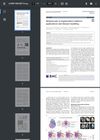
 This review highlights the diverse roles of melanocytes in pigmentation, immunity, and hearing among other functions, their involvement in disorders, and their emerging potential in regenerative medicine, including applications in disease modeling and therapy development using advanced technologies.
 February 2024 in “Skin health and disease”
 This review reports that exosomes show potential in regenerative and cosmetic dermatology for applications like wound healing and hair loss mitigation, but their clinical use is currently limited by high costs, complex processing, and sparse clinical evidence.
 February 2024 in “Rheumatology & autoimmunity”
 This case report documents a rare instance where homonymous hemianopia was the first manifestation of systemic lupus erythematosus in a 42-year-old woman, suggesting its potential inclusion as an initial diagnostic indicator in SLE.
January 2024 in “Frontiers research topics” This research abstract outlines the innovative approach of the Frontiers journal series, which aims to transform academic publishing by providing open access, interdisciplinary journals that employ a rigorous peer-review process to serve both scholarly communities and the public.
 July 2023 in “Journal of Biomedical Science”
 In this review, the authors emphasize that phenotypic heterogeneity in genetic systems and human diseases is influenced by stochastic fluctuation and network topology, proposing that ultrasensitivity and threshold effects explain this variability, which may inform strategies for preventing and treating genetic diseases.
May 2023 in “Asian Journal of Transfusion Science” In this study, conducted at a tertiary care hospital in Chennai, adverse events during blood donation were observed in 0.42% of donors, predominantly affecting first-time male donors, and were mostly vasovagal reactions such as giddiness and sweating.
 January 2023 in “Indian dermatology online journal”
 This case report describes a novel NECTIN4 gene mutation linked to ED-syndactyly syndrome 1 in a young girl, contributing to the understanding of this rare ectodermal dysplasia.
 July 2022 in “Journal of the Dermatology Nurses' Association”
 This editorial summarizes key dermatological insights and learnings from the 2022 Dermatology Nurses' Association Convention, covering conditions like lichen sclerosus and melanoma, and issues related to nail disorders and skin of color.