1 citations
,
February 2025 in “International Journal For Multidisciplinary Research” This study developed and validated a simple, accurate, and sensitive HPTLC method for estimating minoxidil and aminexil in topical solutions, demonstrating effective separation and linear measurement of these compounds with %RSD under 2% and high regression coefficients.
 4 citations
,
March 2019 in “Acta Chromatographica”
4 citations
,
March 2019 in “Acta Chromatographica” This study developed two sensitive chromatographic methods for determining finasteride and tamsulosin hydrochloride in pharmaceutical forms, validated against International Conference on Harmonisation guidelines.
This study established a simple, accurate, and precise HPLC method for determining the content and content uniformity of finasteride capsules.
 May 2023 in “Jurnal farmasi sains dan praktis”
 In this research on cinnamon and virgin coconut oil hair tonics, F2 and F3 demonstrated stable physical properties and mild irritation potential, while formula 1 remained non-irritating but less stable regarding pH and viscosity.
 21 citations
,
February 2003 in “Farmaco”
21 citations
,
February 2003 in “Farmaco” Method quickly measures finasteride concentration in capsules.
66 citations
,
April 1989 in “Alcoholism Clinical and Experimental Research” This study found that the ethanol patch test effectively indicates the ALDH phenotype in healthy Japanese individuals, suggesting its usefulness for future research.
January 2023 in “Minds at UW (University of Wisconsin)” This study suggests that while DI water significantly impacts hair, the effects of citric acid, hydrogen peroxide, and sodium chloride in shampoo on hair remain unclear, requiring further investigation.
 September 2005 in “Eclética Química”
 This study demonstrated that a photometric flow titration method using KMnO4 and minoxidil provided recovery rates of 97.6 to 102.8% for commercial samples, with relative errors of 3.5 to 4.0% compared to chromatographic procedures.
 October 2006 in “Eclética Química”
 This study presents three spectrophotometric methods for determining finasteride in bulk and tablet forms, showing a linear relationship between absorbance and finasteride concentration.
 3 citations
,
January 1989 in “Journal of Japan Oil Chemists Society”
3 citations
,
January 1989 in “Journal of Japan Oil Chemists Society” This study examined the effects of six surfactants on hair and scalp, finding varying irritation levels and impacts on protein denaturation and scalp turnover time, with AMT suggested as a good detergent.
1 citations
,
June 2021 in “Preprints.org” This study demonstrated that hair relaxers containing common chemicals significantly reduced cell viability and increased apoptosis in human skin cells, suggesting potential toxicity that could be assessed with advanced in vitro technologies rather than animal testing.
 January 2019 in “Arabian Journal of Chemistry”
 This study developed and validated an HPLC method to quantify impurities in finasteride, demonstrating its suitability for quality assurance of the drug and its related substances.
January 2013 in “Zhongguo yaofang” This study established a sensitive and reproducible method for determining the levels of four organic solvents in finasteride raw materials, meeting the requirements of the Chinese Pharmacopeia.
 February 2025 in “Journal of Forensic Sciences”
 The study found that sonication washing of hair roots with fewer than 50 visible nuclei could reduce the number of nuclei available for DNA extraction and STR typing, suggesting that for laboratories focused on nuDNA analysis, a gentler washing method might be adequate.
This study found that hair cosmetics have strong bacteriostatic properties, suggesting that current microbial test methods for these products should be revised.
 January 2022 in “Healthy Tadulako Journal”
 This study found no difference in the physical stability of hair tonic preparations made from sansevieria leaves extract, regardless of whether maceration or soxhletation methods were used.
 18 citations
,
January 2008 in “Sen'i Gakkaishi”
18 citations
,
January 2008 in “Sen'i Gakkaishi” This study observed that repeated perm treatments decrease disulfide bonds in hair due to their conversion largely into cysteic acid, affecting the waving efficiency depending on the reduction agent used.
 19 citations
,
November 1971 in “Clinica Chimica Acta”
19 citations
,
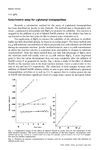
November 1971 in “Clinica Chimica Acta” In this study, the researchers found that the absence of the NFI-C transcription factor delayed the hair growth cycle in mice by affecting key gene expressions and signaling pathways.
 14 citations
,
January 2011 in “Journal of analytical & bioanalytical techniques”
14 citations
,
January 2011 in “Journal of analytical & bioanalytical techniques” This research discusses a validated HPTLC method for simultaneously determining Tamsulosin Hydrochloride and Finasteride in bulk and pharmaceutical dosage forms but reports no new clinical results.
 162 citations
,
August 2005 in “The journal of investigative dermatology/Journal of investigative dermatology”
162 citations
,
August 2005 in “The journal of investigative dermatology/Journal of investigative dermatology” This study introduces a novel non-invasive method called "differential stripping" to quantify the penetration of topically applied substances into hair follicles.
January 2018 in “Journal of analytical, bioanalytical and separation techniques”  3 citations
,
January 2006 in “Eclética Química”
3 citations
,
January 2006 in “Eclética Química” This study developed three spectrophotometric methods to effectively measure finasteride in bulk and tablet forms, providing accurate results that align closely with labeled claims.
 3 citations
,
January 2007 in “Journal of health science”
3 citations
,
January 2007 in “Journal of health science” This study found that an enzymatic method effectively identified chemical treatments like perming and dyeing by detecting higher degradation in treated hair compared to untreated hair.
May 2023 in “Spectrochimica Acta Part A: Molecular and Biomolecular Spectroscopy” This study developed a synchronized fluorescence spectroscopic approach to quantify finasteride and tadalafil in various forms, achieving high accuracy with %recoveries of about 99.62% and 100.19% respectively, and demonstrated superior environmental friendliness compared to previous methods.
 4 citations
,
January 2011 in “Analytical Letters”
4 citations
,
January 2011 in “Analytical Letters” This study demonstrated that a flow injection method using potassium permanganate for detecting minoxidil provided accurate recoveries and agreed closely with HPLC results, showing potential for effective analysis of commercial samples.
 1 citations
,
February 2014 in “Analytical Letters”
1 citations
,
February 2014 in “Analytical Letters” This study developed a fast and sensitive ultra-high performance liquid chromatography method to quantify ketoconazole in antidandruff emulsions, showing comparable results to labeled concentrations.
 January 2025 in “International Journal of Pharmaceutical Research and Applications”
 In this research, topical gels using natural mucilages from okra and hibiscus were successfully formulated to deliver diclofenac diethylamine, with hibiscus mucilage at 10% showing the best performance as a gelling agent based on various physicochemical tests.
 4 citations
,
January 2002 in “Indian Journal of Pharmaceutical Sciences”
4 citations
,
January 2002 in “Indian Journal of Pharmaceutical Sciences” This study developed a precise and reproducible method for estimating finasteride in tablet formulations using a colorimetric reaction with specific reagents.
 2 citations
,
January 2015 in “Sen'i Gakkaishi”
2 citations
,
January 2015 in “Sen'i Gakkaishi” This study found that washing hair after reduction in a permanent waving process allows for significant reformation of disulfide cross-links, enhancing the strength and elasticity of hair fibers.
January 2002 in “China Surfactant Detergent & Cosmetics” This study compared shampoos and found that shampoo D, containing polyquaternium-10, guar gum, and dimethicone, was most effective in restoring chemically permed hair.