 January 2025 in “Recent Patents on Anti-Cancer Drug Discovery”
 In this study, neoadjuvant treatment with durvalumab combined with albumin-bound paclitaxel and carboplatin in patients with driver gene-negative stage III NSCLC showed a 65% objective response rate and was associated with high pathological response rates and improved immune function, with most adverse events being mild.
 4 citations
,
March 2010 in “International Journal of Oral Science”
4 citations
,
March 2010 in “International Journal of Oral Science” This study concluded that the Chinese herbal medicine Xianhuayin effectively reversed DMBA-induced premalignant lesions in the buccal pouch of golden hamsters.
May 2026 in “Therapeutic Delivery” This study found that applying a dutasteride-loaded liposome formulation to damp rat skin nearly doubled the drug's follicular accumulation compared to dry skin, suggesting scalp hydration status may significantly impact the drug's topical delivery, especially in follicle-rich areas.
5 citations
,
August 2022 in “Mediators of Inflammation” This study found that combining pulsed dye laser with pingyangmycin improved treatment efficacy, scar repair, skin condition, and patient satisfaction in treating post-acne hyperplastic scars, compared to laser alone, without increasing adverse reactions.
January 2026 in “Molecules” This study found that DHA, a derivative of artemisinin, shows potential as a cosmetic ingredient due to its anti-aging, anti-hair loss, antibacterial, whitening, and anti-glycation activities.
 November 2024 in “Journal of Investigative Dermatology”
 Reishi mushroom extract may help treat hair loss.
 June 2024 in “International Journal of Dermatology”
 This article in the International Journal of Dermatology reports on a case series where the drug upadacitinib was used to treat patients with recalcitrant lichen planopilaris, but no abstract or detailed results are provided to assess its efficacy or safety fully.
 80 citations
,
April 2011 in “Plant physiology”
80 citations
,
April 2011 in “Plant physiology” This study suggests that the GPX-PDE1 and GPX-PDE2 genes in white lupin enhance root hair development and contribute to Pi limitation acclimation by facilitating glycerophosphodiester degradation.
 April 2026 in “Frontiers in Medicine”
 In this case report, a female patient with both psoriasis and lichen planus initially responded to acitretin and topical mometasone but experienced a relapse after stopping the treatment. The authors reported marked improvement within 3 months after switching to upadacitinib, aiming to guide clinical decision-making.
January 2014 in “Journal of Changchun University of Traditional Chinese Medicine” This study found that resolving acne capsules may suppress acne keratosis and regulate hormone levels in a rabbit ear acne model, showing potential anti-acne effects.
 March 2025 in “Journal of Pakistan Association of Dermatologists”
 In this randomized clinical trial, the authors reported that after 12 weeks, 5% dapsone gel was more effective than 1% clindamycin phosphate gel in treating mild to moderate acne vulgaris, showing efficacy in 78.2% of patients compared to 52.7% with clindamycin.
15 citations
,
July 2022 in “Nano Research” This study suggests that using cholesterol-free liposomes, specifically PPD-Lip, as a delivery system with dutasteride may enhance the treatment of androgenetic alopecia by promoting hair regrowth in mice models.
 26 citations
,
November 2002 in “Planta medica”
26 citations
,
November 2002 in “Planta medica” In this study, the methanol extract of Cercidiphyllum japonicum heartwood was found to stimulate the proliferation of mouse hair epithelial cells, with several isolated compounds showing significant proliferative activities.
 July 2026 in “Mendeley Data”
 This dataset from a systematic review contains extracted data from 56 studies involving 109 patients to assess dupilumab's effects on alopecia areata, detailing study characteristics, patient demographics, treatment regimens, and clinical outcomes.
7 citations
,
March 2013 in “Annals of Hematology” Ganoderma lucidum can cause severe skin reactions and hair loss.
October 2023 in “IP Indian Journal of Clinical and Experimental Dermatology” This study demonstrated that a 12-week treatment with luliconazole-containing shampoo significantly reduced scalp scaling, erythema, and itching in adults with seborrheic dermatitis, achieving high tolerability and progressive symptom improvement without reported intolerance or recurrences.
33 citations
,
January 2019 in “Acta Dermato Venereologica” This case report suggests potential effectiveness of dupilumab for alopecia areata, though hair regrowth may result from indirect effects on inflammation in atopic dermatitis.
 18 citations
,
August 2019 in “Drug Development and Industrial Pharmacy”
18 citations
,
August 2019 in “Drug Development and Industrial Pharmacy” This study concludes that phospholipid–polymer hybrid nanoparticles may be an effective delivery system for quercetin in treating androgenic alopecia by improving hair regrowth and preventing hair follicle cell apoptosis in rat models.
 12 citations
,
August 2019 in “Dermatitis”
12 citations
,
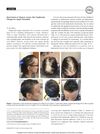
August 2019 in “Dermatitis” This case report describes a 42-year-old woman with atopic dermatitis, whose alopecia areata reactivated rapidly after starting dupilumab, possibly indicating an unrecognized adverse effect in AD patients.
 70 citations
,
July 2005 in “Journal of Ethnopharmacology”
70 citations
,
July 2005 in “Journal of Ethnopharmacology” In this study, Ganoderma lucidum extract was found to significantly inhibit 5alpha-reductase activity and testosterone-induced prostate growth in rats, suggesting potential use for treating benign prostatic hyperplasia.
December 2025 in “Skin Health and Disease” This case report details the development of a psoriasiform rash and inflammatory alopecia in a 29-year-old man with severe atopic dermatitis following dupilumab treatment. The authors observed hair regrowth and eczema control after discontinuing dupilumab and beginning treatment with abrocitinib.
 4 citations
,
August 2014 in “Dermatology and Therapy”
4 citations
,
August 2014 in “Dermatology and Therapy” This study suggests that LOYON® is safe, well tolerated, and effective in reducing scaling from cradle cap in infants and children without causing spot bleedings.
3 citations
,
August 2019 in “Medika Tadulako: Jurnal Ilmiah Kedokteran Fakultas Kedokteran dan Ilmu Kesehatan” In this study on New Zealand white rabbits, the researchers reported that a hair tonic formula combining bitter melon leaf and carrot extracts resulted in optimal hair growth, particularly at a 3:1 ratio and a concentration of 3%, without causing irritation.
 1 citations
,
March 2019 in “Journal of Interdisciplinary Medicine”
1 citations
,
March 2019 in “Journal of Interdisciplinary Medicine” This case report details a middle-aged man with multiple sclerosis who developed difficult-to-evaluate skin reactions after daclizumab treatment, noting only slight improvement with additional therapies.
August 2026 in “Tạp chí Dược liệu” In this study, Curcuma longa, Eclipta prostrata, and Pogostemon cablin extracts were found to significantly promote human dermal papilla cell proliferation, while Chrysanthemum indicum and Eclipta prostrata exhibited strong antioxidant activities, indicating their potential for hair growth-promoting formulations.
36 citations
,
March 1989 in “British journal of dermatology/British journal of dermatology, Supplement” In this study, the authors compared topical diphencyprone and tretinoin gel for treating alopecia totalis and universalis, but the abstract does not report any definitive clinical results.
 32 citations
,
January 2008 in “Journal of Microencapsulation”
32 citations
,
January 2008 in “Journal of Microencapsulation” In this study, nanocapsule-based preparations containing hinokitiol promoted hair growth in mice comparably to Minoxidil solution, as indicated by photographic and histological analysis.
December 2024 in “Food Bioscience” In a depilation mouse model, this study found that Limosilactobacillus fermentum MF10 promoted hair growth and increased follicle size by activating skin Wnt/β-catenin signaling and modulating gut microbiota, with effects comparable to the positive control finasteride.
October 2017 in “Our Dermatology Online” This study reports that while DCP had similar treatment efficacy in propylene glycol and isopropanol for alopecia areata, the formulation in isopropanol was better tolerated.
 March 2021 in “Research Society and Development”
 This case study described a Staffordshire Bull Terrier diagnosed with alopecia by color dilution, characterized by gradual hair loss and confirmed through clinical examination and histopathology.