11 citations
,
November 2009 in “Journal of steroid biochemistry and molecular biology/The Journal of steroid biochemistry and molecular biology” This study found that bolandiol increased lean body mass and bone mineral density in castrate adult male rats, exhibiting tissue selectivity and acting through multiple receptor pathways with less potency compared to other androgens.

The document concludes that scientists created various steroids with different properties, including a more effective semi-synthetic vitamin D.
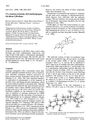 December 1998 in “Acta Crystallographica Section C-crystal Structure Communications”
 This study describes the molecular conformation and intermolecular interactions in the crystalline structure of the compound C24H31BrO4.
 7 citations
,
April 2019 in “The Journal of Steroid Biochemistry and Molecular Biology”
7 citations
,
April 2019 in “The Journal of Steroid Biochemistry and Molecular Biology” This study found that 11α-hydroxyprogesterone is a potent inhibitor of 11βHSD2 in vitro and may serve as a precursor to unique C11α-hydroxy steroids in prostate cancer tissue.
2 citations
,
September 1992 in “Steroids” The researchers reported that compounds 11 to 13 derived from Westphalen-type steroids showed strong antiandrogenic activity in vivo, though their effects could not be attributed to 5α-reductase inhibition or androgen receptor binding.
 7 citations
,
June 1989 in “Steroids”
7 citations
,
June 1989 in “Steroids” In this study, the synthesis of C-4 and C-6 bridged haptens of 11 alpha-hydroxyprogesterone revealed an unexpected formation of a C-4 substituted product using a 6-bromo derivative, contrary to prior reports.
 1 citations
,
January 2024 in “Curēus”
1 citations
,
January 2024 in “Curēus” This study identified significant trends in interest around selective androgen receptor modulators, with increasing attention contrasting stagnant or declining interest in post-cycle therapies and anabolic steroids, and calls for clinicians to use social and prescription data to adjust treatment protocols accordingly.
1 citations
,
December 2011 in “Arzneimittelforschung” This study found that the compound 9,11-dehydrocortexolone 17alpha-butyrate (CB-03-04) showed strong local antiandrogenic activity in animal models, suggesting potential for treating prostate conditions.
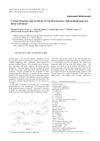
 February 1999 in “Analytical Sciences”
 A new antiandrogen compound was made and its detailed three-dimensional shape was described.
 2 citations
,
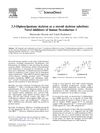
October 2001 in “Analytical Sciences”
2 citations
,
October 2001 in “Analytical Sciences” A new compound that could treat various androgen-related conditions was created and analyzed.
 13 citations
,
August 2007 in “Bioorganic & medicinal chemistry letters”
13 citations
,
August 2007 in “Bioorganic & medicinal chemistry letters” This study developed a new competitive 5alpha-reductase inhibitor with an IC(50) of 0.84 microM using a novel chemical structure.
May 2022 in “Current Enzyme Inhibition” This study found that the synthesized compound 7b exhibited higher 5α-reductase inhibitory activity, increased solubility, and dissolution compared to finasteride, suggesting its potential as a lead compound for benign prostatic hyperplasia treatment.
2 citations
,
January 1975 in “Archives of Dermatological Research” Certain enzymes react strongly with some hormones in rat skin during hair growth, mainly in sebaceous glands and hair sheaths.
 16 citations
,
October 2007 in “Andrologia”
16 citations
,
October 2007 in “Andrologia” This study suggests that DHT may have a less potent effect on the prostate compared to testosterone while maintaining safety and similar effects on erythropoiesis and lipids.
 18 citations
,
January 2002 in “Chemical & pharmaceutical bulletin/Chemical and pharmaceutical bulletin”
18 citations
,
January 2002 in “Chemical & pharmaceutical bulletin/Chemical and pharmaceutical bulletin” This study found that several new pregnane derivatives, especially steroids 16 and 19, demonstrated higher antiandrogenic activity on male hamster models than the commonly used finasteride.

In this study, researchers successfully synthesized a rigid 3a-arylhexahydropentalene-1,6-dione from the easily accessible starting material cyclopent-2-en-1-one, highlighting a structural motif common in natural products and pharmaceuticals.
January 2006 in “Benzina: Revista d'excepcions culturals” This study observed that new trienone compounds consistently showed higher 5alpha-reductase inhibitory activity compared to corresponding dienones across various biological models.
 19 citations
,
June 1999 in “Steroids”
19 citations
,
June 1999 in “Steroids” This study found that compound 10 inhibited testosterone conversion to DHT in hamster flank organs and seminal vesicles, whereas compound 11's inhibitory effect varied with dose, linked to halogen electronegativity differences.
 20 citations
,
June 2007 in “Recent Patents on Endocrine, Metabolic & Immune Drug Discovery”
20 citations
,
June 2007 in “Recent Patents on Endocrine, Metabolic & Immune Drug Discovery” This review summarizes recent research and patents on 17β-HSD3, 17β-HSD5, and 3α-HSD3 inhibitors, suggesting their potential in treating androgen-dependent diseases, but reports no new clinical results.
This source offers an in-depth review of Methandrostenolone, examining its pharmacology, performance-enhancing effects, potential health risks, and legal status in various countries, while emphasizing the scientific evidence surrounding its use and misuse.
 17 citations
,
August 2015 in “Journal of steroid biochemistry and molecular biology/The Journal of steroid biochemistry and molecular biology”
17 citations
,
August 2015 in “Journal of steroid biochemistry and molecular biology/The Journal of steroid biochemistry and molecular biology” This study concluded that the best approach for detecting Androsta-1,4,6-triene-3,17-dione administration in horses is monitoring the metabolites M1b or M4 in urine, detectable up to 77 hours post-administration.
4 citations
,
October 2024 in “Heliyon” This study characterized the CYP154C7 enzyme from *Streptomyces* sp. PAMC26508, highlighting its ability to hydroxylate steroids efficiently, particularly androstenedione, and identified key amino acids important for substrate selectivity and catalytic efficiency.
January 2023 in “WikiJournal of Medicine” This review discusses alternative androgen pathways, including the "backdoor" pathway and pathways to 11-oxygenated steroids, and reports no new clinical results; the authors aim to clarify these concepts for better patient treatment.
7 citations
,
August 2010 in “Medicinal Chemistry Research” This study found that some synthesized 17-oximino-5-androsten-3β-yl esters demonstrated stronger cytotoxicity and antiandrogenic activity against prostate cancer cells than finasteride.
59 citations
,
September 2003 in “Journal of steroid biochemistry and molecular biology/The Journal of steroid biochemistry and molecular biology” This study suggests that epitestosterone may play a role in regulating androgen-dependent processes like prostate growth and body hair distribution by counteracting testosterone's actions.
8 citations
,
June 2017 in “Steroids” This study evaluated novel steroid compounds for their ability to inhibit 5α-reductase, showing that compound 16a significantly reduced rat prostate weight more than epristeride and exhibited excellent in vitro inhibitory potency, indicating its potential as a lead candidate for further benign prostatic hyperplasia drug research.
 1 citations
,
January 2009 in “X-ray Structure Analysis Online”
1 citations
,
January 2009 in “X-ray Structure Analysis Online” A new compound was made that might help treat diseases related to male hormones.
 42 citations
,
May 2003 in “Mini-reviews in Medicinal Chemistry”
42 citations
,
May 2003 in “Mini-reviews in Medicinal Chemistry” This study found that newly synthesized steroidal trienones demonstrated stronger 5α-reductase inhibitory activity compared to dienones in various biological models, suggesting potential for developing enhanced antiandrogenic drugs.
179 citations
,
May 1982 in “The Journal of clinical investigation/The journal of clinical investigation” This study found that plasma 3 alpha-diol glucuronide was markedly elevated in women with idiopathic hirsutism, suggesting it may be a marker of peripheral androgen action.
43 citations
,
July 2017 in “International journal of pharmaceutics” This study found that anionic HSES achieved high complexation efficiencies with various steroids, significantly enhancing their solubility, while specific β-cyclodextrin thioethers showed selective binding to testosterone and estradiol.