 6 citations
,
March 2022 in “Nusantara Bioscience”
6 citations
,
March 2022 in “Nusantara Bioscience” This study evaluated the thrombolytic potential of Moringa oleifera leaves and flowers, finding significant in vitro clot lysis activity at a concentration of one mg/ml, which suggests possible use in preventing athero-thrombotic cardiovascular diseases, although further research is needed to identify the active components.
 5 citations
,
September 2020 in “Molecules”
5 citations
,
September 2020 in “Molecules” In this study, extracts from three Polynesian plants—Bidens pilosa, Calophyllum inophyllum, and Fagraea berteroana—were found to increase dermal papilla cell proliferation and modulate hair growth-related gene expression, suggesting potential for stimulating hair growth.
 4 citations
,
September 2022 in “Indian Journal of Pharmaceutical Education and Research”
4 citations
,
September 2022 in “Indian Journal of Pharmaceutical Education and Research” This study found that methanolic leaf extract of Plumbago zeylanica L. demonstrates strong thrombolytic and antioxidant activities and shows promise as a source of such agents.
 4 citations
,
July 2022 in “Veterinary medicine international”
4 citations
,
July 2022 in “Veterinary medicine international” This review discusses the nature, diagnosis, and control of mange in rabbits, focusing on its zoonotic implications and currently available treatment strategies, and reports no clinical results.
 3 citations
,
June 2022 in “GSC Biological and Pharmaceutical Sciences”
3 citations
,
June 2022 in “GSC Biological and Pharmaceutical Sciences” This study reported that methanolic extracts of Capparis decidua fruits showed significant in vitro thrombolytic activity, suggesting their potential as a dietary health supplement for preventing thrombotic cardiovascular diseases.
 3 citations
,
April 2021 in “Journal of Medicinal Chemistry”
3 citations
,
April 2021 in “Journal of Medicinal Chemistry” This study suggests that finasteride may inhibit the enzyme PNMT, potentially contributing to its sexual and psychological side effects.
 3 citations
,
September 2020 in “Journal of Threatened Taxa”
3 citations
,
September 2020 in “Journal of Threatened Taxa” This paper highlights the distribution and potential economic and medicinal values of aquatic macrophytes in northern Bihar's wetlands, emphasizing their importance to local livelihoods and the risks of habitat degradation.
 3 citations
,
May 2016 in “International Journal of Research in Ayurveda and Pharmacy”
3 citations
,
May 2016 in “International Journal of Research in Ayurveda and Pharmacy” This paper reviews the potential of Ayurvedic herbs like ginger, garlic, and turmeric to reduce the side effects of cancer therapies and enhance patient wellbeing but reports no new experimental findings.
 3 citations
,
November 2014 in “Protein Expression and Purification”
3 citations
,
November 2014 in “Protein Expression and Purification” This study reported successful recovery of biologically active recombinant murine Wnt3a without detergent, suggesting usefulness for structure-activity studies avoiding detergent-related issues.
 2 citations
,
November 2024 in “AAPS PharmSciTech”
2 citations
,
November 2024 in “AAPS PharmSciTech” In this study, researchers found that niosomes, bilosomes, and spanlastic formulations can enhance the oral anticoagulation efficiency of rivaroxaban in rats, with spanlastic ranked as the most effective in prolonging clotting, prothrombin, and tail bleeding times compared to unprocessed rivaroxaban.
 2 citations
,
September 2022 in “Advances in Environmental Biology”
2 citations
,
September 2022 in “Advances in Environmental Biology” This study found that ethanolic extracts of Avicennia marina leaves showed potential antibacterial activity against Vancomycin-Resistant Enterococcus faecium but were less effective than standard antibiotics.
 2 citations
,
May 2022 in “Ethnobotany research and applications”
2 citations
,
May 2022 in “Ethnobotany research and applications” This study documented the indigenous uses of 68 medicinal plant species for food and beverages across three ethnic communities in Southwest Pakistan, with implications for sustainable development and cross-cultural understanding.
 1 citations
,
September 2025 in “Dermatology and Therapy”
1 citations
,
September 2025 in “Dermatology and Therapy” This review suggests that glucagon-like peptide 1 receptor agonists (GLP-1 RAs) have potential benefits for dermatologic conditions but may also cause adverse skin reactions and impact surgical outcomes.
 1 citations
,
November 2024 in “Revista JRG de Estudos Acadêmicos”
1 citations
,
November 2024 in “Revista JRG de Estudos Acadêmicos” This review discusses available treatments for androgenetic alopecia and highlights that, although no definitive treatment exists, current options generally achieve high satisfaction rates.
 1 citations
,
January 2021 in “Advances in animal and veterinary sciences”
1 citations
,
January 2021 in “Advances in animal and veterinary sciences” This study observed a high prevalence of the dermatophyte M. canis in humans and pets in Egypt, particularly highlighting the potential for zoonotic transmission from dogs and cats to humans.
 1 citations
,
January 2014 in “Side effects of drugs annual”
1 citations
,
January 2014 in “Side effects of drugs annual” This review discusses adverse reactions to antihelminthic drugs and highlights that levamisole, a common street cocaine adulterant, can cause serious side effects, including skin necrosis and vasculitis.
 1 citations
,
May 2011 in “Molecular Medicine Reports”
1 citations
,
May 2011 in “Molecular Medicine Reports” This study found no association between the -866G/A polymorphism in the UCP2 gene and the development of polycystic ovary syndrome.
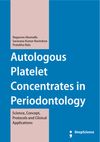
In this book, the authors provide an accessible overview of platelet concentrates and their dental applications, highlighting their role in tissue healing and regeneration, and reviewing recent studies on their efficacy in periodontal therapy, implant dentistry, and oral surgery.
 December 2018 in “Notulae Botanicae Horti Agrobotanici Cluj-Napoca”
 This issue of Notulae Botanicae Horti Agrobotanici Cluj-Napoca reviews new research topics in plant science, including plant root hair growth in response to hormones and micropropagation techniques, without reporting additional clinical results.
 June 2026 in “International Journal of Ayurvedic Medicine (Hyderabad)”
 This study reviewed trichoscopic images to assess hair loss, finding that ayurvedic signs (lakshanas) aligned with modern trichoscopic parameters, potentially aiding accurate diagnosis and management of hair conditions.
 June 2026 in “International Journal of Ayurvedic Medicine”
 In this study, researchers investigated the alignment of trichoscopic findings with ayurvedic signs (lakshanas) for diagnosing hair loss, suggesting that integrating these perspectives could enhance diagnostics and management of hair and scalp conditions.
 May 2026 in “Pacific Rim International Journal of Nursing Research”
 In this study of Thai women with ovarian cancer receiving chemotherapy, researchers found that symptom experiences such as numbness, tingling, and fatigue were frequent and significantly affected quality of life, while the effectiveness of symptom management did not significantly predict quality of life.
 March 2026 in “Health Psychology Report”
 In this study, individuals with alopecia and psoriasis reported higher body shame and depressive symptoms and lower self-compassion compared to the general population, with self-compassion mediating the relationship between external shame and anxiety and depression symptoms.
 February 2026 in “International Journal of Science and Research (IJSR)”
 This case report describes an 18-year-old female with alopecia areata who experienced hair regrowth within seven days following Prachana Vidhi treatment in an Ayurvedic setting, suggesting this approach may offer effective results for patchy hair loss.
 January 2026 in “Theoretical and Natural Science”
 In this study, the authors explored the role of Lgr5+ hair follicle stem cells and their regulation through the Wnt/-catenin pathway, highlighting how precise modulation of this pathway is crucial for treating hair loss safely and effectively.
 January 2026 in “Dermatology and Therapy”
 This study suggests a possible bidirectional relationship between sleep quality and hair loss, indicating that addressing sleep disturbances might improve hair loss management and patient well-being.
 January 2026 in “International Journal of Unani and Integrative Medicine”
 This review correlates modern biomedical and Unani medical perspectives on PCOS, suggesting that integrating both approaches might improve symptom management and quality of life for affected women, though it reports no new clinical results.
 January 2026 in “International journal of research and scientific innovation”
 In this laboratory study, researchers developed a multifunctional organic hair cream with various natural extracts, finding that the cream with 15% extracts demonstrated higher physical stability, hair strength, and antimicrobial activity compared to lower concentration samples and synthetic alternatives.
 December 2025 in “International Journal of Research in Ayurveda and Pharmacy”
 This case report details a 19-year-old female with autoimmune hair loss successfully managed using an integrated Ayurvedic approach, achieving complete hair regrowth and symptom resolution within two months, suggesting potential efficacy for autoimmune conditions warranting further study.
 December 2025 in “International Journal of Pharmaceutical Sciences Review and Research”
 In this study, a newly developed polyherbal hair oil exhibited promising characteristics, including a beneficial pH and antimicrobial activity against Staphylococcus aureus, with preliminary tests suggesting it supports scalp and hair health without adverse effects.