 2 citations
,
April 2017 in “Actas Dermo-Sifiliográficas”
2 citations
,
April 2017 in “Actas Dermo-Sifiliográficas” This review discusses the etiology, pathogenesis, clinical presentation, and treatment of frontal fibrosing alopecia, noting the lack of clinical trial data and limited observational treatment results.
August 1994 in “Journal of Dermatological Science”  26 citations
,
October 2018 in “British Journal of Dermatology”
26 citations
,
October 2018 in “British Journal of Dermatology” This study found that high frequency use of sunscreen is associated with frontal fibrosing alopecia among women attending a specialist hair clinic in Australia.
 1 citations
,
January 2019 in “Acta dermato-venereologica”
1 citations
,
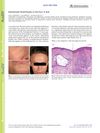
January 2019 in “Acta dermato-venereologica” The woman's skin and hair symptoms were confirmed as frontal fibrosing alopecia, and while facial papules are common in such cases, there's no effective local treatment, but systemic treatments can help.
 April 2019 in “Journal of Investigative Dermatology”
 This study found that CYP11A1-derived vitamin D3 analogs inhibit fibroblast proliferation and decrease collagen production through VDR expression, showing potential antifibrotic and antiproliferative activity in human dermal fibroblasts.
December 2023 in “JEADV Clinical Practice” This study found that dermoscopy of the axilla in patients with frontal fibrosing alopecia revealed significantly higher odds of brownish peripillary halos, suggesting a diagnostic clue for the condition in this region.
3 citations
,
November 2024 in “Journal of the European Academy of Dermatology and Venereology” 2 citations
,
June 2021 in “Sultan Qaboos University medical journal” This case report presents three sisters with familial frontal fibrosing alopecia, making it the 25th documented familial case, with treatment results observed in one sister.
4 citations
,
April 2019 in “DOAJ (DOAJ: Directory of Open Access Journals)” This review highlights available treatments for frontal fibrosing alopecia, noting that 5-alpha reductase inhibitors, intralesional steroids, and hydroxychloroquine currently have the most evidence supporting their use, while other treatments show variable results and require further study.
1 citations
,
August 2024 in “Anais Brasileiros de Dermatologia” This review discusses the non-follicular skin manifestations of frontal fibrosing alopecia and how they affect diagnosis and treatment, but reports no new clinical results.
 January 2019 in “Springer Reference Medizin”
 This article reviews the role of factor Xa inhibitors like Rivaroxaban and suggests they may eventually replace vitamin K antagonists, but their side effects require further clarification.
 26 citations
,
September 2018 in “Neurobiology of Disease”
26 citations
,
September 2018 in “Neurobiology of Disease” This study found that both finasteride and dutasteride significantly reduced L-DOPA-induced dyskinesia in a rat model of Parkinson's disease, with dutasteride showing greater effectiveness at lower doses.
8 citations
,
August 2017 in “Skin appendage disorders” Red dots on the upper chest may be an early sign of certain types of hair loss.
 September 2023 in “International Journal of Dermatology”
 In this study, FAPD was characterized in a Chinese population by perifollicular mast cell infiltration, suggesting young individuals may be at higher risk than previously thought.
January 2016 in “Indian dermatology online journal” This case study diagnosed a 60-year-old woman with frontal fibrosing alopecia after histopathological analysis showed characteristic scarring patterns in the hairline area.
This study found that FGF5 alternative spliceosomes inhibit dermal papilla cell proliferation and regulate hair follicle growth-related gene expression, impacting hair follicle development in rabbits.
 September 2024 in “Cutis”
 Sunscreen use may increase the risk of frontal fibrosing alopecia.
 1 citations
,
April 2018 in “Journal of Investigative Dermatology”
1 citations
,
April 2018 in “Journal of Investigative Dermatology” This study found that FZD2 is crucial for hair follicle formation and postnatal growth in mice and has a novel role in regulating early epidermal development, including stratification and cornification.
 8 citations
,
December 2017 in “Journal of The American Academy of Dermatology”
8 citations
,
December 2017 in “Journal of The American Academy of Dermatology” This correspondence discusses the diagnostic criteria for frontal fibrosing alopecia but reports no new research findings, agreeing with many previously suggested criteria.
March 2021 in “Arrow - TU Dublin (Technological University Dublin)” This study tested a folate-conjugate drug delivery system and found its cytotoxicity depends on whether the treated cells overexpress folate receptors, suggesting potential for targeted chemotherapy.
28 citations
,
December 2001 in “European Journal of Pharmacology” This study found that the compound M50054 inhibits apoptosis by blocking caspase-3 activation and may improve chemotherapy-induced alopecia and hepatitis symptoms.
 September 2017 in “Journal of Investigative Dermatology”
 This study found that infrared thermography might be a useful non-invasive tool to help diagnose frontal fibrosing alopecia by identifying active phases of the disease.
 68 citations
,
May 2016 in “Experimental dermatology”
68 citations
,
May 2016 in “Experimental dermatology” This review discusses what is known about the pathobiology of frontal fibrosing alopecia and reports no new clinical findings, highlighting potential environmental and genetic factors in disease pathogenesis.
 21 citations
,
October 2017 in “Journal of the European Academy of Dermatology and Venereology”
21 citations
,
October 2017 in “Journal of the European Academy of Dermatology and Venereology” This study reports that variable environmental factors, including dietary habits, may contribute to the increasing incidence and diverse clinical presentations of frontal fibrosing alopecia.
 3 citations
,
February 2022 in “Dermatology practical & conceptual”
3 citations
,
February 2022 in “Dermatology practical & conceptual” This study found that trichoscopy is an effective noninvasive technique for diagnosing frontal fibrosing alopecia, confirming its valuable role alongside traditional histopathological examination.
 1 citations
,
November 2020 in “Journal of The American Academy of Dermatology”
1 citations
,
November 2020 in “Journal of The American Academy of Dermatology” The commentary suggests that certain hair and skin care products may be linked to frontal fibrosing alopecia, but not sunscreens, and calls for more thorough research on the causes.
 18 citations
,
October 2017 in “Drug Design Development and Therapy”
18 citations
,
October 2017 in “Drug Design Development and Therapy” The study found that finasteride increased endoplasmic reticulum stress and reduced fertility in rats, effects that were alleviated by the administration of DA-9401.
 28 citations
,
April 2009 in “Annals of laboratory medicine”
28 citations
,
April 2009 in “Annals of laboratory medicine” This study found that the DFS pattern occurs in about 28% of ANA-positive cases and is relatively frequent in autoimmune diseases, contrary to previous observations suggesting no link with these diseases.
 2 citations
,
July 2022 in “Frontiers in Medicine”
2 citations
,
July 2022 in “Frontiers in Medicine” This review discusses the current understanding of frontal fibrosing alopecia's pathogenesis, highlighting genetic susceptibility, immune response involvement, and possible links to steroid hormones, but reports no new clinical results.
2 citations
,
January 2019 in “Skin appendage disorders” This article reports a case of frontal fibrosing alopecia in its early inflammatory stage that responded positively to intralesional steroid treatment.