 October 2010 in “Reproductive Biomedicine Online”
 A new method can almost perfectly distinguish adenomyosis from similar conditions using blood tests.
 January 2008 in “Springer eBooks”
 Thyroid disease can cause hair loss and treating thyroid problems might help with hair disorders.
 January 2006 in “Carl von Ossiezky University of Oldenburg”
 This study observed that unpigmented keratinocytes saturate quickly with foreign substance uptake compared to pigmented melanocytes, where melanin significantly enhances binding.
 April 2005 in “Aktuelle Dermatologie”
 This article reviews advancements in hair cosmetics, including "cosmeceuticals" and new dermocosmetic strategies, and reports no new clinical results.

This review examines complex regional pain syndrome (CRPS I) mechanisms, including immune dysregulation and psychological factors, but reports no new clinical results; the authors highlight potential diagnostic refinements.
 July 2003 in “British Journal of Dermatology”
 This summary presents papers from the British Society for Dermatopathology but does not report new scientific findings or results.
 January 2003 in “Journal für Kardiologie (Krause & Pachernegg GmbH)”
 This review discusses the dermatological impacts of hypogonadism in men, including skin thinning, reduced body hair, and skin reactions to testosterone therapy, but reports no new clinical results.
 June 1997 in “Australasian Journal of Dermatology”
 This article discusses hair and nail research contributions in dermatology but reports no new clinical findings.
 January 1987 in “Side effects of drugs annual”
 This chapter reviews dermatological drugs and cosmetics, identifying common allergens and preservatives linked to contact dermatitis without reporting new clinical results.

This review discusses the characteristics and management of adolescent androgenetic alopecia, noting a lack of FDA-approved treatments and reporting no new clinical results.
 December 2014 in “Turk Dermatoloji Dergisi”
 This study found that a hair lotion containing saw palmetto and 10% trichogen veg complex increased total hair count in male patients with androgenetic alopecia over four months, though observer assessments varied.
9 citations
,
September 2019 in “Clinical Cosmetic and Investigational Dermatology” In this article, the authors reported that calcipotriol/betamethasone dipropionate aerosol foam significantly improved scalp psoriasis symptoms in three patients by reducing itching and improving flaky patches within a four-week treatment period, confirming its efficacy and enhanced skin penetration compared to older formulations.
15 citations
,
June 1961 in “Archives of Dermatology” This report details observations from four patients with alopecia areata who received intralesional triamcinolone injections to assess its effectiveness for promoting hair regrowth in localized areas.
1 citations
,
August 2024 in “Journal of Cosmetic and Laser Therapy” This study found that intralesional vitamin D3 achieved similar effectiveness to triamcinolone acetonide for treating patchy alopecia areata but was associated with fewer adverse effects and higher patient satisfaction.
2 citations
,
January 2021 in “Indian Journal of Dermatology, Venereology and Leprology” This study found that topical betamethasone dipropionate was more effective than topical latanoprost in reducing the area and promoting hair regrowth in patients with localized alopecia areata, though latanoprost was considered safer.
February 2023 in “Reactions Weekly”  1 citations
,
April 2017 in “Journal of Investigative Dermatology”
1 citations
,
April 2017 in “Journal of Investigative Dermatology” This study evaluated the effects of topical glucocorticoids on human skin using non-invasive imaging methods and observed changes such as alterations in skin layer thickness, keratinocyte size, and collagen and elastin signal intensity.
34 citations
,
November 1974 in “Archives of Dermatology” This report discusses historical cases of visual side effects from scalp corticosteroid injections for alopecia areata and attributes their rarity now to improved injection techniques and smaller particulate sizes in suspensions.
 April 2023 in “Journal of Investigative Dermatology”
 This study found that long-term imiquimod treatment on mice intensified skin inflammation early on, but topical corticosteroids significantly reduced skin infiltration and inflammatory cytokines after initial inflammation subsided.
June 2025 in “Archives of Dermatological Research”  May 2026 in “Zenodo (CERN European Organization for Nuclear Research)”
 This study developed a low-viscosity triamcinolone acetonide serum, used with a derma stamp microneedling device, to improve targeted treatment of alopecia areata, reporting favorable drug solubility, spreadability, and permeation to hair follicles, while maintaining skin safety.
 21 citations
,
January 2005 in “Pediatric Dermatology”
21 citations
,
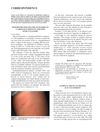
January 2005 in “Pediatric Dermatology” An 8-year-old girl with vitiligo developed extra hair growth on her knee after using tacrolimus ointment.
 9 citations
,
December 2020 in “Dermatologic Therapy”
9 citations
,
December 2020 in “Dermatologic Therapy” This review found that oral and topical phosphodiesterase inhibitors and topical prostaglandin analogues are safe and effective treatments for various skin diseases, including psoriasis, atopic dermatitis, vitiligo, and alopecia.
2 citations
,
February 2022 in “Journal of Pharmacy and Pharmacology” In this study, two methotrexate-loaded liquid crystal formulations for topical application showed immunomodulatory effects and induced skin changes in mice with imiquimod-induced psoriasis.
 2 citations
,
February 2009 in “Journal of the American Academy of Dermatology”
2 citations
,
February 2009 in “Journal of the American Academy of Dermatology” Injecting triamcinolone into the eyebrow area may help eyelash regrowth in alopecia areata patients.
This report describes a case where a young woman developed Kerion Celsi, a fungal skin infection, potentially linked to the use of a tretinoin, minoxidil, and betamethasone valerate lotion.
 2 citations
,
December 2020 in “American Journal of Dermatological Research and Reviews”
2 citations
,
December 2020 in “American Journal of Dermatological Research and Reviews” This study found that combining 308-excimer phototherapy with intramuscular triamcinolone acetonide was effective and well tolerated for treating resistant alopecia totalis, showing a 90% overall response rate in the ten patients studied, with the best results observed in younger patients.
1 citations
,
July 2025 in “Journal of Investigative Dermatology”  December 2019 in “International Journal of Research in Dermatology”
 In this randomized study, 72% of patients treated with 0.05% betamethasone dipropionate showed significant improvement in limited patchy alopecia areata compared to 36% of those using 0.05% tretinoin, suggesting BMD is more effective but further research on tretinoin is needed.
 11 citations
,
May 2010 in “Journal of the South African Veterinary Association”
11 citations
,
May 2010 in “Journal of the South African Veterinary Association” This case report describes how a treatment with mycophenolate mofetil and prednisone may be effective in managing autoimmune subepidermal blistering dermatosis in dogs while allowing for steroid reduction.