 130 citations
,
January 2005 in “American Journal of Clinical Dermatology”
130 citations
,
January 2005 in “American Journal of Clinical Dermatology” This review discusses the dermatologic symptoms associated with severe eating disorders like anorexia nervosa and bulimia nervosa and how they can aid in early diagnosis, without reporting new results.
130 citations
,
December 1998 in “The journal of investigative dermatology/Journal of investigative dermatology” In this study, different types of catagen in the C57BL/6 mouse model exhibited varying effects on hair follicle melanocytes and melanin distribution, with spontaneous and dexamethasone-induced catagen showing pigment incontinence, while cyclophosphamide-induced catagen retained dendritic melanocytes but increased ectopic melanin.
 130 citations
,
January 1994 in “Differentiation”
130 citations
,
January 1994 in “Differentiation” In this study, researchers found that bulge cells in mouse hair follicles undergo transient proliferation during early anagen, indicating their role as follicular stem cells. However, another factor beyond dermal papilla proximity may be required to initiate a new anagen phase.
 130 citations
,
June 2003 in “Journal of Investigative Dermatology Symposium Proceedings”
130 citations
,
June 2003 in “Journal of Investigative Dermatology Symposium Proceedings” This study found that estrogen receptor beta, not alpha, is the main mediator of estrogen action in human skin and hair follicles, suggesting a distinct role in these tissues.
 129 citations
,
January 2009 in “International Journal of Trichology”
129 citations
,
January 2009 in “International Journal of Trichology” This study found that trichoscopy criteria can distinguish female androgenic alopecia from chronic telogen effluvium, with specific features achieving 98% diagnostic specificity.
129 citations
,
January 2004 in “Journal of medicinal chemistry” This study synthesized nonsteroidal ligands as second-generation androgen receptor agonists and identified three compounds with significant anabolic activity and moderate to minimal androgenic activity in vivo.
128 citations
,
August 2020 in “Cell stem cell” In this study, researchers found that extrafollicular progenitors marked by Hic1 are the main contributors to reparative fibroblasts in wound repair, with potential to modulate healing outcomes through genetic and pharmacological interventions.
 128 citations
,
March 2016 in “Advanced Pharmaceutical Bulletin”
128 citations
,
March 2016 in “Advanced Pharmaceutical Bulletin” This study found that sub-100 nm size solid lipid nanoparticles showed the most effective skin penetration and depth, mainly via hair follicles, in rat skin.
 128 citations
,
August 2015 in “Cell Stem Cell”
128 citations
,
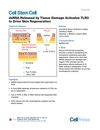
August 2015 in “Cell Stem Cell” The researchers reported that dsRNA from damaged skin activates TLR3, promoting hair follicle regeneration, while TLR3-deficient animals fail to initiate this process, suggesting potential therapeutic approaches for hair neogenesis.
 128 citations
,
September 2013 in “Journal of Clinical Epidemiology”
128 citations
,
September 2013 in “Journal of Clinical Epidemiology” This study developed a framework to handle missing participant data in systematic reviews for continuous outcomes, finding varied impacts on confidence in effect estimates across reviewed cases.
 128 citations
,
October 2011 in “Development”
128 citations
,
October 2011 in “Development” This study found that adult mouse dermis can be reprogrammed by epidermal cues to resemble neonatal dermis, with changes in fibroblast proliferation and extracellular matrix composition.
 128 citations
,
July 2009 in “International Journal of Pharmaceutics”
128 citations
,
July 2009 in “International Journal of Pharmaceutics” This study found that penetration enhancer-containing vesicles significantly improved minoxidil delivery to the skin compared to traditional liposomes and penetration enhancer-containing ethanolic solutions, with deformability linked to enhanced deposition.
 128 citations
,
January 1996 in “Journal of analytical toxicology.”
128 citations
,
January 1996 in “Journal of analytical toxicology.” This study suggests that while hair analysis using GC-MS is a sensitive method for detecting cocaine ingestion, it may not reliably indicate the amount, timing, or duration of drug use due to interindividual variability and multiple incorporation mechanisms.
128 citations
,
March 1989 in “Experimental Cell Research” Hoxc13 is important for hair and tongue development by controlling hair keratin genes.
 127 citations
,
December 2007 in “Journal of Investigative Dermatology”
127 citations
,
December 2007 in “Journal of Investigative Dermatology” This review examines regenerative hair waves and complex hair cycle domains in transgenic mice, highlighting how these dynamic processes contribute to skin regeneration and the physiological regulation of organs, but reports no new experimental results.
126 citations
,
August 2018 in “Molecular Systems Biology” This study found that in murine dermis, fibroblast state switching between proliferation and ECM deposition plays a crucial role in tissue architecture and wound healing.
 126 citations
,
April 2015 in “Clinical, cosmetic and investigational dermatology”
126 citations
,
April 2015 in “Clinical, cosmetic and investigational dermatology” This review discusses best practices for minimizing complications with dermal fillers and provides guidance based on expert consensus, yet it reports no new clinical results.
126 citations
,
January 1987 in “Current topics in developmental biology/Current Topics in Developmental Biology” Different keratin proteins are expressed in various epithelial cells at different stages, affecting cell structure and function.
 126 citations
,
October 1983 in “Journal of The American Academy of Dermatology”
126 citations
,
October 1983 in “Journal of The American Academy of Dermatology” This report verifies isotretinoin's significant efficacy in treating severe acne over the past year in the U.S., highlighting the need for careful patient selection and monitoring due to potential side effects.
125 citations
,
August 2003 in “Development” In this study, mice engineered to express human EGFR showed tissue-specific growth defects and neurodegeneration rescue, but developed severe heart issues and accelerated bone cell differentiation.
125 citations
,
August 1992 in “Development” This study found that implanting isolated adult rat dermal papillae into ear cuts led to the emergence of unusually large vibrissa-type hair follicles, demonstrating their capacity to induce specific hair fiber characteristics.
 124 citations
,
August 1990 in “British Journal of Dermatology”
124 citations
,
August 1990 in “British Journal of Dermatology” Diffuse alopecia in women may be related to androgens and iron deficiency, and basic hormone and nutrient screening is useful.
 124 citations
,
June 2020 in “Cell Stem Cell”
124 citations
,
June 2020 in “Cell Stem Cell” This study found that in mice, dermal adipocytes initiate inflammation and aid repair after skin injury by releasing lipids, suggesting a role in managing inflammatory diseases and impaired wound healing.
 124 citations
,
March 2012 in “JAMA”
124 citations
,
March 2012 in “JAMA” This abstract discusses the unclear role of dihydrotestosterone (DHT) in postembryonic life in marsupials and possibly humans, reporting no new findings.
 124 citations
,
August 1994 in “Journal of Investigative Dermatology”
124 citations
,
August 1994 in “Journal of Investigative Dermatology” This study found that applying dexamethasone to mice induced catagen-like follicle changes significantly earlier and more consistently than a vehicle, such changes being useful for studying hair follicle regression.
124 citations
,
April 1992 in “Journal of Endocrinology/Journal of endocrinology” This study observed that cells from androgen-sensitive areas like the beard and scrotum showed higher androgen receptor levels compared to those from non-balding scalp areas, supporting the role of dermal papilla in follicle growth responses to androgens.
124 citations
,
December 1983 in “Developmental Biology” EGF receptors are crucial for skin cell growth and decrease with age.
 123 citations
,
May 2020 in “Drug Development Research”
123 citations
,
May 2020 in “Drug Development Research” This article argues that androgen sensitivity could be a key factor in the severity of COVID-19, suggesting that trials with anti-androgen agents may be warranted.
123 citations
,
January 2020 in “International Journal of Molecular Sciences” This review discusses the role of fibroblast heterogeneity in determining skin scarring versus regeneration and reports no new results, highlighting opportunities for developing antiscarring therapies.
123 citations
,
December 1997 in “Calcified Tissue International” This study concluded that higher androgen levels in males and specific skeletal sites may contribute to differences in skeletal morphology, with glucocorticoids, E2, and D3 enhancing androgen receptor expression and mitogenic action in human osteoblastic cells.