 4 citations
,
January 2012 in “Chemical Immunology”
4 citations
,
January 2012 in “Chemical Immunology” This paper discusses the challenges of diagnosing drug eruptions, emphasizing the nonspecific patterns and unclear pathomechanisms, and calls for further research using new biologic drugs to understand these reactions better.
 3 citations
,
May 2018 in “European Journal of Dermatology”
3 citations
,
May 2018 in “European Journal of Dermatology” Photodynamic therapy may not work for erythroplasia of Queyrat and could lead to invasive squamous cell carcinoma.
 3 citations
,
September 2017 in “Galen medical journal”
3 citations
,
September 2017 in “Galen medical journal” This study observed elevated serum homocysteine levels in patients with psoriasis and cutaneous-oral lichen planus compared to healthy controls, but found no significant difference between the two patient groups.
 3 citations
,
July 2017 in “Elsevier eBooks”
3 citations
,
July 2017 in “Elsevier eBooks” This article reviews the identification and assessment of cutaneous drug reactions, emphasizing the importance of early recognition and the need for accurate diagnosis to prevent serious complications; it reports no new clinical results.
 3 citations
,
December 2016 in “Journal of epidemiological research”
3 citations
,
December 2016 in “Journal of epidemiological research” In this study, only European-ancestry females showed a linear increase in cutaneous malignant melanoma risk with age, potentially due to the loss of HPV-infected androgenic follicles after menopause.
 2 citations
,
December 2021 in “Journal of Veterinary Medical Science”
2 citations
,
December 2021 in “Journal of Veterinary Medical Science” This case report found that adding lokivetmab to prednisolone treatment improved and maintained remission of pruritus in a dog with cutaneous epitheliotropic lymphoma.
 2 citations
,
October 2016
2 citations
,
October 2016 This article discusses the range of skin-related side effects caused by chemotherapy and radiotherapy, including novel patterns emerging with targeted therapies, but does not report new clinical results.
 2 citations
,
January 2014 in “Advanced Biomedical Research”
2 citations
,
January 2014 in “Advanced Biomedical Research” This article describes SAHA syndrome, which includes symptoms of nodulocystic or severe acne, female pattern hair loss, and hirsutism, but reports no new results.
 1 citations
,
January 2024 in “American journal of clinical and experimental immunology.”
1 citations
,
January 2024 in “American journal of clinical and experimental immunology.” This study reports that cutaneous manifestations such as herpes zoster, purpura, and livedo reticularis in COVID-19 patients can potentially indicate disease severity, aiding in the prediction of the illness's progression and guiding dermatological management during the pandemic.
 1 citations
,
October 2019 in “Journal of Craniofacial Surgery”
1 citations
,
October 2019 in “Journal of Craniofacial Surgery” In this study, 3D planned resection and reconstruction for skull defects after resection of cSCC with bony invasion led to accurate procedures, though patient-specific factors should guide treatment decisions.
 1 citations
,
February 2018 in “British Journal of Dermatology”
1 citations
,
February 2018 in “British Journal of Dermatology” The CWARTS tool is a promising method for assessing warts and could improve treatment and research.
 June 2026 in “Frontiers in Oncology”
 In this study, researchers found that deficiencies in Gsdma1/2/3 significantly inhibited the initiation and progression of cutaneous squamous cell carcinoma (cSCC) in mice, suggesting GSDMA's role in promoting cSCC proliferation and its potential as a therapeutic target.
 April 2026 in “Frontiers in Medicine”
 This study analyzed data from the FDA Adverse Event Reporting System and found that enfortumab vedotin, used for urothelial carcinoma, is linked to various cutaneous adverse events, including severe reactions like Stevens–Johnson syndrome, typically occurring early in treatment and predominantly affecting elderly male patients.
 April 2026 in “Portuguese Journal of Dermatology and Venereology”
 This review summarizes the various skin manifestations linked to COVID-19 infection, vaccination, and personal protective equipment, highlighting their clinical importance and discussing psychological stress and social isolation as additional dermatologic factors.
 March 2026 in “Current Research in Diabetes & Obesity Journal”
 This abstract introduces the "Current Research in Diabetes & Obesity Journal" as an international, peer-reviewed, Open Access journal dedicated to enhancing knowledge, fostering research, and promoting improved treatments for individuals with diabetes and obesity, but does not report specific study results.
 March 2026 in “Frontiers in Immunology”
 This review discusses the multifaceted roles of regulatory T cells in cutaneous wound healing and highlights potential therapeutic strategies targeting these cells to enhance wound repair in chronic and diabetic wounds, but reports no new clinical results.
 December 2025 in “The Journal of Basic and Applied Zoology”
 This study found that the prenatal skin development in Red Sokoto goats undergoes significant morphological changes across gestational stages, which may be important for their adaptation and thermoregulation after birth.
 October 2025 in “Clinical Cosmetic and Investigational Dermatology”
 This study synthesizes knowledge of how dendritic cell signals, epithelial integrins, and fibroblast activity converge on TGF-β1 to maintain or disrupt skin healing, contrasting normal and fibrotic scar formation and suggesting possible integrin and immune-targeted treatments for skin fibrosis.
 January 2025 in “ARC Journal of Dermatology”
 In this study, exposure to e-cigarette vapor was reported to trigger the release of proinflammatory cytokines IL-6, IL-8, and IL-10, which could contribute to dermatological issues.
 October 2024 in “Reumatizam”
 This paper describes that approximately 80% of patients with systemic lupus erythematosus develop skin changes over time, highlighting the prevalence of skin involvement in this autoimmune condition.

This study retrospectively analyzed 945 patients with head and neck cSCC to identify risk factors for recurrences, reporting treatment modality, tumor characteristics, and patient factors such as immunosuppression as strong predictors for loco-regional recurrences.
 April 2024 in “Frontiers in cellular and infection microbiology”
 This review highlights evidence supporting the potential of blue light therapy as a non-invasive treatment for managing skin and hair conditions by modulating interactions between the skin microbiome and its host.
 January 2024 in “Open Journal of Veterinary Medicine”
 In this study on dogs with yeast imbalances and dermatological signs, a protocol using chlorhexidine and Ophytrium products significantly reduced Malassezia pachydermatis counts and improved pruritus and irritation scores over 21 days, earning positive assessments from veterinarians and owners in most cases.

This study found significant correlations between scalp and nail involvement and laboratory findings in Korean patients with chronic cutaneous lupus erythematosus, highlighting their importance for diagnosis and management.
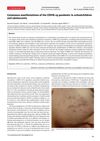 January 2023 in “Acta dermatovenerologica Alpina, Pannonica et Adriatica (Tiskana izd.)”
 This review details skin conditions in children and adolescents related to the SARS-CoV-2 pandemic, emphasizing mask-related acne and various cutaneous manifestations linked to infection and vaccination, with most being mild or nonspecific.
 July 2022 in “International journal of dermatology, venereology and leprosy sciences”
 This study found that more frequent and severe skin problems are associated with higher daily alcohol consumption, though the duration and severity of alcohol dependency didn't impact skin conditions.
 November 2021 in “Chattagram Maa-O-Shishu Hospital Medical College Journal”
 This descriptive study reported that Chronic Cutaneous Lupus Erythematosus was the most prevalent subtype, highlighting distinct clinical and pathological features among Cutaneous Lupus Erythematosus subtypes.
 April 2020 in “Research Square (Research Square)”
 This study found that exosomes derived from human bone marrow mesenchymal stem cells significantly promote cutaneous wound healing in rats by modulating the TGF-β/Smad signaling pathway.
 August 2019 in “Journal of Investigative Dermatology”
 This study suggests that epidermal turnover could be a regulated mechanism of iron excretion, with systemic iron levels influencing keratinocyte behavior and differentiation markers in the skin.
 April 2019 in “Journal of Investigative Dermatology”
 This study reported that gain-of-function mutations in TRPV3 lead to hair loss in mice by disrupting inner root sheath keratinocyte differentiation, ultimately causing follicular keratinocyte stem cell exhaustion and permanent follicle disruption.