 2295 citations
,
August 2012 in “The international journal of transgenderism/International journal of transgenderism”
2295 citations
,
August 2012 in “The international journal of transgenderism/International journal of transgenderism” This publication reviews the World Professional Association for Transgender Health's Standards of Care for supporting transgender and gender nonconforming people, with adjustments needed for diverse global contexts and no new clinical results.
33 citations
,
December 2005 in “British Journal of Clinical Pharmacology” This study found that the Transdermal Delivery System efficiently delivers testosterone systemically and showed bioequivalent hormone concentrations to a known topical gel in healthy males.
April 2021 in “Journal of Investigative Dermatology” A deep learning model was developed to help diagnose trichothiodystrophy by analyzing hair patterns.
 75 citations
,
October 1996 in “Dermatologic Clinics”
75 citations
,
October 1996 in “Dermatologic Clinics” This review examines chronic telogen effluvium, highlighting its distinctive features and the need for reassurance about its non-progressive nature, but reports no new clinical results.

In this case report, researchers describe a 22-year-old male with a unique presentation of Senior-Løken Syndrome due to a NPHP4 mutation, exhibiting atypical symptoms like cryptorchidism, alopecia, and potential syndromic overlap with Rothmund-Thomson Syndrome, suggesting complex genetic interactions and expanding the phenotypic spectrum of ciliopathies.
1 citations
,
April 2010 in “Digital WPI” This study found that CLK1 is necessary for epidermal differentiation but does not affect sebocyte differentiation in a telogen skin stem cell line.
December 2025 in “JGH Open” In this case study, a 78-year-old Japanese woman with Cronkhite-Canada syndrome experienced mesenteric lymphadenopathy, which reduced in size after treatment with the corticosteroid prednisolone. This suggests that mesenteric lymphadenopathy, though uncommon in CCS, may respond to steroid therapy.
 10 citations
,
March 2015 in “Journal of dermatology”
10 citations
,
March 2015 in “Journal of dermatology” This case report describes a 12-year-old boy with severe skin scaling due to novel compound heterozygous null truncation mutations in the TGM1 gene, resulting in loss of transglutaminase 1 activity.
2 citations
,
January 2018 in “International Journal of Trichology” This case report describes trichothiodystrophy in two sisters with only hair fragility, illustrating the condition's variable presentation and the importance of regular monitoring for potential associated impairments.
 February 2026 in “Oncology Reviews”
 This review highlights the promising clinical outcomes of sacituzumab tirumotecan (sac-TMT), an antibody-drug conjugate for breast cancer that targets TROP2, demonstrating improved response rates and progression-free survival, with manageable safety concerns including primarily mild-to-moderate nausea and alopecia.
 7 citations
,
June 2010 in “Journal of The American Academy of Dermatology”
7 citations
,
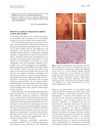
June 2010 in “Journal of The American Academy of Dermatology” This paper reports a single case of lichenoid cutaneous sarcoidosis that was unresponsive to standard treatments but showed marked improvement with the administration of oral tranilast.
 October 2025 in “Indian Journal of Dermatology”
 This study examined the dermoscopic features of five patients with tuberous sclerosis and found that dermoscopy can differentiate characteristic cutaneous features from similar conditions, potentially aiding in earlier diagnosis when other symptoms are subtle or absent.
5 citations
,
September 2013 1 citations
,
April 2018 in “Journal of Investigative Dermatology” The Trichodysplasia spinulosa virus protein can cause abnormal hair growth in mice.
August 2025 in “BMC Pharmacology and Toxicology” The LTF gene may help predict and manage nonspecific orbital inflammation.
68 citations
,
August 2009 in “American Journal of Medical Genetics Part A” This study systematically reviewed clinical findings in trichothiodystrophy patients and suggested a new clinico-genetic classification to help better understand the ichthyotic phenotype and its management.
This study found that super-enhancers in squamous cell carcinoma stem cells are distinctly different from those in normal skin stem cells, with ETS2 playing a crucial role in promoting tumor growth.
11 citations
,
May 2008 in “British journal of dermatology/British journal of dermatology, Supplement” This case report describes a 32-year-old man who developed SCC of the common bile duct a year after receiving treatment for a malignant proliferating trichilemmal tumour on the scalp.
 January 2022 in “International review of movement disorders”
 In this review, the authors found that cannabinoids and steroid-related drugs show potential for treating Tourette syndrome, but existing evidence is limited and further research is needed to confirm their efficacy and safety.
148 citations
,
May 2012 in “The American Journal of Human Genetics” This study identified heterozygous mutations in the ABCC9 gene as the genetic basis of Cantú syndrome, suggesting the syndrome as a new member of potassium channelopathies.
188 citations
,
June 1998 in “Molecular cell” This study found that mimicking the XPD point mutation in mice resulted in trichothiodystrophy-like symptoms, supporting the role of basal transcription and DNA repair defects in the disease.
March 2021 in “Arrow - TU Dublin (Technological University Dublin)” This study tested a folate-conjugate drug delivery system and found its cytotoxicity depends on whether the treated cells overexpress folate receptors, suggesting potential for targeted chemotherapy.
2 citations
,
May 2020 in “Journal of the American Academy of Dermatology” Hair shaft changes may be linked to CCCA, but their role is unclear.
 9 citations
,
February 2011 in “Biologics: Targets & Therapy”
9 citations
,
February 2011 in “Biologics: Targets & Therapy” This review discusses topical calcineurin inhibitors for cutaneous lupus erythematosus and reports no new clinical findings; the authors emphasize the need for more comparative studies with corticosteroids.
July 2024 in “Journal of Investigative Dermatology” This study found that systemic treatment with DS77754007, a KLK5 inhibitor, improved skin symptoms in a mouse model of Netherton Syndrome more effectively than certain antibody treatments, suggesting KLK5 inhibition as a promising therapeutic approach for this condition.
September 2022 in “Indian Journal of Paediatric Dermatology” This case report documents the first confirmed mutation-proved instance of Clouston syndrome in a large Chinese-Malaysian family, linked to the c.263C>T (A88V) mutation in the GJB6 gene, with no available treatment but highlighting the importance of genetic counseling.
September 2023 in “Journal of the American Academy of Dermatology” CTP-543 significantly improved eyebrow and eyelash regrowth and patient satisfaction in adults with alopecia areata.
 January 1999 in “American Journal of Medical Genetics Part A”
 This case report describes a rare occurrence of ectodermal dysplasia features in a 14-year-old with MBTPS1 gene variants, expanding the known spectrum of related disorders.
January 2024 in “Indian Journal of Psychiatry” This study found that precision 40Hz gamma-transcranial alternating current stimulation significantly improved negative and cognitive symptoms in patients with schizophrenia compared to a sham group, suggesting promising potential for this neuromodulation technique in treating these symptoms.
 5 citations
,
September 2017 in “Medicine”
5 citations
,
September 2017 in “Medicine” In this case report, a patient with Cronkhite-Canada Syndrome developed colon cancer and liver metastasis despite hormone therapy, highlighting the need for regular monitoring and early detection strategies.