 March 2018 in “Dermatología Argentina”
 This study found that postmenopausal women in Argentina with frontal fibrosing alopecia had a higher average age of diagnosis than previously reported, with similar clinical features to international cases.
 September 2023 in “Research Square (Research Square)”
 This study describes the development of a prototype clinical expert system that uses a belief rule-based inference methodology to improve the risk stratification and diagnosis of polycystic ovary syndrome by addressing uncertainties in clinical data and domain knowledge.
 5 citations
,
January 2016 in “Dermatology”
5 citations
,
January 2016 in “Dermatology” This study found no significant difference in CAG repeat numbers of the androgen receptor gene between Han Chinese women with female pattern hair loss and healthy controls, suggesting it may not be a genetic marker for FPHL in this population.
61 citations
,
July 2022 in “Journal of Nanobiotechnology” This study found that carbon dots derived from fucoidan effectively inhibit Enterococcus faecalis and its biofilm, offering a promising approach for managing biofilm-associated persistent endodontic infections.
 September 2025 in “Journal of Cosmetic Dermatology”
 In this study, the use of rb‐bFGF in hair transplantation significantly increased follicle survival, reduced hair loss, improved patient satisfaction, and decreased complications compared to controls, in patients with androgenetic alopecia over a 12-month period.
2 citations
,
October 2025 in “Frontiers in Medicine” This study identified several previously unrecognized adverse events linked to ISO, including serious conditions such as Dandy-Walker syndrome and suicidal ideation, suggesting that safety measures and drug labeling should be updated.
 1 citations
,
November 2023 in “Journal of ovarian research”
1 citations
,
November 2023 in “Journal of ovarian research” In this study involving rats with letrozole-induced polycystic ovary syndrome, Agaricus subrufescens significantly reduced blood glucose, total cholesterol, testosterone levels, and renal markers, suggesting its potential protective effects on both metabolic and reproductive parameters.
 84 citations
,
August 2023 in “Drugs”
84 citations
,
August 2023 in “Drugs” This article describes the development milestones and recent approvals of ritlecitinib for treating severe alopecia areata, with approvals in the USA and Japan and ongoing regulatory reviews in other regions.
13 citations
,
October 2005 in “Analytical Sciences” This study developed a method using LC/APCI-MS to measure the activity of steroid 5α-reductase, applied to kinetic studies and inhibitory tests with Finasteride in a rat prostatic enzyme model.
3 citations
,
January 2025 in “Journal of the American Academy of Dermatology” Early diagnosis and a multidisciplinary approach are crucial for managing Frontal Fibrosing Alopecia.
 22 citations
,
January 2018 in “Experimental Dermatology”
22 citations
,
January 2018 in “Experimental Dermatology” This article reviews insights into the pathogenesis of primary cicatricial alopecias, such as lichen planopilaris, provided by emerging technologies, but it does not report new clinical results.
3 citations
,
July 2025 in “Journal of Cosmetic Dermatology” In this study, both Endo-RF subcision and the combination of Endo-RF subcision with PRP were shown to be safe and effective for improving post-acne scars, with the combination therapy potentially offering more desirable outcomes.
9 citations
,
March 1998 in “PubMed” This study describes a 4-year-old spayed female ferret diagnosed with adrenocortical carcinoma, where surgical removal of the mass resulted in complete hair regrowth and improvement of clinical symptoms within four weeks.
 3 citations
,
January 2022 in “Journal of The American Academy of Dermatology”
3 citations
,
January 2022 in “Journal of The American Academy of Dermatology” This study found that sunscreen and moisturizer use was associated with a higher likelihood of developing frontal fibrosing alopecia in the reviewed studies.
 November 2023 in “Research Square (Research Square)”
 In this study, researchers used NIR-II fluorescence imaging to track the survival and migration of EPI-NCSCs in rat models, finding that these stem cells aided in repairing facial nerve defects when applied via acellular nerve allografts.
74 citations
,
April 2017 in “JEADV. Journal of the European Academy of Dermatology and Venereology/Journal of the European Academy of Dermatology and Venereology” This study classified frontal fibrosing alopecia patients into three clinical patterns, finding that pattern III had the best prognosis and pattern II the worst after treatment with dutasteride and corticosteroids.
 24 citations
,
January 2012 in “Journal of Cellular Biochemistry”
24 citations
,
January 2012 in “Journal of Cellular Biochemistry” This study found that C-reactive protein may enhance monocyte adhesion to endothelial cells through NOX-mediated oxidative stress, suggesting a potential mechanism for atherogenesis.
 32 citations
,
September 2017 in “Journal of the American Academy of Dermatology”
32 citations
,
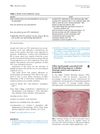
September 2017 in “Journal of the American Academy of Dermatology” In this study, researchers reported that oral isotretinoin effectively treated facial papules in frontal fibrosing alopecia, with histopathologic findings suggesting the involvement of elastic fibers and sebaceous glands in papule formation beyond perifollicular inflammation.
 September 2020 in “Adnan Menderes Üniversitesi Sağlık Bilimleri Fakültesi Dergisi”
 This review investigates the relationship between certain gene polymorphisms associated with obesity (FTO and MC4R) and Polycystic Ovarian Syndrome, reporting no new results but suggesting a potential genetic link.
 1 citations
,
January 2016 in “Open Forum Infectious Diseases”
1 citations
,
January 2016 in “Open Forum Infectious Diseases” This study found that fluconazole induced early hair follicle resting phase (telogen effluvium) in rats, without changing retinoic acid levels in rats or human patients, suggesting further investigation into fluconazole's hair loss mechanism is needed.
72 citations
,
November 2020 in “Frontiers in Surgery” This review found that the clinical results of L-PRF as a grafting material in maxillary sinus augmentation were mixed, with some studies reporting positive effects and others finding no significant impact.
 September 2024 in “Cutis”
 Sunscreen use may increase the risk of frontal fibrosing alopecia.
 May 2024 in “Journal of Education, Health and Sport”
 This review article highlights the complexity of treating folliculitis decalvans, emphasizing the role of systemic antibiotics like rifampicin and clindamycin as common treatments, while also discussing promising novel therapies, including biological agents, that require further clinical trials to assess their effectiveness and safety.
September 2025 in “Animals” This study analyzed circular RNA expression in the developing skin of foetal Gansu Alpine fine-wool sheep, identifying key circRNAs potentially involved in secondary follicle development through regulatory networks, providing insights for wool trait improvement.
March 2025 in “Revista Foco” This review describes the clinical signs, symptoms, and diagnostic findings for alopecia frontal fibrosante, emphasizing the importance of early diagnosis and variable treatment options, and reports no new findings.
 7 citations
,
December 2011 in “Elsevier eBooks”
7 citations
,
December 2011 in “Elsevier eBooks” The document concludes that early diagnosis and treatment are crucial for managing skin diseases in ferrets.
September 2025 in “Clinical and Experimental Rheumatology”  44 citations
,
April 2011 in “Critical reviews in analytical chemistry”
44 citations
,
April 2011 in “Critical reviews in analytical chemistry” This review discusses the pharmacological properties and analytical methods for determining fluconazole but reports no new experimental findings.
 8 citations
,
October 2019 in “International Journal of Dermatology”
8 citations
,
October 2019 in “International Journal of Dermatology” This study examined 56 Thai patients with frontal fibrosing alopecia, finding frontotemporal hairline recession and eyebrow loss were common, and reported better disease stabilization with combination treatments of topical corticosteroids with hydroxychloroquine or finasteride.
 December 2023 in “bioRxiv (Cold Spring Harbor Laboratory)”
 In this study, researchers used a computational drug repurposing approach to identify FDA-approved drugs Dutasteride and Solifenacin as potential inhibitors of Listeria monocytogenes via binding to the virulence factor regulator PrfA, suggesting they may offer new treatment strategies against multi-drug resistant strains.