 April 2024 in “Journal of burn care & research”
 This study found that neck defect size was more relevant than total body surface area for predicting contracture recurrence after burn injury, suggesting increased attention to defect size in managing such cases.
 55 citations
,
October 2009 in “Clinics in Plastic Surgery”
55 citations
,
October 2009 in “Clinics in Plastic Surgery” Burn reconstruction improves with new techniques, materials, and tissue engineering.
 2 citations
,
November 2020 in “International Journal of Otorhinolaryngology and Head and Neck Surgery”
2 citations
,
November 2020 in “International Journal of Otorhinolaryngology and Head and Neck Surgery” The researchers reported that nasolabial flaps were effective for reconstructing small to intermediate oral cavity defects in early oral cancer patients, with overall good cosmetic and functional outcomes despite some complications.
 September 2022 in “Plastic and Reconstructive Surgery”
 This article reviews various recent studies and articles relevant to plastic surgeons, covering topics like alopecia treatment, wound therapy, breast implant safety, and surgical techniques, but provides no new clinical results; it aims to update readers on key developments in plastic surgery.
 December 2025 in “Clinical Cosmetic and Investigational Dermatology”
 In this report, a unique female presentation of IFAP syndrome is described, featuring musculoskeletal contractures but no photophobia, highlighting the importance of early detection and multidisciplinary care to improve outcomes and prevent disability.
 18 citations
,
March 2018 in “Archives of Plastic Surgery”
18 citations
,
March 2018 in “Archives of Plastic Surgery” This article reviews the use of superficial temporal artery island flaps for facial reconstruction and provides a systematic approach for managing composite facial defects, reporting no major complications in 72 patients.
 305 citations
,
March 2018 in “International journal of molecular sciences”
305 citations
,
March 2018 in “International journal of molecular sciences” In this review, the authors summarize classical and recent insights into the biology and treatment of hypertrophic scars and keloids, concluding that while understanding and strategies have advanced, effective prevention and treatments remain unsatisfactory.
 January 2020 in “Medical journal of clinical trials & case studies”
 This report details a case of dystrophic epidermolysis bullosa in a 37-year-old male with a recessive mutation in the CLO7A1 gene, affecting type VII collagen.
23 citations
,
March 2017 in “JAAD case reports” This study reports a new family with hereditary fibrosing poikiloderma (POIKTMP) and identifies a pancreatic cancer occurrence in a family member, raising questions about FAM111B's role as a potential cancer predisposition gene.
 January 2014 in “HAL (Le Centre pour la Communication Scientifique Directe)”
 This review provides an update on sex hormone-associated dermatoses in dogs, detailing known conditions like feminization syndrome and exploring less understood issues such as alopecia X, without presenting new clinical findings.
 1 citations
,
April 2018 in “Revista da Sociedade Portuguesa de Dermatologia e Venereologia”
1 citations
,
April 2018 in “Revista da Sociedade Portuguesa de Dermatologia e Venereologia” This article reviews the prevalence, causes, and associated conditions of hidradenitis suppurativa, a chronic inflammatory skin disease, but reports no new clinical findings.

This study found that grafting an autologous cultured epithelial sheet improved both scarring and skin texture in four patients with acne-associated scar contracture three months post-treatment, suggesting the technique might effectively treat difficult acne scars by metabolizing excess collagen.
 September 2024 in “Journal of Cutaneous and Aesthetic Surgery”
 This case report detailed a successful treatment involving contracture release and expanded neck flap reconstruction for a patient with severe neck contracture and beard alopecia from past thermal burns, highlighting improved skin quality and hair regrowth following follicular unit extraction.
 1 citations
,
January 2019 in “Springer eBooks”
1 citations
,
January 2019 in “Springer eBooks” Hidradenitis Suppurativa is a chronic skin condition best treated early with surgery for better outcomes and less recurrence.
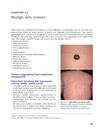
This chapter classifies various benign skin tumors and discusses their characteristics, treatment indications, and potential for recurrence, but reports no new clinical findings.
 September 2023 in “Clinical, cosmetic and investigational dermatology”
 This case series reports successful treatment of refractory folliculitis decalvans using surgical excision with second-intention healing and guarded high-tension suturing, resulting in long-term remission without recurrence over a 10–24 month follow-up period.
 July 2014 in “Plastic and Reconstructive Surgery”
 The document concludes that rib-sparing techniques in breast reconstruction have limited benefits, sentinel lymph node biopsy is needed for desmoplastic melanoma, certain hair preservation methods improve graft survival, partial turbinectomy effectively reduces nasal obstruction, nipple shields with irrigation may reduce capsular contracture, and thicker malignant melanomas have a higher risk of non-skin cancers.
 July 2014 in “Plastic and Reconstructive Surgery”
 The document concludes that rib-sparing techniques in breast reconstruction have limited benefits, sentinel lymph node biopsy is needed for desmoplastic melanoma, certain hair preservation methods improve graft survival, partial turbinectomy effectively reduces nasal obstruction, nipple shields with irrigation may reduce capsular contracture, and thicker malignant melanomas have a higher risk of non-skin cancers.
 68 citations
,
July 2016 in “Dermatology and Therapy”
68 citations
,
July 2016 in “Dermatology and Therapy” This review highlights that light and laser therapies, such as the 1064-nm Nd:YAG and 810-nm diode lasers, may offer significant improvement for acne keloidalis nuchae with minimal side effects, though larger trials are needed.
 1 citations
,
July 2015 in “European Journal of Dermatology”
1 citations
,
July 2015 in “European Journal of Dermatology” This article discusses timed exposure settings with ablative lasers for treating benign dermal tumors and highlights their potential to reduce treatment time and scarring risk, but it reports no new clinical results.
 238 citations
,
July 2003 in “British Journal of Plastic Surgery”
238 citations
,
July 2003 in “British Journal of Plastic Surgery” This review discusses the importance of early diagnosis and the management of hidradenitis suppurativa, reporting no new clinical results but highlighting current therapeutic approaches and need for collaboration in treatment.
5 citations
,
April 2020 in “Journal of Mind and Medical Sciences” This review discusses the challenges of treating lipomas and related adipose tissue diseases, finding that laser liposuction is highly effective and preferred by patients due to minimal pain, quick recovery, and low recurrence, and reports no new clinical results.
 108 citations
,
October 2004 in “Anesthesiology”
108 citations
,
October 2004 in “Anesthesiology” This review discusses surgical factors that may increase the risk of developing complex regional pain syndrome and describes potential preventive techniques but presents no new clinical results.
 56 citations
,
March 2016 in “International Wound Journal”
56 citations
,
March 2016 in “International Wound Journal” This review concludes that autologous split-thickness skin grafting remains the gold standard for safety and efficacy in treating chronic leg ulcers, with greater success in venous ulcers.
 6 citations
,
July 2017 in “Clinics in Plastic Surgery”
6 citations
,
July 2017 in “Clinics in Plastic Surgery” This article reviews the management of head and neck burns across different phases but presents no new clinical results.
 July 2025 in “Journal of the Pakistan Medical Association”
 In this study, intralesional triamcinolone acetonide combined with 5-fluorouracil was more effective for treating keloids, showing a good to excellent response in 95% of cases and fewer side effects, compared to triamcinolone acetonide alone, which achieved a 70% response rate.
 September 2009 in “Pediatric Dermatology”
 This meeting abstract volume for the Society for Pediatric Dermatology reports no new clinical results.
 8 citations
,
July 1996 in “Annals of Internal Medicine”
8 citations
,
July 1996 in “Annals of Internal Medicine” This report documented a case of thrombocytopenia and leukopenia linked to the long-term use of itraconazole in a patient with acute myelogenous leukemia.
 March 2024 in “Frontiers in endocrinology”
 This study reports the first case of mandibuloacral dysplasia syndrome associated with MTX2 gene mutation in the Chinese population, expanding the known spectrum of MTX2 mutations.
 September 2010 in “European Urology Supplements”
 The document does not confirm if radical prostatectomy is the best treatment for locally advanced prostate cancer.