 12 citations
,
September 2021 in “Stem Cell Reviews and Reports”
12 citations
,
September 2021 in “Stem Cell Reviews and Reports” This study suggests that StemMACS MSC Expansion Media is more suitable than PowerStem MSC1 media for expanding therapeutic adipose-derived mesenchymal stem cells, with less expression of negative markers and better chromosomal stability.
 11 citations
,
December 2020 in “Notulae botanicae Horti Agrobotanici Cluj-Napoca”
11 citations
,
December 2020 in “Notulae botanicae Horti Agrobotanici Cluj-Napoca” This study found that arbuscular mycorrhizal fungus inoculation and shading improved tea seedlings' growth, nutrient absorption, and stress resistance by enhancing root biomass and regulating phytohormone levels and gene expression.
 July 2024 in “Experimental Dermatology”
 This study suggests that APC collagen peptides may accelerate hair growth and promote overall hair health by enhancing cellular proliferation and activating specific signaling pathways in human and mouse models.
 August 2021 in “Research Square (Research Square)”
 In this study of clinical-grade ADMSCs, researchers found that cells expanded in PowerStem MSC1 media exhibited increased negative marker expression, chromosomal abnormalities, and signs of senescence compared to those cultured in StemMACS MSC Expansion Media, suggesting that the latter is more suitable for therapeutic applications.
 April 2014 in “The FASEB Journal”
 This study found that Geranium Sibiricum L extract may promote hair growth by increasing cell proliferation and migration while modulating cytokine expression in human dermal papilla cells under stress conditions.
 44 citations
,
April 2008 in “The Journal of Clinical Endocrinology & Metabolism”
44 citations
,
April 2008 in “The Journal of Clinical Endocrinology & Metabolism” This study concluded that although RBP4 and adiponectin levels are associated with visceral fat, they do not independently contribute to the development of PCOS.
 75 citations
,
January 1995 in “American journal of primatology”
75 citations
,
January 1995 in “American journal of primatology” In this study, seasonal hair loss was most pronounced in low-ranking male vervet monkeys, and changes in scrotal color and hyperpigmentation also correlated with hair loss, but underlying causes were not identified.
 44 citations
,
May 2008 in “Fertility and Sterility”
44 citations
,
May 2008 in “Fertility and Sterility” In this study, young, nonobese PCOS patients showed significant insulin resistance, but no significant difference in endothelial function compared to healthy controls, suggesting other factors may influence endothelial health.
10 citations
,
January 2024 in “Dermatology Research and Practice” This randomized, double-blind, placebo-controlled study found that a supplement containing hydrolysed collagen and vitamin C (Absolute Collagen) improved skin, scalp, and hair over 12 weeks when taken daily or every other day.
1 citations
,
February 2005 in “OakTrust (Texas A&M University Libraries)” In this study, dogs fed Diet B with specific levels of dietary zinc and linoleic acid showed improved skin and hair coat conditions, evidenced by increased hair follicle growth and higher skin lipid scores.
 December 2023 in “Alzheimer's & Dementia”
 In this study, chronic exposure to finasteride induced metabolic disturbances and depression-like behaviors in young male rats, similar to those caused by obesity, but did not worsen anxiety or depression in obese rats.
September 2023 in “Middle East Fertility Society Journal” This study found that nicotine may have a therapeutic role in mitigating the exacerbation of infertility conditions connected with alpha-synuclein-related Parkinson’s disease through molecular interactions identified via pathway analysis.
 4 citations
,
June 2019 in “International Journal of Cosmetic Science”
4 citations
,
June 2019 in “International Journal of Cosmetic Science” This study developed mathematical models showing that heat penetrates individual hair quickly but takes longer to reach the center of hair bundles, helping understand potential damage from high-temperature styling tools.
August 2026 in “International Journal of Allied Medical Sciences and Clinical Research” In this study, a hair serum containing guava leaf, chia seeds, peppermint oil, and alkanet root showed potential benefits for hair care, including antioxidant, anti-microbial, and conditioning properties.
 October 2025 in “Asian Journal of Pharmaceutical Research”
 This study observed that herbal shampoos made from natural ingredients such as Reetha powder, Bhringraj powder, and others offered satisfactory hair care results, indicating they may serve as effective alternatives to synthetic shampoos.
 August 2023 in “Han'gug miyong haghoeji/Journal of the Korean society of cosmetology”
 In this study, text mining revealed that research on natural materials effective for hair—focusing on growth, damage, and dyeing—has increased since 2001, indicating rising academic interest and exploring trends in beauty-related topics.
 130 citations
,
September 2018 in “Cell Reports”
130 citations
,
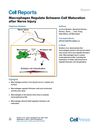
September 2018 in “Cell Reports” This study found that macrophages play a crucial role in nerve regeneration by regulating Schwann cell dynamics and remyelination, with Gas6 identified as a key factor in this process.
7 citations
,
August 2023 in “Frontiers in Immunology” This review discusses the role of transient receptor potential channels in pathological scarification and suggests these channels as potential targets for its prevention and treatment, although it reports no new clinical findings.
 5 citations
,
July 2022 in “Journal of Clinical Medicine”
5 citations
,
July 2022 in “Journal of Clinical Medicine” This study found histopathological evidence of hypertrophy in nerve endings that may explain the cutaneous neurosensory symptoms in some long COVID-19 patients.
 September 2025 in “Medicine”
 This study found that male patients with androgenetic alopecia exhibited signs of increased arrhythmia risk, such as higher P-wave dispersion and lower corrected QT interval on ECG, suggesting potential benefits from closer cardiac monitoring.

This study found that collagen VI is crucial for peripheral nerve function and regeneration, and its absence promotes abnormal hair regrowth after skin wounding in mice, revealing potential therapeutic targets for nerve injuries and hair loss.
 2 citations
,
September 2020 in “Journal of Education Health and Sport”
2 citations
,
September 2020 in “Journal of Education Health and Sport” This review examines the role of IL-15 in alopecia areata treatment but reports no clinical results, as there are currently insufficient studies to determine its therapeutic potential.
December 2025 in “International Journal of Molecular Sciences” This review examined 40 studies on exosome-based therapies for alopecia areata, reporting significant hair regrowth and improvements in hair count, length, and thickness, but highlighted the need for standardized methodologies and robust RCTs before clinical application.
October 2025 in “Modern pediatrics Ukraine” This study highlighted cases where children with atypical forms of celiac disease exhibited symptoms like recurrent alopecia and seborrhea, emphasizing the need for timely diagnosis and treatment to optimize outcomes.
 December 2023 in “Journal of Cosmetic Dermatology”
 In this study, 32 healthy adults with hair fall complaints applied a hair serum daily for 60 days, resulting in statistically significant improvements in hair growth rate, thickness, and density, without any reported adverse events.
127 citations
,
November 2010 in “Pigment cell & melanoma research” This article discusses the challenges in hair follicle pigmentation research compared to epidermal melanocytes and highlights the limitations of relying on mouse models, but reports no new experimental findings.
 122 citations
,
November 1984 in “Journal of the American Academy of Dermatology”
122 citations
,
November 1984 in “Journal of the American Academy of Dermatology” This review discusses the potential autoimmune pathogenesis and various contributing factors of alopecia areata, noting that current treatments remain palliative while emerging therapies offer new hope for extensive cases.
 116 citations
,
April 2002 in “American journal of veterinary research”
116 citations
,
April 2002 in “American journal of veterinary research” This study found trilostane to be an effective and generally safe treatment for improving symptoms in dogs with pituitary-dependent hyperadrenocorticism.
 99 citations
,
July 2017 in “Clinical Reviews in Allergy & Immunology”
99 citations
,
July 2017 in “Clinical Reviews in Allergy & Immunology” This review noted that alopecia areata is an autoimmune disease impacting hair follicles and offered insights into its complex pathogenesis involving immune responses, while highlighting ongoing research into new treatments such as Janus kinase inhibitors and other immunomodulatory drugs.
84 citations
,
March 2002 in “The Journal of Dermatology” This study supports the idea that steatocystoma multiplex is a hamartomatous condition and suggests it may be a variant of eruptive vellus hair cyst, both originating in the pilosebaceous duct.