 May 2022 in “Research Square (Research Square)”
 This study found that the newly developed transdermal oil body microgel emulsion (OBEME) improved wound healing in mice by enhancing skin permeability, reducing inflammation, and promoting new blood vessel formation and re-epithelialization.
 January 2022 in “International journal of zoological investigations”
 In this study, the prevalence of PCOS was reported to be approximately 10% among urban college girls in Chennai, with increased testosterone and decreased progesterone levels observed.

This study demonstrated that cryogelation of human hair keratin allows the development of 3D scaffolds with tunable properties, supporting cell adhesion and proliferation for potential biomedical applications.
 August 2021 in “Josai University Repository of Academia (Josai University)”
 This study found that Sol/ASC-DP nanoparticles could enhance the skin permeability of minoxidil due to improved stability and hydrophobic interactions in the nanoparticle structure.
 July 2021 in “Research Square (Research Square)”
 In this study, the ethyl acetate extract of Semecarpus anacardium Linn leaves was reported to induce cytotoxicity in cancer cells, cause cell cycle arrest, and suppress tumor growth in mice.
 May 2021 in “Boletín latinoamericano y del Caribe de plantas medicinales y aromáticas”
 This study found that ethanolic extracts of Microsechium helleri showed notable antioxidant, hypoglycemic, and cardioprotective activities, while chloroformic extracts exhibited significant anti-inflammatory effects in experimental models.

This article reviews knowledge-sharing efforts in pharmaceutical sciences at the University of Sorocaba, highlighting global collaboration on rational medicine use, without reporting new study results.

This article discusses the Graduate Program in Pharmaceutical Sciences at the University of Sorocaba and emphasizes collaborating internationally to improve health policies and practices but reports no new research findings.

In this study, researchers found that cosmetic formulations containing guaraná extract effectively controlled oiliness in oily skin and hair by reducing sebaceous gland activity and lipid content without compromising skin barrier function, making them promising for managing excessive sebum production.
 May 2020 in “International Journal of Engineering Applied Sciences and Technology”
 This study explored the antimicrobial potential of natural bioactive materials such as Citrus lemon, Garlic, Baeckea frutescens, Neem, and Eclipta Alba, highlighting their eco-friendly and non-toxic properties for combating harmful bacteria.
 March 2020 in “The journal of investigative dermatology/Journal of investigative dermatology”
 This study suggests that the expression of VLCFA biosynthesis genes is suppressed in skin hyperplasia and cancer, which could influence keratinocyte function.
 January 2020 in “Majalah Kedokteran Gigi Indonesia”
 The researchers reported that freeze-dried collagen-activated platelet-rich plasma increased transforming growth factor-β1 levels compared to non freeze-dried PRP with collagen, suggesting a potential benefit for tissue regeneration.
 January 2020 in “JoLS Journal of Life Sciences”
 This study found that a mixture of Red-BCQ and Agnex extract promoted greater hair growth and antioxidant effects in C57BL/6 mice compared to other groups, including minoxidil treatment.
 December 2019 in “University of Malaya Students Repository”
 This study found that Soxhlet extraction is more effective at removing the toxin mimosine from Leucaena leucocephala, and mimosine shows promise as a biodiesel additive due to its antioxidative properties.
This study explored the structure and function of lipocalin prostaglandin D synthase, revealing its dual role in substrate catalysis and as a lipophilic ligand carrier, potentially informing future drug delivery design.
 September 2019 in “University of Huddersfield Repository (University of Huddersfield)”
 In this study, nanoemulsion formulations were found to significantly enhance the skin retention of the antiseptic agent triclosan, with the optimal mixture being a low surfactant concentration, as demonstrated through quantitative and qualitative analysis using tape-stripping and micro CT scans.
This study found that Biofield Energy Healing Treatment significantly increased the proliferation of human hair follicle dermal papilla cells in vitro, suggesting potential as a hair growth enhancer.
 May 2019 in “Pakistan Journal of Pharmaceutical Sciences”
 This study investigated the effects of 10600nm CO2 dot laser and Nd: YAG laser on Wistar rats' skin, finding that CO2 laser treatment resulted in higher positive expression of MMP-1 and TIMP-1 compared to Nd: YAG laser, with statistically significant differences noted.
 April 2019 in “The journal of investigative dermatology/Journal of investigative dermatology”
 In this study, the researchers observed significant metabolic dysregulation in central centrifugal cicatricial alopecia, particularly involving lipid metabolism and the downregulation of AMPK-related genes.
 January 2019 in “Springer Reference Medizin”
 This article reviews the role of factor Xa inhibitors like Rivaroxaban and suggests they may eventually replace vitamin K antagonists, but their side effects require further clarification.
 January 2019 in “Durham e-Theses (Durham University)”
 This study utilized advanced imaging techniques to quantify hair damage and dye uptake dynamics, revealing that compound penetration in hair is influenced by molecule size and lipophilicity.
 December 2018 in “The Journal of medical research”
 In this study, the researchers observed that Biofield Energy Healing Treatment significantly increased hair follicle cell proliferation in human dermal papilla culture, suggesting potential as a hair growth enhancer.
 October 2018 in “International journal of reproduction, contraception, obstetrics and gynecology”
 In this study, dyslipidemia was found to be prevalent among young adult women with polycystic ovary syndrome in Port Harcourt, Nigeria, particularly characterized by increased triglycerides and decreased HDL-c levels.
 October 2018 in “Journal of Clinical Research in Pediatric Endocrinology”
 This study found that children with classic congenital adrenal hyperplasia had elevated epicardial fat thickness, which was associated with increased carotid intima media thickness, left ventricular mass, and mitral deceleration time.
 September 2018 in “Cosmetics”
 This study found that anisotropic osmolyte solutions may improve hair follicle turnover and condition in both in vitro and in silico models, as well as in human volunteers with hair disorders.
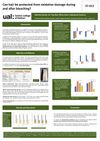 September 2018 in “University of the Arts London Research Online (University of the Arts London)”
 This study assessed three materials—L-arginine, hydrolysed keratin, and cystine-silanol copolymer—ex vivo for their potential to reduce undesirable effects of hair bleaching, such as damage to hair proteins.
 February 2018 in “Egyptian Journal of Radiation Sciences and Applications”
 This study observed that Egyptian patients with discoid lupus erythematosus have significantly lower serum vitamin D3 and antioxidant levels compared to healthy controls, suggesting potential benefits of vitamin D3 and antioxidant supplementation.
 January 2018 in “Open access journal of pharmaceutical research”
 In this study, researchers found that Biofield Energy Healing Treatment significantly increased the proliferation of human hair follicle dermal papilla cells in vitro, suggesting potential hair growth benefits.
 April 2017 in “Advances in Tissue Engineering & Regenerative Medicine Open Access”
 This study found that hydro alcoholic extract from the stem of Musa paradisiacal inhibited alpha amylase and alpha glucosidase enzymes in vitro, suggesting potential antidiabetic benefits.

This study found that dermal papilla-like tissues derived from canine adipose stem cells promoted new hair follicle formation and increased vascularization in athymic nude mice.