 6 citations
,
January 2013 in “IOSR Journal of Dental and Medical Sciences”
6 citations
,
January 2013 in “IOSR Journal of Dental and Medical Sciences” This study identified xerosis and diffuse hair loss as the most common skin manifestations in patients with hypothyroidism, observed in 38.09% and 34.8% of participants, respectively.
 4 citations
,
October 2018 in “Experimental Dermatology”
4 citations
,
October 2018 in “Experimental Dermatology” This study suggests that diffuse alopecia areata initially involves an intense inflammatory attack during the anagen phase, progressing through different hair cycle stages with specific shedding patterns.
 3 citations
,
October 2019 in “JAAD Case Reports”
3 citations
,
October 2019 in “JAAD Case Reports” This review discusses different forms and patterns of alopecia associated with lupus erythematosus and reports no new clinical results; the authors highlight distinct features of these conditions.
2 citations
,
April 2024 in “International Wound Journal” Combining UV therapy with PRP heals chronic wounds faster and reduces pain.
 2 citations
,
September 2014 in “Journal of evolution of medical and dental sciences”
2 citations
,
September 2014 in “Journal of evolution of medical and dental sciences” In this study, 92% of HIV-infected patients had mucocutaneous manifestations, with oral candidiasis being the most common condition observed.
1 citations
,
June 2023 in “Acta veterinaria” This study found that both subclinical and overt maternal hypothyroidism during pregnancy and lactation caused significant damage to the skin development of rat offspring, including pronounced hyperkeratosis and reduced hair follicle formation, with more severe effects observed in overt hypothyroidism.
This review introduces the pilocutaneous syndrome of menopause, a set of skin and hair changes linked to estrogen decline, and discusses its recognition, diagnosis, and management without reporting new clinical results.
June 2026 in “Journal of Cosmetic Dermatology” This study found that a topical 5% phenytoin solution, applied twice daily for 16 weeks, significantly improved total hair count and hair density in men with androgenetic alopecia, with mild and transient side effects observed.
 January 2026 in “International Journal of Nutrology”
 This study concluded that hair loss is a common issue after vertical sleeve gastrectomy, influenced by serum leucine concentration, and is not typically due to low iron or zinc levels.
May 2025 in “Actas Dermo-Sifiliográficas” The study did not find evidence to support using botulinum toxin as a treatment for androgenetic alopecia.
 September 2024 in “Meditsinskiy sovet = Medical Council”
 The study observed that in women, the number of hair follicles with an internal root sheath decreases with age in the parietal region, also hinting at a reduction in hair follicle and shaft width.
 January 2024 in “JEADV clinical practice”
 This article reviews how SALT scores are used in clinical trials for alopecia areata and provides patient images to help clinicians understand and apply these scores in practice; it reports no new clinical results.
April 2023 in “UNESP Institutional Repository (São Paulo State University)” In this study, oral minoxidil at 5 mg/day improved hair density comparably to topical minoxidil 5% in men with androgenetic alopecia over 24 weeks, offering a viable alternative for those intolerant to topical application.
 November 2021 in “PARIPEX INDIAN JOURNAL OF RESEARCH”
 In this study, researchers administered Trigona bee honey to dogs with dermatitis and observed improvements in skin damage, including reduced inflammation, decreased erythema, and increased hair growth at alopecia sites, indicating its potential as a treatment for canine dermatitis.
 September 2020 in “Nature, Environment and Pollution Technology/Nature, environment and pollution technology”
 This study found that Wistar rats fed with grass extracts from mining areas accumulated trace metals, particularly in the spleen, leading to organ pathology and signs of toxicity.
 June 2020 in “International Journal of Research in Dermatology”
 In this study, xerosis was the most common skin condition found among elderly participants, followed by wrinkling and immunoglobulin heavy chain deposition.
 August 2018 in “Journal of the American Academy of Dermatology”
 Patients often experience long-lasting changes to their hair after stem cell transplants.
 February 2018 in “The Journal of Sexual Medicine”
 The researchers reported that using Natesto® testosterone gel improved erectile function and mood in hypogonadal men over a 90-day period.

This study found that polycystic ovary syndrome was the most common cause of hirsutism among premenopausal Algerian women.
January 2006 in “FarFar (University of Belgrade, Faculty of Chemistry (Belgrade, Serbia))” This paper discusses the use and effects of dermocosmetic preparations for treating pregnancy-related skin changes such as hyperpigmentations and striae, but reports no new clinical findings.
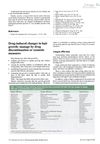 August 1994 in “Drugs & Therapy Perspectives”
 Some drugs can cause hair loss or growth, but hair usually returns to normal after stopping the drug.
 July 1980 in “Journal of The American Academy of Dermatology”
 The conference concluded that understanding hair and nail disorders is important, iron deficiency may be linked to hair loss, and while some treatments for skin conditions are effective, they may have risks and high costs.
4 citations
,
May 2023 in “Plastic & Reconstructive Surgery” This study found that transplanting adipose tissue into the rat dorsum supported long-term skin expansion by enhancing thickness, vascularization, and cell proliferation, with adipose-derived cells actively contributing to skin regeneration and growth factor expression.
 1 citations
,
November 2020 in “Journal of The American Academy of Dermatology”
1 citations
,
November 2020 in “Journal of The American Academy of Dermatology” In this study, oral dutasteride treatment for at least 12 months was associated with either stabilization or improvement of male-pattern hair loss in the majority of patients.
May 2022 in “Zenodo (CERN European Organization for Nuclear Research)” In this study, patients who underwent Roux-en-Y gastric bypass surgery lost significant weight and improved obesity-related complications, but experienced increased hair loss and needed careful calcium and protein management.
2 citations
,
November 2025 in “Nutrition Journal” This study found that an 8-week supplementation with specific probiotic strains improved hormonal markers and oxidative stress while decreasing inflammation in women with PCOS, although clinical symptoms like acne and hirsutism showed no significant improvement compared to the placebo group.
 1 citations
,
December 2013 in “Journal of Evolution of Medical and Dental Sciences”
1 citations
,
December 2013 in “Journal of Evolution of Medical and Dental Sciences” This historical review examines the diagnostic and etiological understanding of alopecia areata, emphasizing the evolution of theories and the impact of immunological data, while providing no new clinical results.
 48 citations
,
February 2017 in “Journal of Cosmetic Dermatology”
48 citations
,
February 2017 in “Journal of Cosmetic Dermatology” This proposal reviews current knowledge and suggests actions for managing chemotherapy‐induced alopecia but reports no new clinical results, highlighting the need for evidence‐based guidelines.
 26 citations
,
October 2016 in “Case Reports in Dermatology”
26 citations
,
October 2016 in “Case Reports in Dermatology” In this study, tofacitinib treatment in a male patient with alopecia areata led to significant hair regrowth and improvement in nail dystrophy symptoms, restoring finger function within 10 months.
 17 citations
,
February 2011 in “Expert Opinion on Drug Safety”
17 citations
,
February 2011 in “Expert Opinion on Drug Safety” This review discusses adverse effects associated with pegylated IFN therapy for chronic hepatitis C and highlights the potential of new antiviral drugs to reduce side effects and improve treatment adherence, but reports no new clinical results.