1 citations
,
July 2024 in “JAAD Case Reports” This study links scalp pruritus in lichen planopilaris and its variants to the inflammation-induced release of substance P and calcitonin gene-related peptide by sensory nerves around hair follicle inflammation sites.
 14 citations
,
July 2012 in “Journal of the American Academy of Dermatology”
14 citations
,
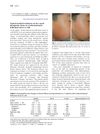
July 2012 in “Journal of the American Academy of Dermatology” This study found that topical tacalcitol improved roughness and scaling in erythromelanosis follicularis faciei et colli, although it was less effective for facial erythema.
 April 2026 in “Lithuanian University of Health Sciences”
 In this study, cinnamic acid in solution form showed strong antifungal activity against Microsporum canis, but when incorporated into hydrogels, the acid's diffusion and resulting antifungal performance decreased, though it maintained effectiveness for potential prolonged exposure.
 13 citations
,
July 2011 in “Journal of Dermatological Treatment”
13 citations
,
July 2011 in “Journal of Dermatological Treatment” This study found that topical pimecrolimus is as effective as clobetasol propionate for treating alopecia areata, with better tolerability in terms of side effects.
2 citations
,
January 2004 in “Linchuang pifuke zazhi” In a reported case, the use of ZD1839 (Iressa), an EGFR tyrosine kinase inhibitor, resulted in hair changes and acneiform eruptions as cutaneous side effects.
16 citations
,
December 2001 in “The Journal of Dermatology” In this case report, a woman experienced complete hair regrowth after anagen effluvium and lichenoid eruptions, possibly due to early corticosteroid intervention after INH was withdrawn.
136 citations
,
April 2010 in “British Journal of Dermatology” This review discusses guidelines for acitretin use in dermatology, reporting its efficacy in severe psoriasis and recommendations for combination therapies, without providing new clinical trial results.
1 citations
,
May 2024 in “Dermatology Online Journal” In this case study, two middle-aged patients with pruritic scalp erosions were diagnosed with localized pemphigus vulgaris, which resolved without relapse after treatment with low-dose oral prednisone and intralesional triamcinolone acetonide.
 40 citations
,
January 1996 in “Journal of Dermatological Treatment”
40 citations
,
January 1996 in “Journal of Dermatological Treatment” This study found that using an antimicrobial lotion for 18 months may reduce inflammation and potentially partially reverse hair loss in men with androgenetic alopecia.
20 citations
,
December 2006 in “Archives of dermatology”  June 2026 in “Aesthetic Cosmetology and Medicine”
 This study reported that patients with mild to detectable androgenetic alopecia showed subjective improvement and a favorable safety profile after receiving a polynucleotide-based intradermal gel, with only one case of mild injection-site erythema noted among 60 participants over three months.
This review reports no new results and discusses various topical treatments, noting that fluocortin butyl ester offers anti-inflammatory effects without systemic side effects, while combinations outperform single-agent therapies in managing hyperpigmentation.
 March 2026 in “Buletin Veteriner Udayana”
 In this case report, a combination therapy including pyrantel pamoate, chlorpheniramine maleate, vitamin B-complex, and topical candlenut oil effectively treated dermatitis and Ancylostoma spp. infection in a dog, leading to improvement in skin condition and hair growth after 14 days.
2 citations
,
January 2018 in “Indian dermatology online journal” This case report describes a 16-year-old girl who developed Plica Polonica, a rare hair matting disorder, after using a homeopathic antidandruff shampoo, highlighting a potential link between shampoo use and the condition.
 December 2022 in “The Journal of Multidisciplinary Research”
 The researchers formulated a polyherbal hair gel using extracts from guava leaves, amla, and aloe, and reported its effectiveness against candidiasis, as well as its benefits in nourishing hair and preventing premature graying.
 9 citations
,
August 2002 in “Current Opinion in Pediatrics”
9 citations
,
August 2002 in “Current Opinion in Pediatrics” This article discusses the roles of pediatrics and dermatology departments at Yale University School of Medicine, but reports no specific clinical results.
January 2023 in “JOURNAL OF CLINICAL AND DIAGNOSTIC RESEARCH” In this study, intralesional triamcinolone acetonide 10 mg/mL combined with topical betamethasone dipropionate 0.05% lotion was found to be more effective for treating alopecia areata than either treatment alone.
 April 2023 in “International journal of pharmaceutical sciences review and research”
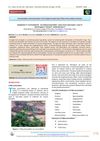
 This study concluded that an Emulgel formulation containing Tridax procumbens extract showed promising wound healing and antimicrobial activity, with improved physical properties in the F2 formulation.
12 citations
,
August 2016 in “Biomedical Chromatography” This study developed and validated an HPLC-UV method for accurately quantifying clobetasol propionate in skin and hair follicles, demonstrating its application in in vitro permeation experiments.
116 citations
,
December 2003 in “Acta Dermato Venereologica” This study reports that Iressa, an anti-cancer agent, commonly causes acneiform eruptions and xerosis as cutaneous side effects, similar to other agents targeting epidermal growth factor receptors.
July 2021 in “International Journal of Applied Pharmaceutics” This study described the development and evaluation of a finasteride nanogel for treating androgenetic alopecia, reporting higher cumulative drug release and enhanced spreadability compared to a plain gel, suggesting potential as a treatment option.
 September 2024 in “Revista Científica de Salud BIOSANA”
 This systematic review explored the potential of cetirizine, an anti-inflammatory antihistamine, as a complementary treatment for androgenetic alopecia, reporting that it might help prevent hair follicle miniaturization by reducing inflammation and modulating immune activity, without notable side effects.
 April 2026 in “Journal of Pharmaceutical Innovation”
 In this study, the researchers developed and optimized a curcumin nanocrystal gel to enhance skin permeability, reporting improved dissolution properties and antiproliferative effects on cell lines, suggesting it as a promising topical delivery system.
January 2026 in “European Journal of Therapeutics” In this study, researchers reported that applying topical 7.5% dapsone led to a significant decline in lichen planopilaris activity within a month and a sustained two-year remission in a patient intolerant to other treatments, suggesting dapsone as a promising alternative for managing this condition.
 April 2017 in “Australasian Journal of Dermatology”
 This study observed that systemic acitretin improved symptoms in 75% of lichen planopilaris patients, despite varied responses and a dominant female prevalence.
 20 citations
,
January 2009 in “International Journal of Dermatology”
20 citations
,
January 2009 in “International Journal of Dermatology” This case report describes a patient with Clouston's syndrome and alopecia who responded positively to topical treatment with minoxidil and tretinoin.
June 2017 in “Journal of Clinical and Health Sciences” This case report describes a 37-year-old woman who developed rare acitretin-induced folliculitis after nearly a year of treatment for pustular psoriasis, treated successfully with skin dressing and antibiotics.
9 citations
,
January 2014 in “World journal of clinical cases” This review discusses the clinical and pathologic features of follicular contact dermatitis, highlighting neomycin as a potential cause, and reports no new clinical results.
 6 citations
,
March 2012 in “Journal of the European Academy of Dermatology and Venereology”
6 citations
,
March 2012 in “Journal of the European Academy of Dermatology and Venereology” This study found that 12 cycles of chlormadinone acetate in hormonal contraceptives significantly improved oily skin and hair quality, enhancing psychosocial well-being in healthy women.
 May 2014 in “Clinical and Experimental Dermatology”
 A 70-year-old woman with a rare skin condition improved after treatment with topical steroids and acitretin.