 1 citations
,
June 2023 in “Animals”
1 citations
,
June 2023 in “Animals” In this study, researchers found that overexpression of CRABP2 enhanced the proliferation of dermal papilla cells in Hu sheep through activation of the Wnt/β-catenin pathway, even when the pathway was inhibited.
February 2026 in “Advanced Science” This study found that the combination of TTNPB and CHIR99021 enhanced the derivation of highly advanced neural stem cells from human pluripotent stem cells, with improved chromatin accessibility and neuroectodermal gene expression, and these cells successfully engrafted in rat hippocampi to ameliorate depression-like symptoms.
2 citations
,
January 2022 in “The Application of Clinical Genetics” This case report presents the first Russian patient with Meier-Gorlin syndrome 5, expanding clinical understanding through the identification of two novel CDC6 gene variants.
117 citations
,
August 1999 in “Nature Genetics” January 2026 in “Applied Sciences” In this study, cyclic ADP-ribose (cADPR) treatment in human hair follicle dermal papilla cells was associated with increased intracellular calcium retention and activated anagen-related signaling without causing significant cytotoxicity, indicating its potential impact on hair growth processes.
 April 2019 in “Journal of Investigative Dermatology”
 This study demonstrated that gene-corrected 3D skin constructs from RDEB patient-derived iPSCs, grafted onto immunocompetent mice, showed normal collagen VII expression after two months.
6 citations
,
March 2007 in “BioTechniques” This study observed that PCR-based genotyping for cre-loxP mice can lead to errors due to cre-mediated recombination in non-target tissues like tails, affecting the detection of lox alleles.
January 2025 in “Repository of Digital Objects for Teaching Research and Culture (University of Valencia)” This research highlights the potential of non-coding RNAs as biomarkers and therapeutic targets in dermatology, while experimental studies on a unique GVM case suggest CCM2L may modulate disease severity, advancing understanding of genetic mechanisms in rare skin disorders.
 April 2023 in “The journal of investigative dermatology/Journal of investigative dermatology”
 This study found that inhibiting the Mitochondrial Pyruvate Carrier in human hair follicles ex vivo activated the integrated stress response, affecting cell proliferation and metabolism.
4 citations
,
November 2024 in “Journal of Advanced Research” In this study, the researchers reported that NMMHC IIA dissociates from PAR1 and activates the CREB3/ARF4 pathway, worsening thrombin-induced blood-brain barrier damage, suggesting it as a potential therapeutic target for blood-brain barrier-related diseases.
 1 citations
,
March 2023 in “Frontiers in Cardiovascular Medicine”
1 citations
,
March 2023 in “Frontiers in Cardiovascular Medicine” A specific gene variant is linked to heart disease, increased heart muscle, curly hair, and thick skin on palms and soles.
November 2025 in “Journal of Investigative Dermatology” A new genetic mutation causing Xeroderma Pigmentosum was found in an 8-year-old girl, affecting her DNA repair.
 133 citations
,
May 2016 in “Cell Host & Microbe”
133 citations
,
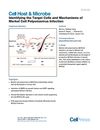
May 2016 in “Cell Host & Microbe” In this study, human dermal fibroblasts were identified as natural host cells that support productive Merkel cell polyomavirus infection, and the MEK antagonist trametinib was introduced as an effective inhibitor to control the virus.
 April 2017 in “Journal of Investigative Dermatology”
 This study found that PRC1 plays crucial roles in skin epithelial stem cell regulation, with catalytic and non-catalytic functions impacting epidermal integrity, hair development, and Merkel cell dynamics in murine models.
The study found that the combined administration of regulatory T cells and rapamycin improved outcomes in an experimental model of chronic graft-versus-host disease.
This study found that FGF5 alternative spliceosomes inhibit dermal papilla cell proliferation and regulate hair follicle growth-related gene expression, impacting hair follicle development in rabbits.
 165 citations
,
September 2001 in “Genes & development”
165 citations
,
September 2001 in “Genes & development” This study found that Cutl1 mutant mice experienced retarded lung differentiation and abnormal hair follicle morphogenesis, indicating the vital role of CDP in lung development and hair follicle cell-lineage specification.
 5 citations
,
February 2019 in “bioRxiv (Cold Spring Harbor Laboratory)”
5 citations
,
February 2019 in “bioRxiv (Cold Spring Harbor Laboratory)” This study found that in a mouse model of Leigh syndrome, rapamycin alters brain proteome and may extend survival by targeting protein kinase C.
477 citations
,
March 2004 in “Proceedings of the National Academy of Sciences” This study reports that the DMI3 gene, essential for nodule formation in legume-rhizobial symbiosis, encodes a calcium/calmodulin-dependent protein kinase, highlighting its role in multiple plant symbioses.
 3 citations
,
July 2021 in “Life science alliance”
3 citations
,
July 2021 in “Life science alliance” This study observed that disrupting the Pnkp gene in adult mice resulted in a premature aging-like phenotype, suggesting PNKP's vital role in maintaining normal growth and survival of certain progenitor cell populations.
 2 citations
,
October 1990 in “The Lancet”
2 citations
,
October 1990 in “The Lancet” Some people have a genetic variation that makes them less effective at breaking down drugs.
 17 citations
,
June 2019 in “BMC genomics”
17 citations
,
June 2019 in “BMC genomics” This study cataloged several long non-coding RNAs and microRNAs in cashmere goat dermal papilla cells, suggesting these non-coding RNAs may play a role in hair follicle stem cell activation and hair growth.
14 citations
,
March 2022 in “Plant Cell & Environment” In this study, the authors reported that AtRXR3, a phosphorus-inducible DUF506 protein, modulates root hair growth under phosphorus stress by interacting with calmodulin and influencing calcium oscillations.
14 citations
,
February 2022 in “The Journal of clinical investigation/The journal of clinical investigation” This study found that the development of Merkel cell carcinoma from hair follicles in mice can be driven by in vivo reprogramming with ATOH1 and relies on p53 loss for progression.
 April 2019 in “The journal of investigative dermatology/Journal of investigative dermatology”
 In this study, the researchers observed significant metabolic dysregulation in central centrifugal cicatricial alopecia, particularly involving lipid metabolism and the downregulation of AMPK-related genes.
This study suggests that PDRN may enhance wound healing by reducing MIR135b expression, which in turn increases FOXO1 expression in keratinocytes.
 13 citations
,
March 2020 in “Genes”
13 citations
,
March 2020 in “Genes” This study found that FGF5-/- rabbits exhibited a significant long hair phenotype by prolonging the anagen phase, suggesting FGF5 acts as a negative regulator of hair growth.
 9 citations
,
January 2023 in “International Journal of Biological Sciences”
9 citations
,
January 2023 in “International Journal of Biological Sciences” This study suggests that CTHRC1, a protein expressed in cardiac fibroblasts, may improve wound repair and prevent cardiac rupture after myocardial infarction by activating a specific signaling pathway.
 10 citations
,
September 1997 in “Molecular carcinogenesis”
10 citations
,
September 1997 in “Molecular carcinogenesis” This study found that mirex and TPA promote papilloma formation in CD-1 mouse skin through distinct populations of mutant Ha-ras cells, resulting in additive tumor yields.
January 2024 in “Animals” In this study, researchers found that circERCC6, a circular RNA identified in cashmere goat hair follicles, helps activate secondary hair follicle stem cells, with its role dependent on specific m6A modifications that interact with miR-412-3p to regulate BNC2 expression.