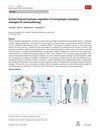
This review highlights that surface mechanical regulation can program macrophage behavior through specific mechanical cues on material surfaces, potentially advancing immunotherapies and regenerative medicine by enabling precise control over macrophage functions.
 April 2017 in “Journal of Investigative Dermatology”
 In this study, the authors concluded that the TS-associated polyomavirus may disrupt Wnt/β-catenin signaling, likely contributing to abnormal hair follicle formation in trichodysplasia spinulosa.
 16 citations
,
December 2016 in “Skin appendage disorders”
16 citations
,
December 2016 in “Skin appendage disorders” This study analyzed patch test results to identify allergens causing scalp contact dermatitis, finding nickel, cobalt, and balsam of Peru among the most common in the patient population.
 12 citations
,
April 2016 in “Chinese Medicine”
12 citations
,
April 2016 in “Chinese Medicine” The research identified 12 antioxidant compounds in Polygonum multiflorum roots, suggesting these as quality markers for the plant's processed roots.
 7 citations
,
February 2014 in “Talanta”
7 citations
,
February 2014 in “Talanta” This study developed an advanced HPLC-ESI-ion trap MS(n) method for the structural identification of cyclosporin A analogs CyA and CyC and reported the first MS(n)-aided identification of a new CyA analog.
 June 2014 in “Basic & Clinical Pharmacology & Toxicology”
 This study found that alkaloids isolated from Cucumis metuliferus fruit pulp demonstrated antiviral activity against IBDV in chicken embryo fibroblast cells and NDV in 10-day-old embryonated chicken eggs, while being non-cytotoxic.
November 2025 in “FEBS Open Bio” In this study, the researchers using Shh-GFP+/- mice found that cyclophosphamide-induced alopecia involves the JAK/STAT1 pathway, where STAT1 binds the Shh gene promoter, decreasing Shh-expressing cells in hair follicles. Treatment with JAK inhibitors helped rescue hair loss, implicating the JAK/STAT1 pathway in this process.
5 citations
,
April 2024 in “Heliyon” In this study, the researchers found that the chemical composition and color of the brown seaweed *Saccharina latissima* varied significantly depending on the harvesting period, site, and cultivation method, suggesting that environmental conditions play a key role in these variations.
January 2016 in “UNESP Institutional Repository (São Paulo State University)” This study suggests that the phenotype of melasma in women is influenced by structural and cellular changes across the epidermal-melanin unit, not just melanocyte hypertrophy, highlighting potential roles for dermal damage repair and fibroblast senescence.
13 citations
,
February 2024 in “Clinical Epigenetics” In this study, the authors review how epigenetic regulation influences the role of iPSC-derived neural stem/progenitor cells in spinal cord injury therapy, highlighting challenges in the cells' generation, differentiation, and transplantation, and the effect of therapeutic tools on these processes.
 January 2026 in “Preprints.org”
 This review explores current knowledge on fibroblast lineage specification and its impact on scar-free wound healing, noting that early fetal skin fibroblasts support regeneration, while later developmental shifts lead to fibrosis, highlighting potential strategies to reprogram adult fibroblasts for regenerative repair.
56 citations
,
November 2007 in “Molecular and cellular endocrinology” This study identified enzymes responsible for regulating androgen action in the human prostate, suggesting that inhibiting AKR1C2 or RL-HSD may have therapeutic potential in androgen insufficiency or benign prostatic hyperplasia, respectively.
30 citations
,
November 2019 in “Genetics selection evolution” This study found that in Chinese goat breeds, specific genetic variations, particularly in Tibetan Cashmere goats, are associated with traits like hair growth and adaptation to high-altitude environments.
27 citations
,
October 2021 in “Frontiers in Cell and Developmental Biology” This review discusses the role of histone marks in the transition between quiescence and proliferation in cells, and reports no new findings, emphasizing the potential existence of a histone "code" for quiescence.
9 citations
,
February 2023 in “Genes” This study reveals that long non-coding RNAs influence cashmere fiber traits in goats by interacting with target genes involved in pathways affecting fiber diameter and color.
March 2026 in “Adipocyte” This study identified transcription elongation as a crucial regulatory factor in adipocyte cell fate, showing that the elongation factors Spt4 and Spt6 are essential for proper adipogenic differentiation by aiding RNA polymerase II progression through key adipogenic genes.

This source reviews current understanding of fibroblast lineage differentiation and its role in wound healing, highlighting the potential to reprogram adult cells for scar-free repair by emulating fetal-like regenerative states.
July 2025 in “PNAS Nexus” This study integrated single-cell RNA-seq data from four previous studies to create a comprehensive human corneal cell state meta-atlas, revealing novel marker genes, rare cell states, and distinct transcription factors, and offering a tool to enhance future cornea research.
This study found that S1PR1 signaling in mouse aortic endothelial cells varied by location and subtype, influencing inflammatory and lymphangiogenic gene expression through distinct molecular pathways.
This study found that targeting S1PR1 signaling in mouse aortic endothelial cells helps suppress inflammation-related gene expression while revealing diverse and spatially distinct endothelial cell subtypes.
1 citations
,
June 2022 in “Frontiers in Neuroanatomy” This study found that neonatal blocking of androgen and estrogen pathways in rats altered sex-specific expression of estrogen and androgen receptors in adult pituitary and adrenal glands, potentially influencing lifelong neuroendocrine function.
180 citations
,
January 2011 in “EMBO Reports” This review discusses strategies for identifying and characterizing adult stem cells in mice and highlights their potential and limitations, but reports no new experimental results.
94 citations
,
April 2018 in “Nature Genetics” This study identified more than 100 genetic loci associated with hair color variation in Europeans, explaining a significant portion of the trait's heritability and advancing understanding of hair pigmentation.
68 citations
,
December 2010 in “The journal of investigative dermatology/Journal of investigative dermatology” This study suggests a regulatory model where HOXC13 activates Foxn1, affecting hair and nail differentiation, supported by similarities in Hoxc13(tm1Mrc) and Foxn1(nu) mice phenotypes and gene expression patterns.
29 citations
,
January 2021 in “G3 Genes Genomes Genetics” This study identified a 195 bp duplication in crested chickens that causes large crest feathers and can be associated with cerebral hernia in some breeds, but not all.
25 citations
,
November 2010 in “Journal of Molecular Structure” This preliminary study suggests that Raman micro-spectroscopy can help differentiate basal cell carcinoma from hair follicles in skin tissue sections, although some misclassification of hair follicles as carcinoma was observed.
24 citations
,
March 2022 in “Genome biology” This study introduces scINSIGHT, a method that showed improved performance over existing approaches in identifying gene expression patterns and cellular processes in heterogeneous scRNA-seq datasets from different biological conditions.
9 citations
,
June 1999 in “Journal of Investigative Dermatology” This study observed hair-specific transcription of a reporter gene in transgenic mice, with increased expression after dexamethasone and ultraviolet B treatment.
5 citations
,
August 2023 in “G3 Genes Genomes Genetics” This study developed an improved reference genome for the African spiny mouse using long Nanopore sequencing reads, potentially aiding future research into the species' remarkable tissue regeneration capabilities.
5 citations
,
August 2021 in “Journal of biological chemistry/The Journal of biological chemistry” This study observed sexually dimorphic effects of reduced Rdh10 on energy metabolism and muscle function in mice, with males experiencing decreased endurance and females showing increased endurance on a high-fat diet.