29 citations
,
January 2021 in “G3 Genes Genomes Genetics” This study identified a 195 bp duplication in crested chickens that causes large crest feathers and can be associated with cerebral hernia in some breeds, but not all.
 16 citations
,
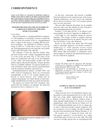
January 2005 in “Pediatric Dermatology”
16 citations
,
January 2005 in “Pediatric Dermatology” This brief report describes a case of Fox-Fordyce disease in a prepubertal girl but reports no new clinical findings.
 6 citations
,
September 1990 in “International Journal of Gynecology & Obstetrics”
6 citations
,
September 1990 in “International Journal of Gynecology & Obstetrics” This case report describes a rare instance of pruritic urticarial papules and plaques of pregnancy in a 25-year-old caucasian primigravida during the third trimester, discussing management recommendations.
3 citations
,
August 2023 in “Clinical Cosmetic and Investigational Dermatology” This case report details an instance of Wolf's isotopic response, where a 76-year-old patient developed keloids at the site of a previous herpes zoster infection, highlighting the unclear pathogenesis and theoretical explanations for such occurrences.
3 citations
,
March 2025 in “Science Advances” This study found that the unique crest feather formation in Polish chickens is driven by a 195-bp duplication in the HoxC10 gene region, which alters gene expression by modifying the genomic structure, suggesting a mechanism for diverse integumentary appendages in birds.
January 2016 in “Indian Dermatology Online Journal” This case study discusses a 36-year-old female diagnosed with a facial variant of eruptive vellus hair cyst, confirmed by skin biopsy, and highlights the importance of considering this condition in the differential diagnosis of asymptomatic facial papules.
 2 citations
,
August 2013 in “British Journal of Dermatology”
2 citations
,
August 2013 in “British Journal of Dermatology” This case report observed a dramatic improvement in a 15-year-old girl's pachyonychia congenita symptoms during chemotherapy for Ewing sarcoma, suggesting chemotherapy's potential role in managing hyperkeratotic conditions.
 9 citations
,
August 2002 in “Current Opinion in Pediatrics”
9 citations
,
August 2002 in “Current Opinion in Pediatrics” This article discusses the roles of pediatrics and dermatology departments at Yale University School of Medicine, but reports no specific clinical results.
 1 citations
,
August 2005 in “British Journal of Dermatology”
1 citations
,
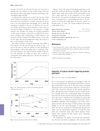
August 2005 in “British Journal of Dermatology” This case report describes a 7-year-old girl who developed widespread erythroderma and systemic symptoms after ingesting clobetasone butyrate cream, despite previous psoriasis treatment.
91 citations
,
July 2020 in “JAMA Dermatology” This study suggests that minoxidil may improve hypotrichosis in patients with ARWH due to LIPH variants, but a possible genetic factor could affect its efficacy within families.
12 citations
,
January 2021 in “Dermatology Research and Practice” This study found that using a nonablative 1927 nm wavelength laser followed by hydroquinone cream is safe and effective for treating postinflammatory hyperpigmentation in patients with dark skin types.
30 citations
,
January 2014 in “Journal of Controlled Release” This study concluded that combining cyanoacrylate skin surface stripping with particle-based antigen delivery effectively targets HIV-1 p24 protein to skin cells, supporting its potential for needle-free transcutaneous vaccination.
 April 2023 in “Journal of Investigative Dermatology”
 This study found that during the COVID-19 pandemic in China, atopic dermatitis became more prevalent among pediatric skin conditions, while infectious skin diseases decreased, possibly due to mask-wearing.
26 citations
,
June 2020 in “The Journal of Allergy and Clinical Immunology In Practice” This case study highlights that even short-term use of hydroxychloroquine for COVID-19 can potentially lead to acute generalized exanthematous pustulosis as an adverse effect.
7 citations
,
January 2025 in “Frontiers in Microbiology” In this study, researchers investigated the immunohistopathological characteristics of the skin in individuals during the acute phase of chikungunya infection, revealing CHIKV antigens and inflammatory infiltrates in various skin components and highlighting the role of cytokines/chemokines in the disease's skin manifestations.
 40 citations
,
August 2010 in “Archives of dermatology”
40 citations
,
August 2010 in “Archives of dermatology” This case report describes the youngest known patient with viral-associated trichodysplasia of immunosuppression, where systemic valganciclovir therapy improved facial papule eruptions following cardiac transplantation.
 July 2015 in “Actas Dermo-Sifiliográficas”
 A young woman with a rare fungal infection showed significant improvement after treatment with antifungal medication.
December 2013 in “Pump Industry Analyst” This study found that using particle-based antigen delivery in combination with cyanoacrylate skin surface stripping is an effective needle-free method for targeting HIV-1 p24 protein to skin cells, enhancing transcutaneous vaccination potential.
5 citations
,
September 1989 in “Pediatric dermatology” Persistent papular plaques on children's faces need better understanding and treatment.
September 2025 in “BMJ Case Reports” This case report suggests that herpes zoster ophthalmicus with secondary preseptal cellulitis may occur as a rare adverse reaction following platelet-rich plasma injections for androgenetic alopecia.
 16 citations
,
March 2013 in “International Journal of Dermatology”
16 citations
,
March 2013 in “International Journal of Dermatology” This study found that infectious skin diseases were prevalent in immigrant Latino poultry processors and manual workers in North Carolina, with tinea pedis and onychomycosis being particularly common.
6 citations
,
January 2014 in “Pediatric annals” This case report describes a 21-day-old infant with erythematous annular scaly plaques and pustules on the face and scalp, which did not improve with topical corticosteroid cream.
 November 2021 in “Open Forum Infectious Diseases”
 This study found that dermatological manifestations in COVID-19 patients with severe pneumonia were relatively rare, with the most frequent being the morbilliform viral exanthema and some cases of reversible androgenetic alopecia linked to disease severity.
 April 2021 in “Journal of Investigative Dermatology”
 This study found that multicomponent microarray patches for SARS-CoV-2 vaccination produced stronger immune responses and fewer side effects in mice compared to traditional intramuscular injection.
 May 2011 in “British Journal of Dermatology”
 The 1891 epidemic skin disease was likely caused by arsenic poisoning, possibly from beer or fish.
October 2025 in “Brazilian Journal of Veterinary Research and Animal Science” The researchers reported a case of a neotropical porcupine co-infected with Brazilian porcupine poxvirus and Toxoplasma gondii, suggesting the need for further investigation into the impact of this interaction.
 23 citations
,
September 2021 in “Frontiers in Medicine”
23 citations
,
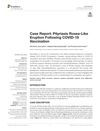
September 2021 in “Frontiers in Medicine” This report describes a rare case of pityriasis rosea-like eruption in a 52-year-old Thai woman following Oxford/AstraZeneca COVID-19 vaccination, emphasizing the condition does not preclude further vaccinations.
 6 citations
,
May 1941 in “Science”
6 citations
,
May 1941 in “Science” Ducks can get the Rous sarcoma virus if infected shortly after birth, leading to tumors and disease spread.
55 citations
,
May 2007 in “Australasian journal of dermatology” This case report describes the characteristic clinicopathological features of trichodysplasia spinulosa in two boys with acute lymphocytic leukemia, highlighting its resolution as immune function normalizes.
August 2025 in “International Journal of Clinical Dermatology” In this study, a possible case of Wolf’s isotopic response was observed, where a 72-year-old woman developed superficial basal cell carcinoma at a prior herpes zoster site on her scalp, possibly due to altered local immunity from the zoster episode.