 13 citations
,
August 2007 in “Bioorganic & medicinal chemistry letters”
13 citations
,
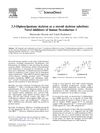
August 2007 in “Bioorganic & medicinal chemistry letters” This study developed a new competitive 5alpha-reductase inhibitor with an IC(50) of 0.84 microM using a novel chemical structure.
 61 citations
,
September 2016 in “NPG Asia Materials”
61 citations
,
September 2016 in “NPG Asia Materials” This study developed thermo-reversible glycol chitosan hydrogels that effectively form and maintain 3D cell spheroids within one day, offering a simplified method for creating biologically realistic cultures for tissue regeneration and drug screening applications.
 14 citations
,
February 1994 in “Tetrahedron Letters”
14 citations
,
February 1994 in “Tetrahedron Letters” This study found that using anhydrous cerium(III) chloride with alkyl Grignard reagents significantly improved the addition to sterically hindered 17-ketosteroids, resulting in high yields and stereoselectivity.
 20 citations
,
June 1995 in “Tetrahedron Letters”
20 citations
,
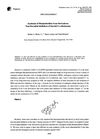
June 1995 in “Tetrahedron Letters” This study reported that newly synthesized phenanthridin-3-one derivatives effectively inhibit human steroid 5-α-reductase.
1 citations
,
March 2004 in “Patty's Toxicology” This review discusses the uses and toxicological data of eleven unsaturated halogenated hydrocarbons, including dichloroacetylene, allyl chloride, hexachlorobutadiene, β-chloroprene, vinyl chloride, trichloroethylene, and perchloroethylene, but presents no new findings.
 13 citations
,
October 2017 in “Bioorganic & Medicinal Chemistry”
13 citations
,
October 2017 in “Bioorganic & Medicinal Chemistry” This study found that compound 3, a tetrahydropyridoindole carboxymethylated at position 5, significantly inhibited sorbitol accumulation in both rat eye lenses and tissues affected by diabetes, indicating its potential as a lead compound for ALR2 inhibition.
 69 citations
,
February 2021 in “PLoS Computational Biology”
69 citations
,
February 2021 in “PLoS Computational Biology” This study found that securinine and ajmaline significantly inhibited hepatocellular carcinoma cell viability and induced apoptosis, with securinine showing lower toxicity to normal liver cells.
![The Synthesis of (−)-4-Methyl-8-Chloro-Trans-1,2,3,4,4a,5,6,10b-Octahydrobenzo-[f]-Quinolin-3-One-[3-14C] (LY300502-14C) via a Circuitous Route](/images/assets/73bab8dc-bdf0-45e3-8ef7-73d0d4b93cb1/small/21074.jpg) 3 citations
,
October 1994 in “Journal of Labelled Compounds and Radiopharmaceuticals”
3 citations
,
October 1994 in “Journal of Labelled Compounds and Radiopharmaceuticals” This synthesis report details the successful development of a C-14 labeled isotopomer of LY300502, a 5α-reductase inhibitor, through a multi-step radiochemical process.
May 2022 in “Current Enzyme Inhibition” This study found that the synthesized compound 7b exhibited higher 5α-reductase inhibitory activity, increased solubility, and dissolution compared to finasteride, suggesting its potential as a lead compound for benign prostatic hyperplasia treatment.
 22 citations
,
January 2001 in “Chemical & Pharmaceutical Bulletin”
22 citations
,
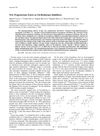
January 2001 in “Chemical & Pharmaceutical Bulletin” This study found that two new progesterone derivatives showed higher antiandrogenic effects and 5α-reductase inhibition than finasteride in hamsters, particularly reducing seminal vesicle weight and flank organ size.
5 citations
,
July 2019 in “Investigational new drugs” TLR7-based compounds may help manage chemotherapy-induced hair loss.
23 citations
,
October 2008 in “Journal of medicinal chemistry” This study suggests that PF-0998425 is an effective androgen receptor antagonist for sebum control and androgenetic alopecia with rapid metabolism reducing the risk of systemic side effects.
 23 citations
,
January 2001 in “Chemical & Pharmaceutical Bulletin”
23 citations
,
January 2001 in “Chemical & Pharmaceutical Bulletin” This study found that several synthesized pregnane derivatives exhibited significant inhibitory effects on testosterone conversion to dihydrotestosterone and reduced related androgenic parameters in multiple pharmacological models.
 153 citations
,
November 2004 in “Current Medicinal Chemistry”
153 citations
,
November 2004 in “Current Medicinal Chemistry” This article updates a prior work on pharmacophore modeling and highlights the advances in 3D database searching technologies for drug design, without presenting new research findings.

This review explores the synthesis and potential of azasteroids as novel drugs, discussing challenges in their production and reporting no new clinical results.
January 2026 in “RSC Medicinal Chemistry” This study notes the ongoing challenge in developing new drugs for androgenetic alopecia, mentioning that both minoxidil and finasteride were originally intended for treating hypertension. Results are not reported.
27 citations
,
July 2008 in “The Journal of Steroid Biochemistry and Molecular Biology” The new compounds may be more effective and cheaper than current treatments for conditions like baldness.
![Synthesis and 5α-Reductase Inhibitory Activity of 8-Substituted Benzo[ƒ]Quinolinones Derived from Palladium Mediated Coupling Reactions](/images/assets/2aedba8c-b0ac-4fa3-9ac7-9f375a016bba/small/15581.jpg) 14 citations
,
February 1998 in “Bioorganic & Medicinal Chemistry Letters”
14 citations
,
February 1998 in “Bioorganic & Medicinal Chemistry Letters” This study explored how modifying the 8-substituent of 8-bromobenzoquinolinone affects its selectivity in inhibiting both 5 alpha-reductase isozymes in the scalp.
 January 2018 in “Clinical dermatology open access journal”
 This review discusses the various applications of chitosan-based materials in dermatology and highlights their potential as promising new materials but does not present new experimental results.
November 2024 in “Elsevier eBooks”  December 2023 in “International Journal of Biological Macromolecules”
 This study found that MCS nanoparticles improved Minoxidil's hair growth effects in an animal model compared to the commercial formulation, but they were less effective than CS nanoparticles despite showing better solubility with minimal side effects.
 32 citations
,
June 2017 in “Journal of Pharmaceutical Sciences”
32 citations
,
June 2017 in “Journal of Pharmaceutical Sciences” This study found that coating liquid crystalline nanoparticles with chitosan significantly enhanced the skin permeation of 5α-reductase inhibitors, suggesting a promising strategy for improving topical delivery in androgenetic alopecia treatment.
This study evaluated amphiphilic self-assembling peptides as drug delivery systems and found they effectively ensured prolonged release and therapeutic efficacy for timolol in glaucoma and for chemotherapy agents in cancer treatment, with significant tumor size reduction observed in animal models.
![Synthesis, Biological Evaluation, and Molecular Docking of 4-Amino-2H-benzo[h]chromen-2-one Analogs Containing the Piperazine Moiety](/images/assets/2ecf4eed-7dbe-4f1a-83db-739625546cdd/small/31808.jpg) 7 citations
,
August 2019 in “Bioorganic & medicinal chemistry”
7 citations
,
August 2019 in “Bioorganic & medicinal chemistry” This study identified novel 4-Amino-2H-benzo[h]chromen-2-one analogs as potent androgen receptor antagonists that show strong antiproliferative activity against prostate cancer cells, suggesting them as potential lead compounds for therapy development.
 September 2025 in “Experimental & Molecular Medicine”
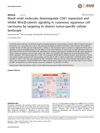
 This study observed that the small molecules KY19382 and KY19334 inhibited cancerous traits in human cutaneous squamous cell carcinoma cells by suppressing the Wnt/β-catenin pathway, indicating their potential as treatments for cancers involving CDK1 overexpression and diseases related to CXXC5 accumulation.

This study demonstrated that de novo designed bifunctional proteins can target and degrade BCL-xL, leading to cell apoptosis, suggesting a new approach to targeted protein degradation therapy.
5 citations
,
November 2024 in “Biomedicine & Pharmacotherapy” This study developed a carbohydrate chitosan-based biomaterial combined with a novel peptide to promote the chondrogenic differentiation of human adipose-derived stem cells, suggesting potential clinical applications for cartilage regeneration.
2 citations
,
November 2024 in “In Silico Pharmacology” 12 citations
,
April 2023 in “Pharmaceutics” This review covers the current and potential medical uses of semifluorinated alkanes, including applications in eye surgery, drug delivery, and oxygen transport.
 33 citations
,
January 2009 in “Contraception”
33 citations
,
January 2009 in “Contraception” This review summarizes the use of chlormadinone acetate for hormone replacement therapy and contraception, highlighting its anti-androgenic effects, contraceptive efficacy, and clinical tolerability, without offering new clinical results.