 25 citations
,
December 2005 in “Molecular Genetics and Metabolism”
25 citations
,
December 2005 in “Molecular Genetics and Metabolism” This study reports that riboflavin may increase enzymatic activity in a GCDH-deficient patient with specific mutations, but doesn't fully normalize urinary organic acid levels.
 108 citations
,
November 2006 in “Phytomedicine”
108 citations
,
November 2006 in “Phytomedicine” This study found that EGCG from green tea may stimulate human hair growth by promoting the proliferation and anti-apoptotic activity in dermal papilla cells.
4 citations
,
November 2022 in “Nutrients” In a study on mice, cow placenta extract showed strong antioxidant activities and reduced collagen damage, suggesting it could help delay skin aging caused by D-galactose.
 November 2022 in “Journal of Investigative Dermatology”
 This study found that short-term treatment with ROCKi significantly increased keratinocyte stem cell proliferation without affecting their stemness, suggesting a potential safe approach for improving in vitro keratinocyte cultures for clinical applications.
 20 citations
,
February 2013 in “Nutrition”
20 citations
,
February 2013 in “Nutrition” This article reviews the role of prebiotics and the potential of green tea and selenium as alternatives due to their non-toxic nature, but it reports no new research findings.
 3 citations
,
June 2009 in “The journal of alternative and complementary medicine/Journal of alternative and complementary medicine”
3 citations
,
June 2009 in “The journal of alternative and complementary medicine/Journal of alternative and complementary medicine” This letter discusses the potential of green tea extract as a treatment for hirsutism but reports no clinical outcomes.
 1 citations
,
January 2021 in “Clinical Dermatology Open Access Journal”
1 citations
,
January 2021 in “Clinical Dermatology Open Access Journal” This study observed that the Aptamin C® and vitamin C complex had effective ROS-scavenging and anti-inflammatory effects on human skin in both in vitro and clinical tests.
 108 citations
,
December 2003 in “Lasers in surgery and medicine”
108 citations
,
December 2003 in “Lasers in surgery and medicine” This study found that combining near-infrared laser phototherapy with indocyanine green application may improve acne vulgaris by reducing active lesions and inflammation without side effects.
September 2025 in “Journal of Applied Biological Chemistry” In a laboratory study, Grateloupia elata extract demonstrated antioxidant and anti-aging effects by scavenging free radicals, inhibiting collagenase and elastase, increasing procollagen production, and reducing MMP-1 secretion, suggesting its potential use in functional cosmetics.
80 citations
,
August 2022 in “Materials Today Bio” This study developed a double-network hydrogel using polyacrylamide and catechol-chitosan to enhance mechanical properties and promote drug release, aiding in inflammation regulation and wound healing for chronic wounds with challenging microenvironments.
 15 citations
,
March 1997 in “International Journal of Dermatology”
15 citations
,
March 1997 in “International Journal of Dermatology” In this case report, the authors describe green hair discoloration in a patient attributed to the use of selenium sulfide.
November 2021 in “Natural product research” This study observed that the aqueous extract of roasted Alocasia macrorrhizos tubers led to hair follicle repigmentation and reduced epidermal thickness in a murine model of Vitiligo.
 January 2026 in “Journal of Emerging Technologies and Innovative Research”
 This study reported that zinc oxide nanoparticles synthesized using Tridax procumbens leaf extract demonstrated significant antibacterial and anticancer activity, showing potential for applications in biomedical and pharmaceutical fields.
33 citations
,
January 2015 in “Journal of Ginseng Research” This study found that ginsenoside Rg3 significantly inhibited melanogenesis in human melanocytes and B16F10 cells by activating the ERK pathway, suggesting potential as a skin-whitening agent.
34 citations
,
March 2007 in “Biochemical and Biophysical Research Communications” This study suggests that decreased expression of thioredoxin reductase 1 in hair follicle cells may contribute to glucocorticoid resistance in some alopecia areata patients by affecting the intracellular redox system.
 September 2024 in “Journal of Cosmetic Dermatology”
 In this study, researchers found that Ectoin, derived from halophilic bacteria, can mitigate stress-related skin damage by reducing cortisone's inhibitory effects on essential skin proteins and decreasing UVB-induced glucocorticoid activity, highlighting its potential as a preventative agent for stress-induced skin issues.
This study found that Heated radish extract potently suppressed melanin production in vitro and reduced wrinkle formation and collagen degradation in vivo, suggesting its potential as a skin whitening and antiaging product.
May 2026 in “Pharmacy Reports” This systematic review found that while green solvent- and natural excipient-based semisolid formulations often show promising efficacy and safety compared to conventional options, the evidence does not currently establish superior stability, highlighting a need for further research on long-term formulation quality.
 July 2022 in “Skin research and technology”
 This report describes common skin CT features of rosacea identified using a reflective confocal microscope, facilitating more objective diagnosis but highlights the need for further clinical exploration.
 5 citations
,
December 2011 in “Drug Research”
5 citations
,
December 2011 in “Drug Research” This study found that cortexolone 17α-propionate showed strong topical antiandrogenic activity, outperforming progesterone and several known antiandrogens, but lacked systemic antiandrogenic effects in animal models.
 3 citations
,
March 2014 in “Journal of Industrial Microbiology & Biotechnology”
3 citations
,
March 2014 in “Journal of Industrial Microbiology & Biotechnology” This study identified a cytochrome P450 enzyme, CYP-pa1 from Pseudonocardia autotrophica, as responsible for the specific hydroxylation of cyclosporin A at the 9th N-methyl leucine, suggesting potential for biotechnological applications.
 7 citations
,
July 2012 in “Regenerative Medicine”
7 citations
,
July 2012 in “Regenerative Medicine” This article summarizes recent highlights in regenerative medicine research but reports no new experimental findings.
 May 2017 in “bioRxiv (Cold Spring Harbor Laboratory)”
 This study found that the peach gene CTG134, involved in auxin-ethylene interactions, plays a role in hormonal regulation during root hair formation in Arabidopsis and tobacco.
7 citations
,
January 2022 in “Brazilian Journal of Biology” This study found that a shampoo formulation using mangabeira leaf extract without sodium lauryl sulfate showed promising antioxidant activity and improved foam quality.
7 citations
,
August 2020 in “Plastic and reconstructive surgery. Global open” In this study, QR 678 and QR 678 Neo formulations containing growth factors and peptides were found to be safe in vitro and promoted hair growth in vivo in an animal model, suggesting their potential as treatments for alopecia, including secondary alopecia post-chemotherapy.
8 citations
,
October 2022 in “Frontiers in Bioengineering and Biotechnology” This study found that HFV70 cryogels, made from Flammulina velutipes extract and hydroxyethyl cellulose, effectively promoted rapid hemostasis and tissue regeneration in full-thickness skin defects in rats, demonstrating improved hemocompatibility, cytocompatibility, antimicrobial, and antioxidant properties.
12 citations
,
December 2023 in “Antioxidants” In this study, researchers found that blackberry leaves exhibited higher liposoluble antioxidant levels and inhibited lipid peroxidation more effectively than raspberry leaves, while raspberry leaves showed greater water-soluble antioxidant content and hydroxyl radical inhibition in vitro.
 57 citations
,
March 2024 in “Nano-Micro Letters”
57 citations
,
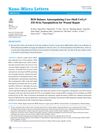
March 2024 in “Nano-Micro Letters” In this study, researchers created a core-shell nanozyme, CeO2@ZIF-8/Au, which autonomously regulates ROS levels to efficiently eliminate bacteria, reduce inflammation, and promote wound healing by balancing ROS generation and scavenging in response to environmental conditions.
 8 citations
,
February 2022 in “Molecules”
8 citations
,
February 2022 in “Molecules” This study found that Asparagus racemosus root extract significantly reduced facial sebum production and pore size in male volunteers, suggesting potential application as an anti-sebum ingredient in cosmetics.
May 2010 in “OPAL (Open@LaTrobe) (La Trobe University)” This research discusses potential cancer vaccine strategies using cell-based and DNA vector-based approaches, and suggests targeting the v3 splice variant of thioredoxin reductase 1 to inhibit cancer cell motility and metastasis formation.