23 citations
,
July 2016 in “JAMA Ophthalmology” This study observed that CDH3-related congenital hypotrichosis with juvenile macular dystrophy presents with childhood-onset progressive chorioretinal atrophy and universally thin and sparse scalp hair.
65 citations
,
March 2004 in “Journal of Clinical Investigation” In this study, overexpression of ornithine decarboxylase accelerated basal cell carcinoma in Ptch1+/– mice under UVB exposure, while its inhibition reduced tumor induction, suggesting potential chemoprevention strategies in humans.
 September 2016 in “Journal of Dermatological Science”
 This study found that plasmacytoid dendritic cells may initiate alopecia areata in mice by overexpressing interferon-alpha.
 117 citations
,
May 2017 in “Human Reproduction Update”
117 citations
,
May 2017 in “Human Reproduction Update” This review examines the epidemiology, pathophysiology, diagnosis, and management strategies for non-classic congenital hyperplasia due to 21-hydroxylase deficiency, and provides evidence-based recommendations for its treatment and genetic counseling.
July 2024 in “Journal of Investigative Dermatology” September 2025 in “OPAL (Open@LaTrobe) (La Trobe University)” This study observed that treating hair follicles with BM15766 and 7DHC led to structural damage, disrupted cellular organization, reduced expression of key genes and proteins, and increased apoptosis, in contrast to controls, indicating detrimental effects on hair follicle integrity.
May 2024 in “Journal of the Egyptian Womenʼs Dermatologic Society” This study suggests that DPCP treatment can be effective and safe for severe alopecia areata in children, with maintenance therapy potentially reducing relapse rates.
 1 citations
,
April 2022 in “The Journal of Family Practice”
1 citations
,
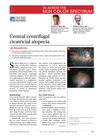
April 2022 in “The Journal of Family Practice” This report describes early and late stages of central centrifugal cicatricial alopecia in two Black women, highlighting progression from a small to a large central patch of hair loss.
 8 citations
,
March 2020 in “Frontiers in Cell and Developmental Biology”
8 citations
,
March 2020 in “Frontiers in Cell and Developmental Biology” This study developed a DPC cell line by introducing mutant CDK4, Cyclin D1, and TERT, making it a promising tool to study downstream signaling pathways activated by testosterone in androgenetic alopecia.
11 citations
,
December 2013 in “Clinical and experimental dermatology” This study reports a case of a child with congenital skin fragility, alopecia, and cardiomyopathy due to compound heterozygous mutations in the DSP gene causing desmoplakin deficiency.
January 2022 in “International journal of dermatology and venereology” This case study reports a 36-year-old man with KID syndrome caused by an N14Y GJB2 mutation, expanding the mutation spectrum of this condition in the Chinese population.
 8 citations
,
January 2023 in “RSC Advances”
8 citations
,
January 2023 in “RSC Advances” This article reviews advancements in carbon dots for tissue engineering and regenerative medicine, highlighting challenges and future directions without presenting new clinical findings.
61 citations
,
January 2013 in “International Journal of Biological Macromolecules” This study found that applying both dehydrothermal treatment and carbodiimide crosslinking improved the mechanical properties of porcine acellular dermal matrix scaffolds without added cytotoxicity, suggesting potential applications in tissue engineering.
3 citations
,
January 2013 in “Journal of cosmetics, dermatological sciences and applications” This study found that the new HCC additive enhances the permeation of pigments and active ingredients into hair, suggesting potential use in developing functional cosmetic hair products.
 5 citations
,
September 2015 in “BMC Medical Genetics”
5 citations
,
September 2015 in “BMC Medical Genetics” In this study, individuals with a c.1072C > T mutation in the EDAR gene showed more hair shaft deformations compared to non-mutation carriers, highlighting EDAR's role in hair follicle development.
 19 citations
,
August 2020 in “Gastroenterology report”
19 citations
,
August 2020 in “Gastroenterology report” This review discusses the characteristics and challenges in treating Cronkhite–Canada syndrome but reports no new clinical findings, emphasizing the need for better understanding and uniform treatment approaches.
 November 2022 in “CARDIOMETRY”
 This article discusses the potential benefits of GcMAF and oral MAF, developed by "Saisei Mirai", for cancer and other conditions, but reports no new clinical results.
April 2023 in “Journal of Investigative Dermatology” CD206+ macrophages are crucial for hair growth in alopecia areata treatment.
 April 2018 in “Journal of Investigative Dermatology”
 This study observed that β-catenin overexpression in human squamous cell carcinoma cells led to increased CREB expression, which significantly enhanced clonogenic activity, suggesting CREB as a β-catenin-regulated factor promoting cancer characteristics.
 97 citations
,
March 2002 in “Molecular and cellular biology”
97 citations
,
March 2002 in “Molecular and cellular biology” This study found that mice with a mutant CDP/Cux protein lacking the homeodomain showed severely impaired growth, high postnatal mortality, and reduced fertility, highlighting CDP/Cux's role in developmental regulation.
 27 citations
,
December 2015 in “Clinical and Experimental Dermatology”
27 citations
,
December 2015 in “Clinical and Experimental Dermatology” This study found that hair regrowth occurred in 72.2% of alopecia areata patients treated with diphencyprone, with disease extent at baseline and duration affecting outcomes.
November 2025 in “Journal of Investigative Dermatology” TEDAR is crucial for skin cell differentiation and barrier formation.
 January 2024 in “Journal of camel practice and research/Journal of Camel Practice and Research”
 This study analyzed the KRTAP7 gene in four Indian camel breeds and found that the gene sequences were identical across breeds, with no observed SNPs in coding or non-coding regions.
This study found that the rs3185480 polymorphism in the APCDD1 gene was associated with an elevated risk of developing androgenic alopecia and reduced protein levels, potentially due to altered codon usage affecting translation efficiency.
1 citations
,
December 2023 in “JAAD International” Mast cells may significantly contribute to central centrifugal cicatricial alopecia.
 42 citations
,
August 1999 in “The American journal of pathology”
42 citations
,
August 1999 in “The American journal of pathology” This study found that basal cell carcinomas show strong expression of vitamin D receptors at both mRNA and protein levels, suggesting a potential role in tumor growth regulation.
 November 2022 in “The journal of investigative dermatology/Journal of investigative dermatology”
 This study found that conditional deletion of CD271 in mouse epidermis led to significant disorganization and increased thickness, suggesting CD271's crucial role in regulating skin differentiation and structure.
 December 2024 in “Clinical Cosmetic and Investigational Dermatology”
 This study found that AA may have a protective role in the progression of both HBDC and CRC, suggesting potential new research avenues for treatments of these conditions.
January 2026 in “Biomaterials” 67 citations
,
September 2001 in “American Journal Of Pathology” This study found that overexpression of the enzyme ornithine decarboxylase in transgenic mice led to UVB-induced skin tumors, but this was prevented by the ODC inhibitor α-difluoromethylornithine.