Search
for
Sort by
Research
270-300 / 1000+ resultsresearch Suppression of mammary tumorigenesis in transgenic mice by the RXR-selective retinoid, LGD1069.
This study found that the retinoid LGD1069 suppressed mammary tumorigenesis in a mouse model without observable toxicity, while TTNPB showed modest effects but was associated with significant toxicity.
research 177 Chronic graft-versus-host disease exhibits distinct Th1-skewing and barrier abnormalities in the skin
In this study, researchers developed a mouse model of scarring alopecia and observed significant reductions in CD200R expression in affected skin, potentially linking this signaling pathway to immune attacks on hair follicles and suggesting new treatment targets for scarring hair loss.

research Cardiac biopsy in myocarditis
Some people have a genetic variation that makes them less effective at breaking down drugs.
research A 32‐year‐old woman with arthralgias and severe hypotension
This case report describes a 32-year-old woman with a history of undifferentiated connective tissue disease who presented with cardiogenic shock, and endomyocardial biopsy revealed giant cell myocarditis, possibly indicating an association with her autoimmune condition.
research Conditional expression of the ErbB2 oncogene elicits reversible hyperplasia in stratified epithelia and up-regulation of TGFα expression in transgenic mice

research O02 Ubiquitomics of CYLD-deficient skin tumours reveals dysregulation of hair follicle keratinocyte processes
The researchers reported increased ubiquitination of proteins such as the insulin receptor in CYLD cutaneous syndrome skin tumors, suggesting that CYLD dysfunction may affect protein secretion and signaling processes.
research hsa_circ_0002980 prevents proliferation, migration, invasion, and epithelial-mesenchymal transition of liver cancer cells through microRNA-1303/cell adhesion molecule 2 axis
In liver cancer cells, this study found that upregulating hsa_circ_0002980 inhibits cell proliferation, metastasis, and EMT by modulating the miR-1303/CADM2 axis, suggesting it as a potential therapeutic target.
research Ornithine decarboxylase is a target for chemoprevention of basal and squamous cell carcinomas in Ptch1+/– mice
This study found that inhibiting the enzyme ornithine decarboxylase (ODC) prevented UVB-induced basal cell carcinomas in a mouse model, suggesting ODC is a potential target for chemoprevention strategies.
research Distinct use of super-enhancer elements controls cell type–specific CD25 transcription and function
This study found that deleting specific super-enhancer regions in mice affects CD25 expression in a cell type-specific manner, leading to autoimmune alopecia in some cases and revealing distinct regulatory mechanisms for constitutive and inducible expression of CD25.

research ECM1 modified HF-MSCs targeting HSC attenuate liver cirrhosis by inhibiting the TGF-β/Smad signaling pathway
In this study, researchers found that hair follicle-derived mesenchymal stem cells, modified to overexpress extracellular matrix protein 1, significantly improved liver function and reduced liver damage in cirrhotic mice by inhibiting hepatic stellate cell activation and TGF-β/Smad signaling.
research Epidermal cell proliferation and modulation of the protective potency of dexamethasone against phorbol ester-induced ornithine decarboxylase activity
This study found that dexamethasone treatment inhibited the inflammatory response and the induction of ornithine decarboxylase activity in mouse skin after TPA application, although the effect on ODC was weaker during the hyperplastic stage.
research MCMV Infection Lowers the Threshold for the Development of Clinical GvHD after Allogeneic Bone Marrow Transplantation.
This study found that CMV infection in a mouse model of allogeneic transplantation was associated with increased allo-reactive T cell expansion and exacerbated graft-versus-host disease, highlighting the need for effective GvHD prophylaxis and treatment.
research Decision letter: IL18 signaling promotes homing of mature Tregs into the thymus
In this study, researchers identified IL18R+ thymus-resident regulatory T cells in mice, demonstrating their unique molecular features and resistance to age- and stress-induced thymus involution, highlighting IL18 signaling's role in Treg migration and retention.
research Single‐center study to determine the safety and efficacy of CT‐707 in Chinese patients with advanced anaplastic lymphoma kinase‐rearranged non‐small‐cell lung cancer
In this phase I study, CT-707, a new ALK inhibitor, showed a 77% response rate among Chinese patients with advanced ALK-rearranged non-small cell lung cancer, suggesting clinical effectiveness despite some adverse events like diarrhea and liver enzyme elevation.

research P0881 Effectiveness and Safety of Tofacitinib in Biologic-Naïve Elderly Patients with Ulcerative Colitis
In this study, tofacitinib showed promising efficacy and safety for biologic-naïve elderly patients with moderate-to-severe ulcerative colitis, achieving steroid-free remission and clinical response over 52 weeks.
research Directed elimination of senescent cells by inhibition of BCL-W and BCL-XL
This study shows that inhibiting anti-apoptotic proteins BCL-W and BCL-XL can specifically induce apoptosis in senescent cells, suggesting a potential strategy for treating age-related pathologies.

research The Phenotype of Circulating Follicular-Helper T Cells in Patients with Rheumatoid Arthritis Defines CD200 as a Potential Therapeutic Target
In this study, rheumatoid arthritis patients showed no changes in the number of circulating follicular helper T cells, but these cells had increased CD200 expression, implicating them in disease pathogenesis and suggesting CD200/CD200R as a potential therapeutic target.

research XEDAR activates the non-canonical NF-κB pathway
This study found that the XEDAR receptor can activate the non-canonical NF-kB pathway involving p100 processing, which is regulated by interactions with TRAF proteins and specific kinases.
research DEVELOPING NEW DUAL-ACTION ANTIVIRAL/ANTI-INFLAMMATORY SMALL MOLECULES FOR COVID-19 TREATMENT USING IN SILICO AND IN-VITRO APPROACHES
This study explored new molecular structures as potential COVID-19 treatments, identifying a compound called Hit15 that inhibited viral infection in lab settings and reduced inflammation markers in human neutrophils, suggesting further development is warranted.

research 848 Genes implicated in lipid & metabolic regulation downregulated in CCCA
In this study, the researchers observed significant metabolic dysregulation in central centrifugal cicatricial alopecia, particularly involving lipid metabolism and the downregulation of AMPK-related genes.
research Recombinant Thrombomodulin Used to Successfully Treat Cronkhite-Canada Syndrome with Disseminated Intravascular Coagulation due to Sepsis in a Compromised Patient
In this study, a patient with Cronkhite-Canada syndrome complicated by severe sepsis and disseminated intravascular coagulation was successfully treated using combined therapies, including recombinant human soluble thrombomodulin, despite the absence of a standard treatment regimen for CCS.
research Differential expression of KRT83 regulated by the transcript factor CAP1 in Chinese Tan sheep
This study found that the transcription factor CAP1 negatively regulates KRT83 expression in Tan sheep, possibly influencing their curly hair phenotype.

research 1421 Primary cutaneous diffuse large B-cell lymphoma–leg type masquerading as a mucocele
This case study reports an unusual presentation of primary cutaneous diffuse large B-cell lymphoma–leg type occurring on the upper lip of an 81-year-old woman, highlighting the need for timely recognition of atypical manifestations.

research 1367 Inhibition of the mitochondrial pyruvate carrier promotes ATF4–dependent stress responsive metabolic rewiring and cell cycle arrest in the human hair follicle
This study found that inhibiting the Mitochondrial Pyruvate Carrier in human hair follicles ex vivo activated the integrated stress response, affecting cell proliferation and metabolism.
research 057 Single cell RNA and TCR sequencing reveals hyperexpansion of T cell clones and novel regulatory mechanisms of CD8+ T cells in murine alopcecia areata skin and draining lymph nodes
This study found that in mice with alopecia areata, CD8+ T cells showed clonal expansion and specific regulatory networks, which might help identify new therapeutic targets for patients not responding to JAK inhibitors.
research Folliculotropic CD8+ mycosis fungoides associated with diffuse mucosal involvement
This report describes a rare case of folliculotropic and syringotropic CD8 mycosis fungoides with unusual widespread mucosal involvement.
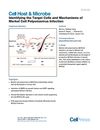
research Identifying the Target Cells and Mechanisms of Merkel Cell Polyomavirus Infection
In this study, human dermal fibroblasts were identified as natural host cells that support productive Merkel cell polyomavirus infection, and the MEK antagonist trametinib was introduced as an effective inhibitor to control the virus.

research Signal integrator function of CXXC5 in Cancer
This study reviews the role of the zinc finger protein CXXC5 in cellular signaling and its implications for cancer, discussing how its dysregulation is linked to various physiological and pathological processes, as well as potential therapies targeting CXXC5.

research Genetic alteration of cyclic adenosine 3',5'-monophosphate-dependent protein kinase subunit expression affects calcium currents and beta-endorphin release in AtT-20 clonal pituitary cells.
This study found that AtT-20 pituitary cells with higher cAMP-dependent kinase activity had larger calcium currents and significantly increased beta-endorphin release compared to cells with lower kinase activity.