 March 2025 in “MINAR International Journal of Applied Sciences and Technology”
 This study reviewed evidence on the role of specific genes (FKBP12, SAMAHD1, TRF2, CD155, and GATA3) in predicting how breast cancer patients might respond to adjuvant chemotherapy, aiming to monitor these markers in blood or tissue samples.
1 citations
,
July 2016 in “Dermatologic surgery”  20 citations
,
September 2010 in “Cell Cycle”
20 citations
,
September 2010 in “Cell Cycle” This study reports that in MRL mice, loss of p53 does not impair ear regeneration, suggesting p21's potential role in this process may involve the Tgfb/Smad pathway.
July 2025 in “Journal of Investigative Dermatology” Complex basal cell carcinomas need personalized treatment due to unique genetic mutations.
The study found that the combined administration of regulatory T cells and rapamycin improved outcomes in an experimental model of chronic graft-versus-host disease.
1 citations
,
July 2020 in “The Egyptian Journal of Hospital Medicine” This study found no significant association between the MDR1 C3435T polymorphism and methotrexate responsiveness in rheumatoid arthritis patients.
2 citations
,
October 2023 in “PubMed” This study reported the creation of isogenic immortalized COL7A1-deficient keratinocyte lines, providing a model for researching Recessive Dystrophic Epidermolysis Bullosa biology and potential therapies.
40 citations
,
July 2019 in “Journal of Investigative Dermatology” In this study, knockout mice lacking the Cyp4f39 gene showed severe skin barrier dysfunction and high early mortality, suggesting its critical role in skin barrier formation and insights into ichthyosis pathogenesis.
This study found that OCT4B1 isoform expression was elevated in tissue and blood samples from patients with inflammatory bowel disease, suggesting a potential role in tissue repair.
 81 citations
,
February 2000 in “Anti-cancer drugs”
81 citations
,
February 2000 in “Anti-cancer drugs” In this pilot study, Doxil at 60 mg/m² every 4 weeks showed activity against hormone-refractory prostate cancer but was limited by severe mucocutaneous toxicities.
 May 2018 in “European Journal of Dermatology”
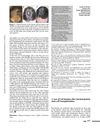
 Adjusting the medication tacrolimus resolved a boy's red nail beds after a stem cell transplant.
 April 2010 in “The Journal of Urology”
 This study found that ureteroileal anastomosis with direct intraluminal visualization had a 4.2% stricture rate, which compares favorably to other techniques with rates between 3.5% and 11.1%.
July 2025 in “Journal of Investigative Dermatology” This study found that autologous Foxp3+ γδTregs, when tested in human scalp hair follicle models and mouse xenotransplants, can both prevent and treat alopecia areata by reducing immune privilege collapse and lymphocytic infiltration, suggesting their potential as a novel cell-based therapy for the disease.
 April 2018 in “Journal of Investigative Dermatology”
 In this study, researchers identified CENPV as a new CYLD interacting partner that localizes to primary cilia and regulates acetylated tubulin levels, offering insights into the pathogenesis of skin appendage tumors.
 49 citations
,
August 2004 in “The FASEB Journal”
49 citations
,
August 2004 in “The FASEB Journal” This study found that transgenic mice expressing human keratin K8 in the epidermis showed increased progression of skin lesions toward malignancy, suggesting a role for K8 in the development of invasive skin cancer.
1 citations
,
May 2023 in “The Journal of Immunology” In this animal study, researchers discovered that CD4 T cells from mice with alopecia areata can induce the disease more efficiently than those from unaffected mice, likely by supporting CD8 T cell activation and hair follicle attack.
 April 2018 in “Journal of Investigative Dermatology”
 This study found that high skin expression of amphiregulin in acute graft-versus-host disease was associated with severe disease grade, poor overall survival, and increased non-relapse mortality.
 78 citations
,
June 2013 in “Science”
78 citations
,
June 2013 in “Science” This study found that mice lacking the Sept4/ARTS gene had more hair follicle stem cells and improved wound healing, suggesting apoptosis regulation as a potential target in regenerative medicine.
76 citations
,
January 1998 in “Mammalian Genome”  1 citations
,
January 1995 in “Journal of Investigative Dermatology”
1 citations
,
January 1995 in “Journal of Investigative Dermatology” RU58841, a substance from France, can potentially block the effects of hormones that cause hair loss and excessive hair growth, performing better than a similar substance, cyproterone acetate.
10 citations
,
May 2011 in “American Journal of Hematology” This study found that vinblastine treatment rapidly increased platelet counts in childhood refractory immune thrombocytopenia, providing effective control of bleeding symptoms, although side effects like neuropathic pain were common and resolved with dose adjustments.
33 citations
,
May 2018 in “Stem Cell Reports” This study demonstrates that Krt15 marks long-lived, multipotent, and injury-resistant crypt cells in the small intestine, which may serve as the cell of origin in intestinal cancer.
 21 citations
,
October 2013 in “Molecular Biology of the Cell”
21 citations
,
October 2013 in “Molecular Biology of the Cell” This study found that the protein CCN2 in dermal papilla cells is a physiologically relevant suppressor of hair follicle formation by destabilizing β-catenin, which may help maintain stem cell quiescence.
3 citations
,
October 2020 in “Journal of Investigative Dermatology” This study established that the Dct::CreERT2 mouse line is effective for targeting and studying adult melanocyte stem cells, contributing to the understanding of melanocyte biology and hair pigmentation.
23 citations
,
December 1977 in “Virchows Archiv B Cell Pathology” 22 citations
,
March 1994 in “Journal of Heredity” In this study, researchers identified a mutation in mice that causes hair loss and immune system issues, located on chromosome 18.
July 2026 in “Journal of Investigative Dermatology” January 1975 in “NJEA Review” This Phase II study found that BAY 43-9006, given at 400 mg orally twice daily, led to stable disease in 30% and tumor reduction in 40% of renal cell carcinoma patients.
1 citations
,
May 2025 in “BMC Cancer” In this study, the researchers found that different CDK4/6 inhibitors used in treating HR+/HER2- advanced breast cancer have varying safety profiles and impacts on patient quality of life.
 March 2024 in “EMBO molecular medicine”
 This study found that the antiviral drug daclatasvir significantly improved fibrosis and quality of life in a mouse model of recessive dystrophic epidermolysis bullosa, suggesting potential for treating this and other fibrotic diseases.