 1 citations
,
May 2022 in “Frontiers in Pharmacology”
1 citations
,
May 2022 in “Frontiers in Pharmacology” This study found that astilbin downregulates effector CD4+ T cell activities through the CYP1B1/ROS/PPARγ pathway, suggesting its potential use in treating inflammation.
 November 2025 in “Clinical Cosmetic and Investigational Dermatology”
 This study found that specific immune cell phenotypes, particularly CD25 on CD4 Treg cells, were causally linked to androgenic alopecia, suggesting potential targets for immune-based therapies.
 24 citations
,
March 2018 in “Experimental Dermatology”
24 citations
,
March 2018 in “Experimental Dermatology” This review explores the role of regulatory T cells in autoimmune skin disorders like alopecia areata and vitiligo, emphasizing unanswered questions and reporting no new experimental results.
 15 citations
,
January 2014 in “Dermatology”
15 citations
,
January 2014 in “Dermatology” This case report describes alopecia universalis-like hair loss occurring in two patients with cutaneous T cell lymphoma, providing clinical, dermoscopic, and pathologic features to help differentiate it from alopecia areata universalis.
October 2025 in “Science Advances” In this study, researchers demonstrated that CD4 T cells from skin-draining lymph nodes in mice with alopecia areata can transfer the disease to recipient mice, revealing a critical role for CD4 T cells in disease development and suggesting potential therapeutic targets.
11 citations
,
September 2023 in “Nature Communications” In this study, researchers found that the cell surface protein Lrig1 plays a crucial role in regulating the suppressive function of regulatory T cells, suggesting it as a potential target for treating autoimmune diseases, as evidenced by experiments in mouse models.
13 citations
,
February 1995 in “Archives of Dermatological Research” In this study, gamma/delta T cells were observed in skin after allergic or irritant reactions to heavy metal salts, suggesting a role in skin defense against these metals.
 April 2023 in “The journal of investigative dermatology/Journal of investigative dermatology”
 This study analyzed blood samples from individuals with alopecia areata and found that NKG2D+ immune cells, particularly memory-like NK cells, may better correlate with disease activity compared to CD8+ cells, though significant variability among individuals complicates these findings.
 1 citations
,
October 2023 in “Journal of the Pakistan Medical Association”
1 citations
,
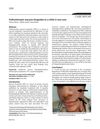
October 2023 in “Journal of the Pakistan Medical Association” This source describes a case of a 12-year-old male diagnosed with folliculotropic mycosis fungoides, presenting with an asymptomatic, erythematous plaque. Histology and immunohistochemistry confirmed FMF, which is typically rare in children and marked by follicular infiltration by CD4+ lymphocytes.
This study found that the loss of papillary fibroblasts in the skin due to UV radiation is mainly caused by an uncontrolled inflammatory response, with T cells helping fibroblast survival.
This study found that chronic UVR exposure in mice and humans leads to a permanent loss of papillary fibroblasts in the upper dermis, which is associated with changes in the extracellular matrix.
 34 citations
,
January 2005 in “Journal of the American Veterinary Medical Association”
34 citations
,
January 2005 in “Journal of the American Veterinary Medical Association” This study found that cyclosporine A treatment at 5 mg/kg/day may reduce inflammation and promote gland regeneration in dogs with sebaceous adenitis, though symptoms returned when treatment stopped.
 1 citations
,
June 2020 in “bioRxiv (Cold Spring Harbor Laboratory)”
1 citations
,
June 2020 in “bioRxiv (Cold Spring Harbor Laboratory)” In this study, researchers identified unique prenatal lymphocyte features in human fetal skin, including proliferative naive T cells and memory-like T cells, which may influence antigen and allergen responses in utero and infancy.
24 citations
,
October 2022 in “Cell Regeneration” This study describes a new mouse model for vitiligo that mimics key clinical features such as skin depigmentation and CD8 + T cell infiltration, providing a useful tool for in-depth research and drug discovery.
 June 2024 in “Research Square (Research Square)”
 This study demonstrated that in mice, the absence of Jagged-1 expression in skin-resident regulatory T cells significantly delays wound healing by reducing the accumulation of neutrophils, highlighting the role of Jagged-1 in coordinating immune cell recruitment during injury.
 16 citations
,
April 2007 in “Journal of Medical Primatology”
16 citations
,
April 2007 in “Journal of Medical Primatology” This study reports that a 14-year-old female rhesus monkey with alopecia universalis was found to have a T-cell-mediated autoimmune disease similar to human alopecia areata universalis.
 1 citations
,
October 2022 in “International Journal of Molecular Sciences”
1 citations
,
October 2022 in “International Journal of Molecular Sciences” This study suggests that allogenic human mesenchymal stem cell treatments have potential therapeutic effects by inducing immune tolerance and anti-inflammatory effects in severe alopecia areata patients.
This study found that UV radiation-induced fibroblast depletion in the skin is primarily due to a deregulated inflammatory response, with T cells aiding fibroblast survival under stress.
16 citations
,
April 2024 in “Proceedings of the National Academy of Sciences” This study found that selectively targeting HDAC4 and HDAC7 in mice can reduce Th17 cell-mediated intestinal inflammation, suggesting a potential treatment approach for Th17-related inflammatory diseases like ulcerative colitis.
 4 citations
,
September 2017 in “Skin appendage disorders”
4 citations
,
September 2017 in “Skin appendage disorders” This case report describes the first dermoscopic evaluation of alopecia areata-like disease in a dog, where the condition mirrored human cases in terms of clinical presentation and treatment response.
 September 2017 in “The journal of investigative dermatology/Journal of investigative dermatology”
 This study found that orally administering the CCR5 inhibitor Maraviroc improved hair loss in 4 out of 5 mice with alopecia areata and also reduced the development of the condition, evidenced by decreased CCR5+ T-cell infiltration in treated mice.
 September 2017 in “The journal of investigative dermatology/Journal of investigative dermatology”
 This study suggests that the outer root sheath of human hair follicles may act as a "metabolic center," capable of synthesizing glucose from lactate, which supports glycogen metabolism.
 10 citations
,
April 2013 in “Veterinary dermatology”
10 citations
,
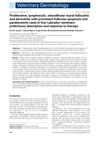
April 2013 in “Veterinary dermatology” In this study, four dogs with a novel skin disease showed clinical lesions involving verrucous, crusted papules and plaques, and responded variably to immunosuppressive therapy, suggesting an immune-mediated cause.
 January 2025 in “Plastic Surgery and Reconstructive Medicine”
 In this study, plasmatherapy was found to improve immune status indicators in patients with vitiligo, particularly benefiting those with segmental vitiligo by normalizing immune markers and reducing IL-6 levels, suggesting its potential as an adjunct treatment to slow depigmentation progression.
 23 citations
,
January 2010 in “Journal of Medical Primatology”
23 citations
,
January 2010 in “Journal of Medical Primatology” This study found that alopecia in captive Rhesus macaques may be linked to chronic hypersensitivity dermatitis with CD4+ cell inflammation, possibly influenced by altered housing and reduced pathogen exposure.
 37 citations
,
November 2003 in “Veterinary pathology”
37 citations
,
November 2003 in “Veterinary pathology” This study showed that in C3H/HeJ mice, focal follicular inflammation starts before overt hair loss, with inflammation severity possibly reaching a threshold causing hair follicle dystrophy prior to visible hair loss.
3 citations
,
October 2024 in “Experimental Dermatology” This study found that patients with alopecia areata exhibited increased CRHR1 expression on circulating monocytes compared to controls, suggesting that stress-related factors like CRH and CRHR1 may contribute to the development and progression of the condition, particularly in chronic cases and those with larger lesions.
4 citations
,
September 2011 in “Journal of the American Academy of Dermatology” This case report describes a 46-year-old man who developed folliculotropic mycosis fungoides, a form of post-transplant lymphoproliferative disorder, following renal transplantation.
112 citations
,
January 2013 in “Experimental dermatology” This article offers a viewpoint on hidradenitis suppurativa pathogenesis, suggesting that impaired Notch signalling from γ-secretase mutations may drive inflammation and link the condition to other Th17-driven diseases.
3 citations
,
December 2003 in “Archives of Pathology & Laboratory Medicine” This article reviews the distinctive features of cutaneous lymphadenoma, a variant of trichoblastoma, and its differential diagnosis, but it presents no new empirical results.