September 2025 in “JID Innovations” This study suggests that macrophages, particularly CD206+ macrophages, play a crucial role in squaric acid dibutylester-induced hair growth in alopecia areata treatment.
July 2024 in “Journal of Investigative Dermatology” This study suggests that macrophages, especially CD206+ subsets, play a key role in hair growth induced by squaric acid dibutyl ester, a therapy used for alopecia areata.
April 2023 in “Journal of Investigative Dermatology” CD206+ macrophages are crucial for hair growth in alopecia areata treatment.
 April 2016 in “The journal of investigative dermatology/Journal of investigative dermatology”
 This study suggests that infiltrating M2 macrophages promote wound-induced hair neogenesis in mice by producing growth factors that activate the wnt signaling pathway during the late phase of wound healing.
 April 2016 in “Journal of Investigative Dermatology”
 This study found that the CD301b-expressing subpopulation of macrophages plays a crucial role in promoting reparative processes during the mid-stage of skin wound healing in a mouse model.
 6 citations
,
December 2022 in “Cell reports”
6 citations
,
December 2022 in “Cell reports” This study found that feeding mice a high-fat diet with fish oil leads to hair loss through a mechanism involving omega-3 fatty acids and TNF-α signaling, with epidermal fatty acid binding protein playing a key role.
 31 citations
,
February 2014 in “Inflammation Research”
31 citations
,
February 2014 in “Inflammation Research” This study found that reduced expression of CD200R1 on monocyte-derived macrophages in rheumatoid arthritis patients was significantly associated with higher disease severity and an imbalance in Th17/Treg cells.
 September 2022 in “bioRxiv (Cold Spring Harbor Laboratory)”
 This study indicates that a helminth-derived protein, TGF-β mimic, may accelerate wound healing and promote regenerative processes in skin tissue by interacting with TGF-β receptors.
 November 2022 in “Journal of the Endocrine Society”
 This clinical case report identifies xanthomatous hypophysitis in a male patient, highlighting the mismatch between clinical symptoms and MRI findings, which led to a pituitary biopsy and accurate diagnosis instead of unnecessary surgery.
 May 2026 in “Iranian journal of pharmaceutical research”
 This study found that HAMA hydrogels promote faster healing of skin wounds in mice by enhancing the accumulation of anti-inflammatory macrophages and increasing type III collagen in the local wound environment.
 March 2024 in “International Journal of Cosmetic Science”
 This study observed that dandruff-affected scalp skin has increased T-cell infiltration in the epidermis and a reduction in the hair follicle's physiological immune privilege, particularly in the suprabulbar outer root sheath area, indicating a distinct immune microenvironment compared to healthy scalp.
 September 2017 in “Journal of Investigative Dermatology”
 This study suggests that sweat glands may have an immune privilege similar to hair follicles, and disruptions in this could contribute to autoimmune skin diseases.
 163 citations
,
April 2019 in “Nature Communications”
163 citations
,
April 2019 in “Nature Communications” This study found that mechanical skin stretching can stimulate hair stem cell proliferation and hair regeneration by activating a complex pathway involving WNT, BMP-2, and M2 macrophages.
 17 citations
,
June 2018 in “Frontiers in Physiology”
17 citations
,
June 2018 in “Frontiers in Physiology” This study found that acellular dermal matrix scaffolds may facilitate full-thickness skin wound healing by promoting a pro-regenerative immune response through M2 macrophage polarization via the Lamtor1 pathway.
 2 citations
,
March 2021 in “Molecular Immunology”
2 citations
,
March 2021 in “Molecular Immunology” This review discusses the role of dermal macrophages in stress-induced hair regeneration and reports no new clinical findings, highlighting the need for further research into macrophage dynamics for potential hair loss therapies.
 44 citations
,
January 2019 in “Journal of Translational Medicine”
44 citations
,
January 2019 in “Journal of Translational Medicine” This study found that macrophages are crucial for skin regeneration during tissue expansion, as their depletion in rats led to inhibited skin growth and reduced secretion of key growth factors.
 5 citations
,
September 2022 in “Research Square (Research Square)”
5 citations
,
September 2022 in “Research Square (Research Square)” This study identified CD201+ fibroblast progenitors in mouse skin that regulate wound healing through differentiation into specialized cell types, with retinoic acid and hypoxia influencing this process.
 130 citations
,
September 2018 in “Cell Reports”
130 citations
,
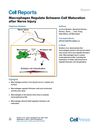
September 2018 in “Cell Reports” This study found that macrophages play a crucial role in nerve regeneration by regulating Schwann cell dynamics and remyelination, with Gas6 identified as a key factor in this process.
 65 citations
,
February 2017 in “Pflügers Archiv - European Journal of Physiology”
65 citations
,
February 2017 in “Pflügers Archiv - European Journal of Physiology” This review examines the roles of macrophages and Langerhans cells in skin homeostasis and suggests that understanding these functions can aid in developing therapies for skin and hair regeneration, but it reports no new research findings.
 61 citations
,
September 2020 in “Bioactive Materials”
61 citations
,
September 2020 in “Bioactive Materials” This study found that the multifunctional FEA-PCEI dressing significantly accelerated wound healing, reduced scar formation, and promoted hair follicle neogenesis while providing antibacterial and anti-inflammatory benefits.
 9 citations
,
August 2021 in “Biological Chemistry”
9 citations
,
August 2021 in “Biological Chemistry” This review examines current and potential approaches to managing chronic wound inflammation through macrophage-targeted strategies using ECM-inspired wound dressings, but it reports no new clinical results.
 8 citations
,
August 2021 in “Aging”
8 citations
,
August 2021 in “Aging” This animal study found that berberine may alleviate benign prostatic hyperplasia by reducing inflammation and oxidative stress through inhibition of the NF-κB signaling pathway.
 117 citations
,
March 2017 in “Nature Communications”
117 citations
,
March 2017 in “Nature Communications” This study shows that macrophage-induced TNF signaling can activate hair follicle stem cells and promote new hair follicle formation after wounding by regulating AKT/β-catenin pathways.
 3 citations
,
August 2024
3 citations
,
August 2024 In this study, researchers using single nuclei RNA-sequencing found that fibroblasts in deeper layers of mouse skin expressed higher levels of pro-inflammatory genes post-wounding compared to other cells, highlighting their significant role in early inflammation and tissue repair processes.
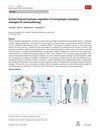
This review highlights that surface mechanical regulation can program macrophage behavior through specific mechanical cues on material surfaces, potentially advancing immunotherapies and regenerative medicine by enabling precise control over macrophage functions.
 6 citations
,
September 2024 in “BMC Pulmonary Medicine”
6 citations
,
September 2024 in “BMC Pulmonary Medicine” This study demonstrated that CEP may effectively treat pulmonary fibrosis by inhibiting fibroblast activation through regulating macrophage M2 polarization and decreasing fibrosis-associated factors, suggesting a new avenue for future research in this area.
 January 2026 in “Frontiers in Immunology”
 This review highlights icariin’s potential to regulate macrophages in varying conditions, discussing its effects on macrophage polarization, metabolism, and disease mechanisms, and noting the development of delivery systems to enhance its therapeutic impact.
 6 citations
,
April 2025 in “Plastic and Aesthetic Research”
6 citations
,
April 2025 in “Plastic and Aesthetic Research” This review highlights that biomaterial properties can be designed to modulate macrophage activity, potentially reducing foreign body responses and enhancing tissue healing in regenerative medicine.
 32 citations
,
January 2012 in “Clinical & Developmental Immunology”
32 citations
,
January 2012 in “Clinical & Developmental Immunology” In this study, rheumatoid arthritis patients showed no changes in the number of circulating follicular helper T cells, but these cells had increased CD200 expression, implicating them in disease pathogenesis and suggesting CD200/CD200R as a potential therapeutic target.
 27 citations
,
May 2018 in “Journal of Dermatological Science”
27 citations
,
May 2018 in “Journal of Dermatological Science” This study suggests that M2 macrophages play a key role in promoting wound-induced hair neogenesis in mice by producing growth factors like Igf1 and Fgf2.