 63 citations
,
August 2008 in “Journal of Cosmetic Dermatology”
63 citations
,
August 2008 in “Journal of Cosmetic Dermatology” The researchers reported that the petroleum ether extract of Cuscuta reflexa may promote hair growth in testosterone-induced alopecia in mice by inhibiting the enzyme 5α-reductase.
 November 2006 in “Reactions Weekly”
 A woman's hair grew back after she stopped taking the Parkinson's disease medication pramipexole.
February 2021 in “Open Repository of the University of Porto (University of Porto)” 14 citations
,
January 2015 in “Annals of dermatology/Annals of Dermatology” This study found that corticosteroid pulse therapy may be more effective than oral cyclosporine with corticosteroid for patients with severe alopecia areata, especially for those with the plurifocal type or a short disease duration.

This study evaluated AI chatbots' responses to scabies-related questions, finding DeepSeek had the highest accuracy despite higher hallucination rates, while ChatGPT-5.2 provided more readable and reliable information, highlighting variability and the need for cautious use of AI in health queries.
9 citations
,
June 2014 in “Molecular biology reports” KAP9.2 and Hoxc13 genes are important for cashmere growth and vary in activity during different stages.
21 citations
,
January 2020 in “Pharmaceutical Biology” In this study, Salvia plebeia extract promoted hair growth by enhancing proliferation and anti-apoptotic effects in human dermal papilla cells and increased hair growth in treated mice.
7 citations
,
March 2025 in “Cytotechnology” January 2012 in “Journal of Beijing Normal University” In this study, canna was identified as the most effective plant for water purification in eutrophic conditions, supplemented by reed, with significant differences in pollutant absorption among the five plant species tested.
April 2014 in “DOAJ (DOAJ: Directory of Open Access Journals)” This study identified 64 chemical compounds in the L. luteus L. plant, including several fatty acids and coumarin, highlighting the pharmacognostic potential of yellow lupine.
This study introduced ElixirSeeker2, a computational framework for designing anti-aging peptides, and found that some newly identified peptides significantly delayed cellular senescence and enhanced cellular and locomotor functions in aged Caenorhabditis elegans.
8 citations
,
July 2020 in “BMC genomics” In this study, ceruloplasmin and keratin 4 were identified as markers that differentiate between growing and resting phases in cashmere goat hair follicles, with keratin 4 being a potential marker for the onset of a new hair cycle.
 2 citations
,
January 2021 in “Cureus”
2 citations
,
January 2021 in “Cureus” This case study describes a three-year-old girl who developed acute hepatitis and pancytopenia, potentially due to chronic use of Senna, highlighting possible liver and bone marrow toxicity.
44 citations
,
April 2019 in “Journal of the American Academy of Dermatology” This study observed that cyclosporine showed a trend toward improving alopecia areata symptoms compared to placebo, but the difference was not statistically significant.
17 citations
,
May 2021 in “Journal of Cell Science” In this study, the researchers discovered that specific polyamine depletion enhances stemness in hair follicle stem cells through a mechanism independent of mRNA translation.
June 2007 in “CRC Press eBooks” Aesthetic mesotherapy can improve the appearance of the face and hair.
19 citations
,
May 2016 in “Cytotechnology” 26 citations
,
October 1997 in “Planta Medica” This study found that bisbenzylisoquinoline alkaloids from Stephania cepharantha Hayata stimulated growth in cultured murine hair cells but not in keratinocytes or fibroblasts.
 13 citations
,
December 2024 in “Cellular and Molecular Life Sciences”
13 citations
,
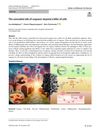
December 2024 in “Cellular and Molecular Life Sciences” This study reviews recent advancements in understanding caspases, highlighting their roles beyond apoptosis in cancer, inflammation, and neurological disorders, and discusses the potential and challenges of targeting caspases for therapeutic purposes.
 3 citations
,
July 2018 in “Biomedicine & pharmacotherapy”
3 citations
,
July 2018 in “Biomedicine & pharmacotherapy” This study suggests that paeoniflorin's protective effects on brain astrocytes may be mediated by TSPO and neurosteroids biosynthesis.
 April 2025 in “International Journal of Health Sciences”
 This study reports that Polyscias scutellaria exhibits diverse pharmacological activities, including antibacterial, antifungal, anti-inflammatory, antioxidant, and antidiabetic properties, suggesting potential therapeutic uses in various health applications.
 12 citations
,
December 2022 in “Annals of Phytomedicine An International Journal”
12 citations
,
December 2022 in “Annals of Phytomedicine An International Journal” This review discusses the historical and potential medical uses of Cyperus rotundus rhizomes, but reports no new clinical results and emphasizes the need for further study on its pharmacognostic properties.
7 citations
,
April 2020 in “JIMD Reports” In this follow-up of three siblings with ATP6AP1 deficiency, the researchers observed progression to total hearing loss, hair loss, and proteinuria.
1 citations
,
May 2017 in “Journal of Clinical Oncology” This study found that applying BPM 31543 twice daily was safe, well-tolerated, and showed signs of reducing chemotherapy-induced alopecia in women receiving taxane-based chemotherapy.
 December 2024 in “Tropical Journal of Natural Product Research”
 This study evaluated the anti-alopecia effects of Petroselinum crispum leaf extracts in a rabbit model and through molecular docking analysis, finding that two ethyl acetate fractions promoted hair growth, with effects comparable to minoxidil, suggesting potential for alopecia treatment development.
 2 citations
,
May 2022 in “Horticulturae”
2 citations
,
May 2022 in “Horticulturae” This study found that applying the highest dose of biostimulant improved the fresh yield, leaf area, and ACO2 of hydroponically grown ‘Genovese’ basil, suggesting enhanced productivity with reduced fertilizer use.
January 2026 in “Plant Communications” This study found that overexpressing the CLE peptide SlCLE10 in tomatoes increased root hair length and improved drought tolerance, suggesting its potential for enhancing crop resilience to osmotic stress.
January 2010 in “DOAJ (DOAJ: Directory of Open Access Journals)” This study concluded that monthly pulse IV cyclophosphamide is effective for severe lupus nephritis in Indian patients, achieving complete or partial remission in 68.9% of cases, though longer follow-up is needed.
 November 2025 in “Journal of Microbiology and Biotechnology”
 This study demonstrates that pea sprout extract promotes hair growth by activating specific signaling pathways and providing antioxidant and anti-inflammatory effects, suggesting its potential as a natural alopecia treatment.
November 2025 in “Quantum Wellness : Jurnal Ilmu Kesehatan” This study analyzed the ethanol extract of pacing tawar leaves and found it contains alkaloids, saponins, tannins, and steroids but not flavonoids, suggesting potential for use in natural medicinal products.