16 citations
,
January 2000 in “Journal of dermatological treatment” This study found that calcipotriol scalp solution was more effective than a coal tar-based shampoo for treating mild to moderate scalp psoriasis and showed continued efficacy with long-term use.
 12 citations
,
January 2008 in “Drugs”
12 citations
,
January 2008 in “Drugs” This review critically assesses current topical therapies for scalp psoriasis and reports no new clinical results; the authors highlight the need for controlled trials to evaluate treatment efficacy.
 December 2025 in “npj Breast Cancer”
 In the phase 3 CAPItello-291 trial, capivasertib combined with fulvestrant significantly increased progression-free survival in patients with advanced breast cancer with specific genetic alterations, but the authors highlight that managing side effects like diarrhea, rash, and hyperglycemia is crucial for optimizing treatment adherence and outcomes.
October 2019 in “Zenodo (CERN European Organization for Nuclear Research)” In this study, researchers developed a new solution called CapilGen, showing it increased hair quantity by 35% and density by 25% in clinical trials without side effects, providing a potentially safe and effective treatment for baldness.
 2 citations
,
March 2024 in “Supportive Care in Cancer”
2 citations
,
March 2024 in “Supportive Care in Cancer” In this study, manual cold capping was found to be effective in minimizing chemotherapy-induced alopecia, with 92.1% of patients retaining 50% or more of their hair, although effectiveness varied with different chemotherapy regimens.
1 citations
,
March 2018 in “Journal of lasers in medical sciences” This study found that combining topical capislow with laser hair removal significantly enhanced hair reduction compared to laser alone, although the beneficial effects lasted only while capislow was applied.
14 citations
,
August 2014 in “The FASEB Journal” This study found that the catalytically inactive serine protease CAP1/Prss8 can still induce skin disorders in mice and is subject to inhibition by nexin-1, independent of its catalytic activity.
This study reports that FDA-approved scalp cooling caps, like DigniCap and Paxman, can help 50-66% of breast cancer patients retain at least 50% of their hair during chemotherapy, with specific recommendations and limitations discussed for different patient groups.
 October 2022 in “The Journal of Family Practice”
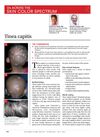
 This article describes cases of tinea capitis in young Black and Latina children, highlighting the condition's diverse presentations such as erythema, scaling, and subtle signs like comma hairs, but reports no new clinical results.
February 2023 in “مجلة التراث والتصميم” This study found that choosing appropriate fabrics for hats and caps enhanced protection against sun damage and air pollution for hair in construction and manufacturing workers.
January 2016 in “Refubium (Universitätsbibliothek der Freien Universität Berlin)” In this study, the safety profile of the prodrug CAP7.1 was found to be similar to other topoisomerase inhibitors, with myelosuppression as the main dose-limiting toxicity.
2 citations
,
September 2011 in “Revista de Ciências Farmacêuticas Básica e Aplicada” This study examined a shampoo containing chili pepper extract and biopolymer microspheres for hair loss treatment, finding that it was well tolerated by volunteers, particularly due to the exfoliation sensation.
January 1994 in “Journal of the society of cosmetic chemists”  June 2024 in “Journal of Ayub Medical College Abbottabad”
 This study concluded that adding 5% topical Procapil to PRP therapy provided better outcomes for androgenetic alopecia than PRP alone, as assessed by dermatologist evaluations and patient satisfaction.
51 citations
,
January 2007 in “The journal of investigative dermatology/Journal of investigative dermatology” This study identified a novel keratin-associated protein, KAP24.1, which is specifically expressed in the human scalp and located in the hair cuticle.
13 citations
,
October 2021 in “Actas Dermo-Sifiliográficas” This review examines existing evidence on scalp cooling systems to prevent or reduce chemotherapy-induced hair loss in cancer patients, noting promising results and their increasing adoption in clinical practice.
 December 2024 in “Journal of General-Procedural Dermatology & Venereology Indonesia”
 In this study, a topical hair growth serum containing ingredients like procapil and redensyl was found to be safe and effective for subjects with androgenic alopecia, significantly improving hair density, thickness, and Anagen:Telogen ratio after 120 days, with no observed adverse effects.
 May 2025 in “Journal of Cosmetic Dermatology”
 This study observed that the addition of Cuticapil Stem Hair Serum to standard care significantly improved hair growth and reduced hair shedding in patients with androgenetic alopecia, demonstrating superior efficacy compared to standard care alone without any reported adverse events.
 January 2021 in “Mastology”
 This study found that over 80% of women treated with paclitaxel who used a hypothermic glycerin-based hydrogel cap preserved at least 50% of their initial hair volume, suggesting scalp cooling may effectively prevent chemotherapy-induced alopecia.
27 citations
,
June 2011 in “Journal of Advanced Nursing” The research observed that a penguin cap scalp cooling system may effectively reduce chemotherapy-induced alopecia, though its success varies due to individual characteristics and treatment regimens.
 October 2018 in “International journal of clinical & experimental dermatology”
 In this pilot study, baicalin-containing serum significantly decreased hair loss and increased hair growth after two months in participants with telogen effluvium, as subjective and objective assessments showed statistically significant improvements in hair thickness and density.
June 1958 in “Mycopathologia” Selective chemical epilation effectively treats tinea capitis without harmful side effects.
July 2024 in “Journal Archives of Health” This study reviewed existing literature on Tinea Capitis, highlighting its frequent occurrence in children, the ease of fungal spread from humans or animals, and the necessity for prompt and proper antifungal treatment due to potential drug resistance and complications like alopecia.
6 citations
,
March 2024 in “Saudi Pharmaceutical Journal” This study found that a nano-cubosome formulation co-loaded with capsaicin and thiocolchicoside enhanced bioavailability and showed promising analgesic and anti-inflammatory effects in rats, potentially benefiting gout management through improved transdermal delivery.
 April 2016 in “JAMA Dermatology”
 This commentary highlights the importance of additional sun protection for individuals with alopecia, noting that common headwear like baseball caps may provide insufficient photoprotection for the scalp.
22 citations
,
May 2016 in “Breast cancer research and treatment” This study reported cold thermal injuries on the scalp in four patients using cold caps to prevent chemotherapy-induced alopecia, suggesting improper application can lead to adverse events.
50 citations
,
July 2008 in “British Journal of Dermatology”  62 citations
,
January 2004 in “The journal of investigative dermatology/Journal of investigative dermatology”
62 citations
,
January 2004 in “The journal of investigative dermatology/Journal of investigative dermatology” This study identified 16 novel high sulfur KAP genes and two KAP pseudogenes on chromosome 21q23, showing expression in a specific region of the hair fiber cuticle.
 20 citations
,
July 1990 in “Journal of the American Academy of Dermatology”
20 citations
,
July 1990 in “Journal of the American Academy of Dermatology” Captopril may cause hair loss, as shown by a woman's hair regrowing after stopping the medication.
 February 2026 in “International Journal of Research in Dermatology”
 In this report, two adult cases of tinea capitis with unusual symptoms like pustules and non-scarring alopecia were diagnosed based on clinical and pathological findings, and successfully treated with oral Griseofulvin and topical luliconazole cream.